As the tenth anniversary of the Brexit vote approaches, there is a new question in the air. A decade ago 37% of registered voters in Britain voted to leave the EU.
Within eight years of that vote, electors had repudiated the Conservatives who had proposed the referendum and today the Tory leader Kemi Badenoch has, like all other party leaders including Nigel Farage, negative ratings in opinion polls.
The lost decade since Brexit has seen British politics become ever more European. The old two-party system is gone and, at the next election, it is unlikely that any party will get more than 20-25% of the vote.
By any reading of British economic history, the Brexit decade of 2016-2026 has seen the lowest, most sluggish economic growth ever recorded. Most economists say that British GDP will be 8% smaller following our break with the EU.
In 2022, speaking at a Labour Movement for Britain event at the Irish embassy in London, Keir Starmer said his policy as the new Labour leader was “to make Brexit work”. Listeners were puzzled – that slogan was first coined by Theresa May.
Now according to new research by Best for Britain, 53% of all British voters say they would like to be in the EU, with just 32 % opposed.
Within that majority, 83% of Labour voters, 84% of LibDem voters, and 82% of Green voters say they would like the economy to be reconnected to the continent.
Trade with far-off nations adds value, but the promised trade deal with the US collapsed and Donald Trump imposed new tariffs on Britain. India’s trade deal with Britain was based on the UK allowing large number of Indian migrants to work in Britain.
The Best for Britain research project was launched in Westminster in the same week as a high level EU-UK conference in Brussels, organised by the EU-UK Forum founded by Paul Adamson, who made a career patrolling the EU corridors of power on behalf of British firms.
Nick Thomas-Symonds, Labour’s cabinet minister in charge of relations with the EU, was at that conference and made an impassioned speech against Boris Johnson’s hard Brexit treaty. This, he said, had required farmers to issue more than a million health certificates since 2023 and has saddled businesses with hundreds of millions of pounds of extra costs.
Thomas-Symonds said that working from the same rule-book as EU competitors was a “strategic choice” based on British patriotism. He announced the return of young Brits to the Erasmus programme. From next year, 100,000 young Brits will spend a year studying or working as apprentices across the Channel.
This is welcome, but as the long queues experienced by British visitors and tourists to the continent now show, Brexit has consequences for all citizens, as well as for businesses.
In addition to the Best for Britain polls, this month the Daily Mail carried out one of its regular readers’ polls. The Mail was and is the most passionately anti-European of all UK newspapers – and yet out of the 25,000 readers who took the survey, 84% agreed that the UK should once again rejoin the EU.
This poses a problem for pro-European policy-makers. How do they respond to the clear public sense that it is time to wind down the Brexit experiment? The Liberal Democratic Party has responded by saying the UK should shape a new Customs Union with the EU.
Suggested Reading
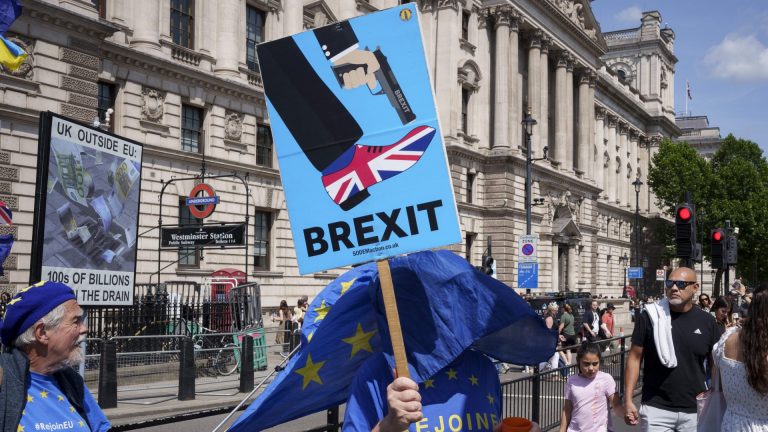

The Brexit hardcore who still think it was right to leave
Others suggest entering the Single Market. The Labour Party has a cautious reset policy, intended mainly to reduce various checks on food or goods exported to Europe from the UK. But the Best for Britain poll shows voters do not want these half-way houses. They want to rejoin.
Both a custom union or single market arrangement would “require a protracted negotiation with the EU and would provide only modest growth in return”. In contrast, returning to a single market “would yield significantly higher growth”, even if the politics of grinding it through parliament would not be easy.
Nothing can happen without political leadership – but that is not the current prime minister’s speciality. He has signed up to the EU-led rejection of the Trump-Netanyahu war on Muslims in the Middle East at the expense of the fabled but non-existent “special relationship”. But in the years after Brexit, Starmer supported the complete dead-end campaign for a second referendum and shielded the life-long anti-EU Jeremy Corbyn during Labour’s wasted years of opposition 2015-20.
There are actually more Labour MPs who are paid up members of the Labour Movement for Europe (LME) – 120 – than the total number of Tory MPs – 116. The Labour Movement for Europe’s president is Neil Kinnock, who in his first years as Labour MP was an eloquent tribune for anti-European Labourism. He changed his tune after Labour’s 1983 defeat with its manifesto offering a Brexit referendum and a pledge to leave the EC.
From 1950-1990 the Tories were the pro-European party they gradually took up the anti-European cause, so that today’s Tory MPs seem content to tail behind Nigel Farage. Not a single Tory MP now makes the argument for partnership with Europe. At some stage, will an intelligent Tory or two emerge to speak for the 84% of Daily Mail readers who believe the UK should re-enter Europe?
The EU is dominated by the centre-right – there is a story about Europe that Tories could tell if any of their MPs felt willing to point out that the anti-European emperor is in fact naked.
There are signs that Rachel Reeves and even the prime minister are finally admitting that Brexit has been bad for Britain. Farage and Badenoch and the pro-Brexit press have made a political mistake in presenting Britain as Trump’s number one global poodle. All previous US presidents have supported European construction and integration and urged Britain to play a leading role in Europe.
The president of the European Parliament, the Maltese politician Roberta Metsola, told the EU-UK conference in Brussels that the UK should seek a “bespoke” new relationship with the rest of Europe.
The pollster professor Sir John Curtice told the Best for Britain event that Labour’s “half-way house policy” on Europe was not winning votes from pro-European Greens, LibDems, or Welsh and Scottish nationalists. Curtice argued that Labour is losing voters at twice the rate to the more Brexit-critical LibDems and Greens than it is to the Tories and Reform.
At the EU-UK Forum in Brussels, a spokesman from a major bank said their sector had not been negatively impacted by Brexit and that the UK should emulate the US model of modern capitalism despite its devastating impact on American society.
The City of course was a major funder of the Johnson-Farage Brexit campaign in 2016. The City works almost entirely on-line so has no need to secure export certificates or negotiate work permits for its executives to operate out of other European capitals. Similarly, the CBI, BCC and different trade and industry federations, whose leaders are close to the Tory Party have a policy of omerta on not criticising Brexit.
And yet, according to the IMF, the rate of growth in Brexit Britain is shrinking as Britain becomes visibly a poorer nation. That means Starmer must come clean and admit he made a mistake proclaiming he could “Make Brexit Work”. Instead he should set a target for rejoining Europe. That would put him, and his government, clearly on the side of public opinion.
Denis MacShane is the former Minister for Europe
 Most popular

Suella Braverman’s book has sold only 106 copies. This is why
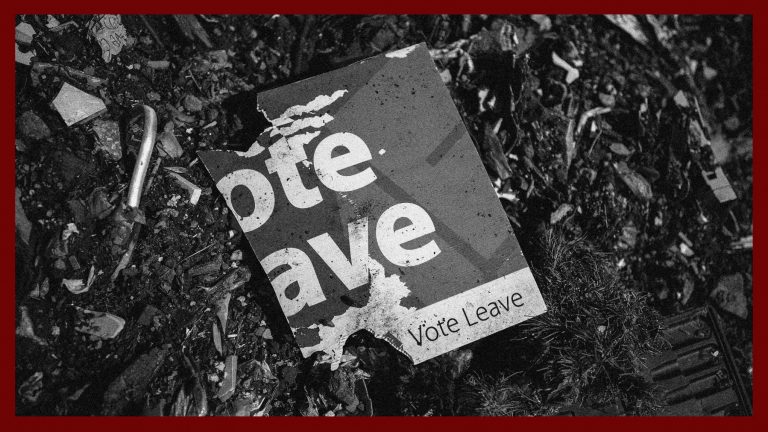

The Brexit majority has gone for ever – rejoin now has a majority of 9 million

The mask has slipped – now we can see the real, shameful face of Reform


The riots in France are being stoked by Russia and Iran