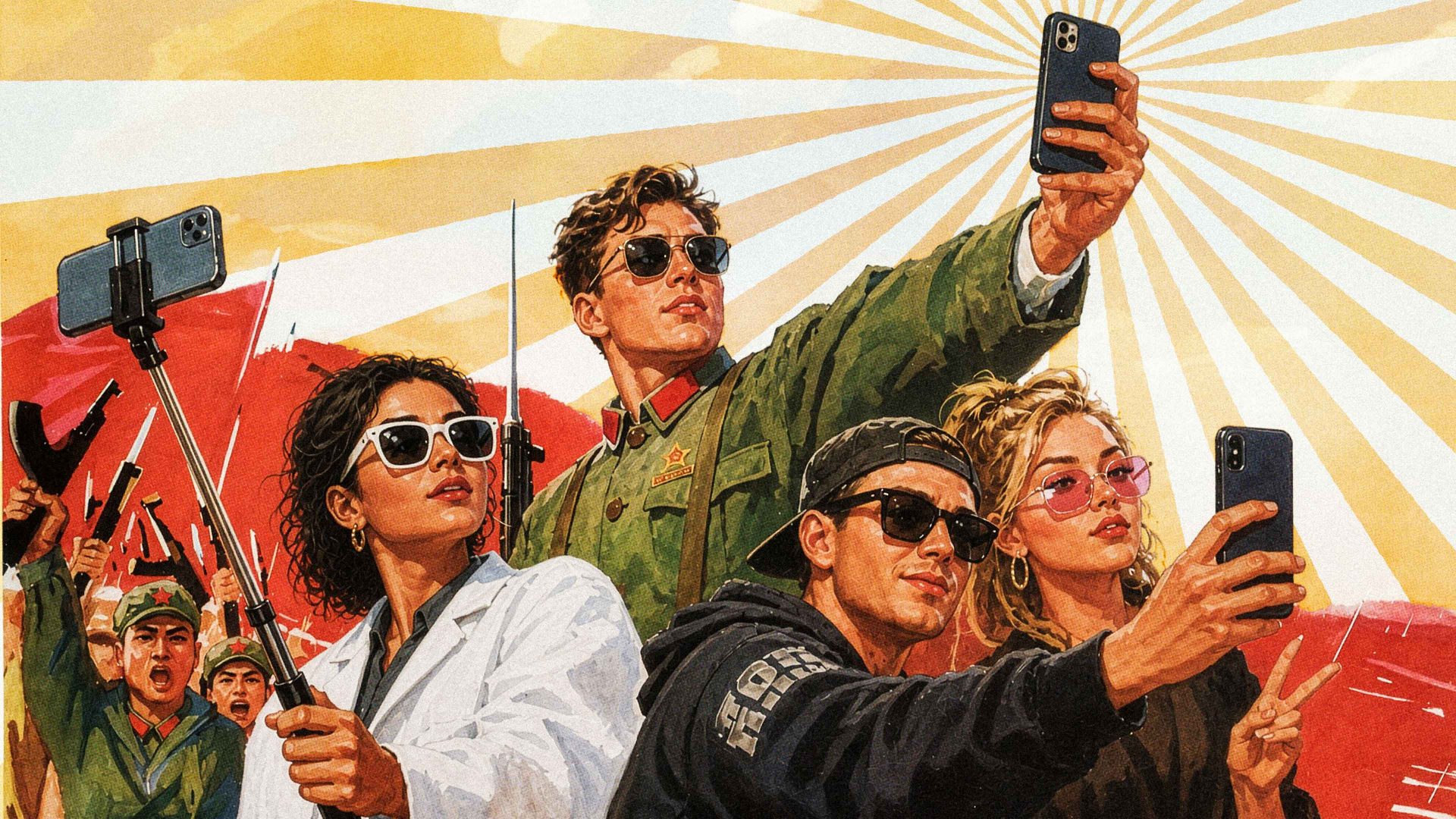
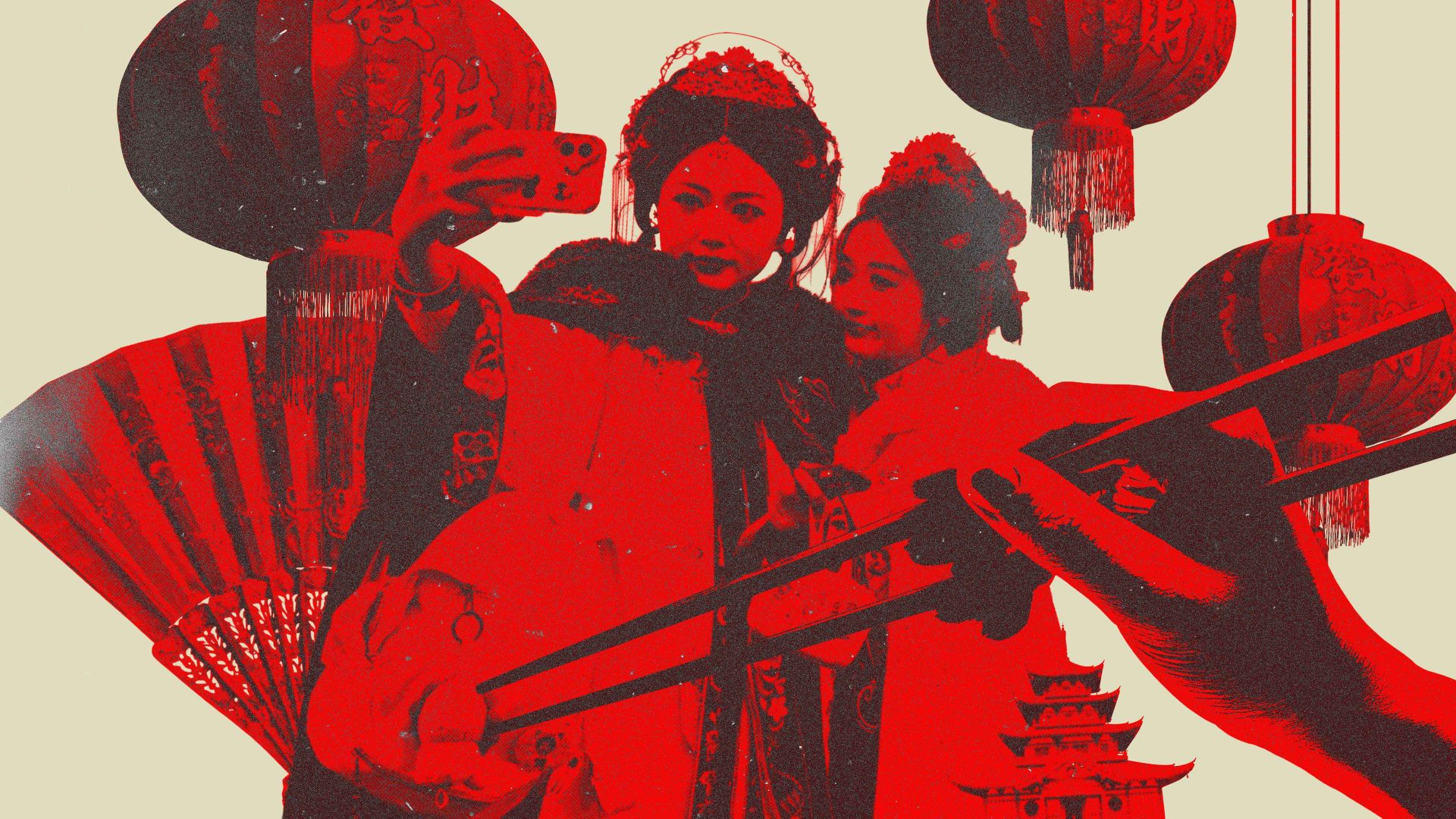
A growing number of young people in the West now proclaim, semi-seriously, that they feel spiritually Chinese. You can see the idea spreading on social media.
One of the biggest Gen Z inside jokes of the year is, “You met me at a very Chinese time in my life.” It’s a rejigged line from the movie Fight Club (“You met me at a very strange time in my life”.) Another one that’s been doing the rounds is: “I don’t even call it Chinatown anymore, I just call it ‘town’. Just a glimpse into how Chinese my mind is becoming.”
These weird jokes are not tongue-in-cheek racism, or absurdism. They are a symptom of the fact that Gen Z is in the process of falling in love with the nation once regarded as the greatest threat to world peace: China. Recent polls show that Gen Z views China much more favourably than older generations. Less than a quarter see Beijing as a major threat to the west, and a majority opposes restrictive tariffs on Chinese exports.
But the people who make and share these jokes are not new-age “tankies”: authoritarian communists who have committed Mao’s Little Red Book to memory. The Gen Z Sinophile is far less ideological than earlier generations.
They want to go to Shanghai not out of a sense of political conviction but because they think the trains are impressive, and because they like Chinese food, fashion, and cinema. They may have very few opinions on Mao, except that some Chinese cigarette cartons feature a photo of him, which looks quite cool.
One of the ways this new fixation manifests itself is in the Chinamaxxer. These are westerners who immerse themselves in the country, drink Chinese beer, marvel at the infrastructure, and broadcast it all to thousands of viewers back home in the west.
A lot of it is lighthearted, but what lies beneath is an undeniable truth: western youngsters are beginning to see China as a neutral actor on the world stage. And more than that, they are beginning to see it as a beacon of the future.
One of the most prominent Chinamaxxers on the internet is Mungo McCosh, a young Scottish “entrepreneur” and “explorer” who has travelled extensively around China for several years and has “totally fallen in love with the place”.
McCosh is now at Edinburgh University and is in China on a year out. He told me he has been “absolutely living it large here”, and that visitors, particularly young people, are “blown away” by the infrastructure, development, convenience, safety and the friendliness of Chinese people.
“I seem to have kind of accidentally been propelled to the forefront of this whole Chinamaxxing trend with videos that I filmed and kind of made for jokes initially. And the real question that I’ve been asking myself is, to what extent is this sort of online obsession with China genuine and comes out of an understanding for the culture, and how much of it is a reaction to maybe what some people feel is the decline of the West and dissatisfaction with, particularly in the United States, their current administration, but also in the UK, a weaker Britain and a non-EU Britain?”
Suggested Reading

China’s new Arctic spy game
McCosh is genuine in his enthusiasm for Chinese infrastructure. “I was just in a town called Zunyi, which before getting there a couple of days ago, I’d never heard of,” he says. “Today, I’ve just arrived in Kunming, and we took a high-speed train at 280km/h through some of the most inhospitable, crazy mountain terrain.
“It cost us 30 quid each for a four-hour journey. And it’s kind of an irrelevant train line in the grand scheme of things in China, but it is far and away better than all the infrastructure in the UK. And it took five, 10 years to do.
“And so I suppose when, you know, kids are growing up in the UK and we’re just feeling like we’re seeing no progress, nothing being built, and then you look at these cities in China that seem to have endless housing and high speed rail, of course you’d think why on earth should we believe that capitalism or western capitalism is in any way, you know the correct way for a country to progress?”
But, hang on – Gen Z are supposed to be the cultural Magellans of the woke era. We are the generation that struck for school climate, boycotted Israel, knelt for George Floyd and, in some cases, stopped watching Harry Potter because of JK Rowling’s views on trans people. We are apparently quite obsessed with injustice.
So why are we so blasé about a country with an atrocious human-rights record – and, less often discussed, an atrocious record on animal rights – and one of the biggest surveillance states on earth?
I asked McCosh about China’s history, its human rights record and its foreign policy. He accepted that China has a problematic foreign policy, “to say the least”, but argued that a teenager watching American military action abroad might reasonably respond: “Well, nobody’s perfect.”
He added: “And China hasn’t bombed a foreign nation since, I think, a brief skirmish with Laos in the 80s.” This was the point at which I found myself rather less convinced.
Suggested Reading
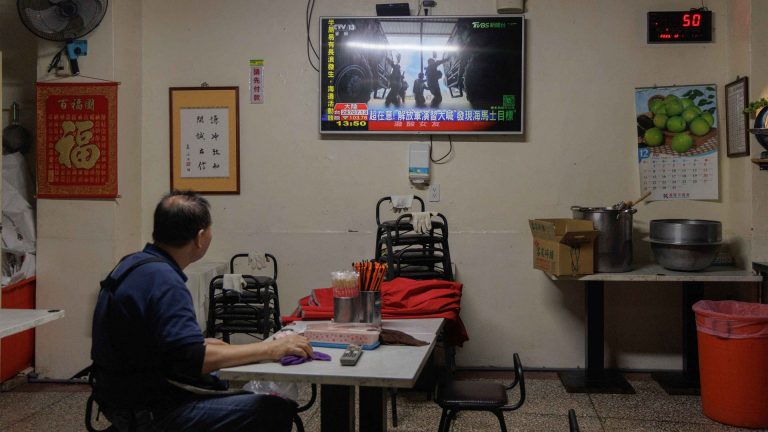
Will China see Venezuela and think Taiwan?
For all the talk of China as a neutral actor, it is worth mentioning that McCosh had to change his VPN three times during our conversation to keep the phone call online. He also has to use a VPN to post his videos to Instagram, because China has its own, separate, heavily censored internet. When we began talking about Tibet and Tiananmen Square, he apologised for having to lower his voice, wary of the fact that he speaking from a hotel.
It’s a tale as old as teenage rebellion. Your parents tell you not to date the bad boys, so naturally you find yourself going out with a tattooed, motorcycle-riding ne’er-do-well. Is Gen Z doing something similar with China? Are we chaining ourselves to the great beast simply because we have grown tired of the beast we know?
Or has China succeeded in making history look like something that happened to somebody else? The cultural revolution, Tiananmen, the great leap forward: these immense human catastrophes are strangely absent from this Gen Z view of modern China.
The history of the Soviet Union was never edited in this way – likewise Germany. Perhaps a Eurocentric approach to teaching our teens history has inadvertently produced a generation exceptionally well-versed in the crimes of the west and comparatively incurious about the crimes of its rivals. I can say from experience that Gen Z, having been taught to question western power, has become extremely good at questioning western power. It is not good at questioning anyone else’s.
China’s relationship with Africa, for example – taking oil, copper, cobalt and other resources, while leaving impoverished countries totally dependent on them – is one of the great blind spots of woke political culture, particularly among people who have become accustomed to seeing international politics solely through the lens of western colonialism. And for a generation so concerned with genocide, the detention of around one million Uyghur Muslims in western China seems to have slipped under their radar.
“There is actually a long tradition, going back to the 17th century, of westerners using China as a foil for their own disappointment with life at home,” said George Magnus, an associate at the China Centre at Oxford University. “Adam Smith and Voltaire, for example, both wrote admiringly about China, and in the 18th century, some of the ruling classes in Britain and France saw it as a model society they could learn from.
“Today, I think Gen Z looks at China’s high-speed rail, the images of huge, modern cities like Shanghai and Shenzhen, and thinks, ‘things seem to work better there’. They’ve also grown up with TikTok, Temu and Shein.
“But I think a lot of this is absolutely naive and misinformed. The question is: what are these views actually based on? Often it seems to be particular individuals talking about what a wonderful place China is, some of whom may have received Chinese state funding. People can also be wowed simply by visiting China or knowing a little bit about it, which is understandable and has happened for centuries.”
I asked McCosh whether he had ever received any funding or assistance from the Chinese state in making his online content about China. He replied by text: “Never. No. Please be explicit about that.”
“People know a lot about what they don’t like at home,” said Magnus, “but you can’t really get a clean view of China without knowing something about control and repression which are basically the, you know, leitmotifs of the Chinese Communist Party nowadays.”
Suggested Reading
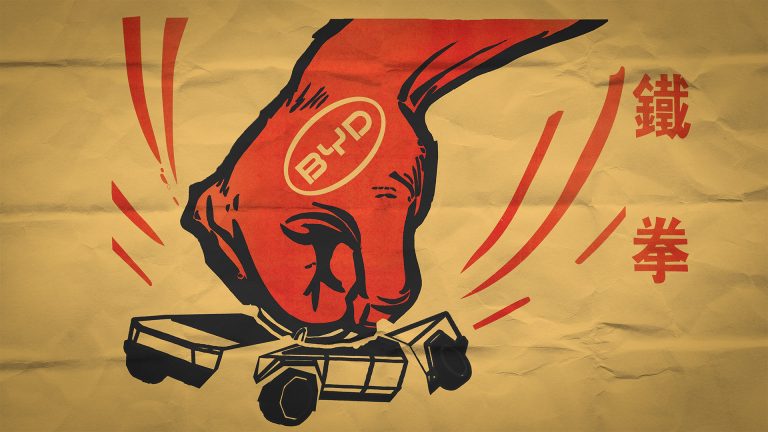

Sorry America, but China makes better electric cars than you
Magnus also pointed out that China has a long-standing practice of trying to win people over “through flattery, money and influence, whether through social media or universities… TikTok is an obvious example: if the only way you inform yourself is through TikTok videos, you’re likely to get a very subtle, rather than obviously propagandistic, and potentially very slanted view of China.”
“I don’t think the attraction to China necessarily means that people actually want a communist society organised in the Chinese way. I think it’s much more a reflection of frustration with things at home. But I think it’s naive because people don’t really understand much about China, the ambitions of the CCP, or what the implications for us in the west would be if we capitulated or lost our will to stand up against what is, offensively, tyranny.”
Are we overreacting? Maybe, in an age of cheaper flights and easier travel, destinations in the Far East are far more accessible than they were to previous generations.
And, to be fair, it is practically a rite of passage for each generation of white Westerners to go east on a gap year, discover spirituality and return home with a mass-produced Buddha souvenir and the conviction that they, and only they, have seen through the west. China now offers a particularly seductive version of that fantasy: not merely an ancient and exotic civilisation, but one that appears to have arrived in the future before us – so long as you ignore their medieval approach to human rights.
And this is happening at the same moment that Britain is itself becoming more open to China. In January 2026, the UK and China agreed a new partnership that confirmed visa-free travel for British visitors staying under 30 days.
Francis Fukuyama famously declared the “end of history” in the 1990s, and ever since then, the 2est has spent a long time congratulating itself. Gen Z has arrived at this party rather late, looked around the room, and now seems to have discovered that the party may be over.
Even if Chinamaxxing is simply about declining confidence in the west, this should still worry us. Even if it’s all in jest and in the form of a TikTok hashtag, it still means something deeply alarming – that we no longer have a monopoly on the idea of human progress. If China has managed to instill that idea in the minds of young people in the west, then it has won a deep, long-term victory in the battle for the future.