

Watching Sir Olly Robbins – the man who was until April 6 permanent secretary to the Foreign Office – giving evidence on Tuesday morning, one thing became immediately obvious: for reasons that are evident, No 10 has put a lot of work into making a very simple, very damning story look extremely complicated.
The simple and damning story is this: Keir Starmer appointed Peter Mandelson – a man fired twice from the government for dishonesty, who had maintained a close friendship with paedophile Jeffrey Epstein even after he had been jailed for it, and who had spent the last 15 years as a paid lobbyist for dubious global interests – as the UK’s ambassador to the USA.
Starmer did this over objections from his civil servants, who wanted a more conventional appointee, and despite warnings that the decision could blow up in his face. There are suggestions that Mandelson felt he was owed a big job for services rendered to Starmer and his chief aide Morgan McSweeney throughout their time in opposition.
Months later, that decision did indeed blow up in the prime minister’s face, as US Department of Justice disclosures on Jeffrey Epstein put Mandelson’s conduct back into the headlines, prompting a criminal investigation into his actions when he was business secretary under Gordon Brown in 2009. Mandelson was sacked, and No 10 was left to look for an explanation as to why all of this wasn’t obviously Keir Starmer’s fault.
The simple, damning story wouldn’t work for No 10: Keir Starmer could hardly admit that he’d known about Mandelson’s friendship with Epstein but decided it didn’t matter, having just sacked him for that reason.
Suggested Reading
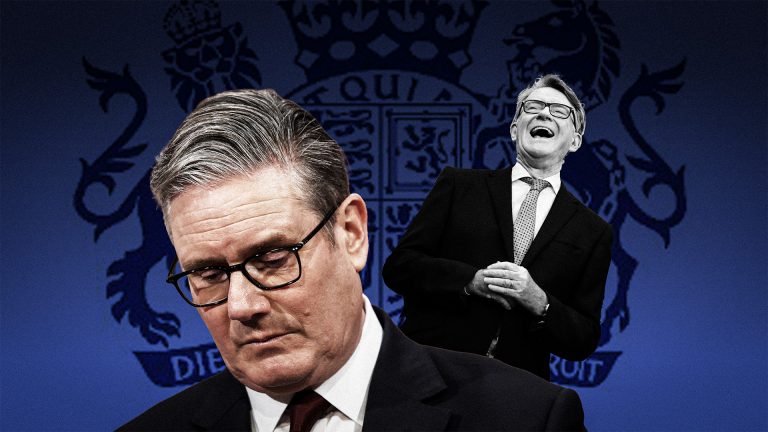

The next sacking is going to be Starmer
They needed a different story and came up with one that centred on vetting: Mandelson, they said, had been extensively vetted, had promised there was nothing embarrassing not already in the public domain, and in doing so had lied to secure his appointment. Starmer declared himself “furious” to be lied to, but used it to paint himself as a victim of deception. McSweeney took responsibility for the appointment and quit No 10 over the farrago.
This narrative was already struggling to hold itself together. Opposition parties teamed up with Labour backbench MPs to force the government to disclose all of the papers relating to Mandelson’s hiring. The very first batch of those showed the PM was specifically made aware of Mandelson’s close ties to Epstein, and raised many more questions. The story had not gone away.
But it was a Guardian report last week that truly unravelled it: the report claimed that Mandelson had, in fact, failed the vetting process but that this had been overruled by unnamed higher-ups. The Guardian did not name who made that decision, but by the following morning, Robbins had been sacked from the Foreign Office.
That means the new No 10 narrative is that Starmer wanted to follow all proper process when appointing Mandelson as ambassador, but was let down because Olly Robbins – in his first week in the job – decided entirely on his own authority to overrule an official vetting process and not tell anyone. Once again, Starmer declared himself “furious” to have been let down again.
On Tuesday morning, Robbins did what Starmer was so good at in opposition. He took apart convoluted excuses for terrible practice in a calm, lawyerly way.
Robbins sat down and tried to calmly and methodically cut through the tangle created by No 10 to get to the heart of the matter – during which he was often hindered, rather than helped, by the Foreign Affairs Committee’s ponderous questions and interruptions.
Robbins noted he “wasn’t walking into a vacuum” when he started his first week as permanent secretary and spoke of an “atmosphere of fear and pressure” over the appointment emanating from No 10 and the Cabinet Office.
Oddly, though, these details are not the ones that are damaging for Starmer and his team – if they could imply Robbins made a bad decision under pressure from the already-fired McSweeney, they can stick with their current scapegoats. It’s hardly a good story for No 10, but it just about works for them.
Robbins, though, had more substantive criticisms. Crucially, he stated multiple times that the Cabinet Office had not wanted to put Mandelson through vetting at all, but had been forced to because his predecessor at the Foreign Office had insisted upon it, even if it was somewhat bizarre to do it after the appointment was announced.
Mandelson’s appointment had been publicly announced, presented to the King, and agreed with the US administration all before vetting had been passed, Robbins announced. The offer of the post to Mandelson was not conditional on passing vetting, he added.
This is crucial: No 10’s story relies upon the idea that vetting was a crucial part of Keir Starmer’s decision-making. Robbins’ timeline suggests that to be totally untrue.
As to the decision on the vetting itself, Robbins tells quite a different story to that suggested by the Guardian. Robbins notes that the Foreign Office makes the final decision on vetting, subject to recommendation by UK Security Vetting.
Robbins says he never saw their form or paperwork – and that he has never seen such paperwork – but was told Mandelson’s vetting was “borderline” and they were “leaning” towards rejection. He added that the Foreign Office team were confident they could mitigate the concerns and support the clearance.
From Robbins’ perspective, then, he didn’t overrule or reverse any decision. His argument is that yes, the Foreign Office was under huge political pressure from No 10 to clear Mandelson, but that it didn’t succumb to that pressure. Robbins did not think he had overruled anything, and so didn’t have anything to disclose to the prime minister.
As Robbins tells it, he has been fired for scrupulously following the process he was required to follow, because it became politically inconvenient for the prime minister. His quiet fury on that front was hard to miss.
No 10 needs this to be a complicated story about vetting, documentation, process and probity because the simple facts of the case are that the prime minister made a bad decision, seemingly for political reasons.
The problem with that is that process stories go on forever: by firing Olly Robbins on what seem like extremely shaky grounds, No 10 is surely open to a lawsuit. The Foreign Affairs Committee is investigating the Mandelson appointment. The disclosures of documents around Mandelson’s appointment are still due to be released over the coming months. This story cannot and will not go away.
By sacking Robbins to survive another day, Starmer threw out several of the few remaining cards he had left. He is no longer “Mr Process”, having seemed to sack one of the country’s top civil servants for doing his job. He can no longer boast of good relations with the civil service to run the government competently. His reputation as a stodgy but decent man of integrity is even further in tatters.
Olly Robbins is not a shouty man. He did not thump the table, or launch into a tirade against Starmer for how he has been treated. Instead, he quietly and methodically demolished Number 10’s latest convoluted explanation of the indefensible.
Starmer will have to find a new version of events soon enough. It will be anything but simple.
 Most popular

I went looking for Trump’s America – this is what I found

18 things that will absolutely, definitely happen if Trump gets whopped in the midterms


Emily Maitlis’s diary: Why are we turning away the people who could make Britain richer?


‘The deep state stole my mini-budget’: An exclusive extract from Liz Truss’s new book