
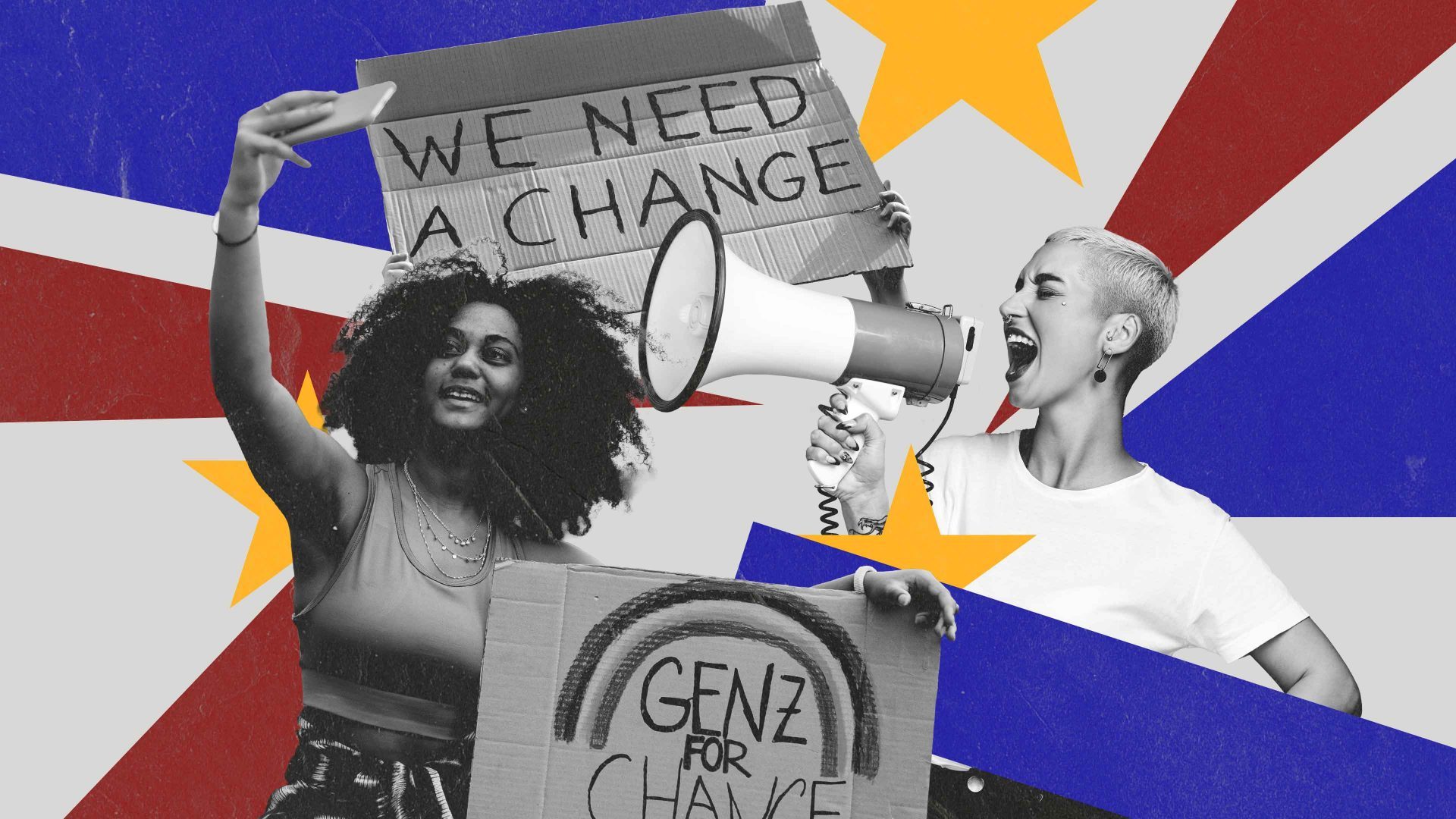
According to the Office for National Statistics, around six million Brits were born between 1999 and 2005. These six million people have spent their entire transition from childhood to adulthood, and may well spend the rest of their lives living through the consequences of a decision they were not old enough to influence. This is the Brexit generation.
I was 12 when Britain voted to leave the EU. An unusually news-obsessed child, I was already paying close attention to politics, but even if I hadn’t been, it would have been impossible to ignore. Brexit felt like the biggest political event any of us had ever witnessed, shortly to be overhauled by Donald Trump’s election a few months later.
In the decade since Leave won, Brexit has caused irreparable damage to this country: our economy, our politics, our world standing. We now know that Brexit has reduced UK GDP by 6-8%, investment by 12-18%, employment by 3-4%, and productivity by 3-4%. In isolation, those numbers are already scary, and have had a devastating impact on people, organisations and businesses of all demographics up and down the country
Now couple them with two big problems facing young people: the NEET crisis, which has left around a million young adults out of employment, education or training; and the housing crisis, which has made home ownership feel like a literal pipe dream for most people under 35. Both have knock-on effects, for example on the birth rate, because if fewer younger people can get jobs and a home, of course they won’t be starting a family.
Brexit did not create all of these problems, and Covid certainly accelerated many of them. But when an economy is smaller, less productive, and attracts far less investment, it is always young people who will feel the consequences most sharply.
However, it’s not so much about concrete figures for the Brexit generation. When speaking with my friends, what many of us feel is a loss of opportunity, like our horizons have shrunk. Our parents could live and work anywhere across the continent with relatively little hassle, but the world available to us has become smaller.
The most tangible way that Brexit has affected my generation is the UK’s withdrawal from the Erasmus scheme, which allowed young British people to study in the EU, and vice versa.
Suggested Reading


The death of the after-school job
Take the case of Anna: “I was 12 during the Brexit referendum, and it’s the first political event I can remember. A way that I’ve been affected by it was when I was applying for my visa [to live and study in Spain]. Even though we had left Erasmus, my university was partnered with a university in Spain so I still got to study abroad, but I had to pay a lot of money to do my visa application and it was a lot of hassle.
“With all the bureaucracy around it, I really felt like an outsider – I had even had to get a criminal record check – but other students who had EU passports didn’t have to do this. In total I probably ended up spending £1.5k. And, I also didn’t have access to the Erasmus loan, when wealthier European students did. One girl I know actually dropped out of her year abroad because of the financial strain.”
Brexit’s impact is not measured only in economic statistics. It is also measured in the accumulation of small barriers that tell a generation they are less welcome than the one that came before them. But for all the rhetoric about taking back control, we remain, in spirit, European. Most British children grow up visiting France, Spain or Italy long before they ever set foot in North America or Asia.
We still crowd around Eurovision every spring. We still learn our history through a largely European lens. And for many Gen Z Britons, the cultural pull of Paris, Barcelona, Prague or Amsterdam feels far stronger than that of, say, America’s increasingly polarised politics.
Which brings me to political radicalisation. A spate of polls from the last couple of years will tell you that Gen Z are a politically extreme generation.
A Channel 4 study titled “Gen Z: Trends, Truth and Trust” found that 52% of Gen Z thought the UK would be better off with a “strong leader” who bypasses Parliament, and 47% believed society requires radical change through revolution. Combine that with the popularity among Gen Zers of Andrew Tate and other far right influencers, and it’s clear to see the political climate of the Brexit generation is a more hostile and extremist one. But who could possibly be surprised by that?
The 2016 referendum fundamentally altered the way politics is conducted: exaggeration, misinformation, and outright lies became normalised and accepted features of political campaigning. Immigration went from being one topic among many to the defining lens through which much of British politics is now viewed.
The result of all this has been a political culture in which increasingly extreme views receive mainstream attention, views that would once have been confined to the fringes but are now regularly aired by our political figures and commentators.
At the same time, the instability unleashed by the Brexit era has left Britain speedrunning through six prime ministers in ten years, with a seventh entirely conceivable before long. For a generation raised amid constant political turmoil, it is hardly shocking that many have become disillusioned and drawn towards more radical alternatives.
As Salem puts it: “I was 14 when Brexit happened and that, together with Trump’s election, made me feel that the world was opening up for the first time in my life. Brexit revealed but also created divisions in our nation. However, it is important that we confront discord so that we can unite in future in healthier conditions. There is no sense in letting underground tensions fester as they did in that period of stifling consensus preceding Brexit.”
And what of the future? After all, we will live with the consequences of Brexit longer than anyone who voted for it. We have grown up watching Britain struggle to define its place in the world outside the European Union. The promise was that Brexit would restore national confidence and influence, but instead my generation has come of age during a decade characterised by economic stagnation, political instability and an increasing sense of doom.
Suggested Reading

How the world recoiled in horror from Brexit
Oliver told me: “I was 17 at the time of the Brexit vote. I was at college studying politics at the time so was very engaged, but also quite impressionable and I stupidly believed a leave vote would shock the EU into giving the UK special concessions (i.e. on immigration controls) and eventually we would stay.
“I was stupid, idealistic, and wrong. I now deeply regret persuading people around me who could vote to vote Leave. It’s now my view that Brexit was an act of national suicide, and has made us poorer and more isolated. If I had the opportunity to campaign for rejoining the EU in any future referendum then I absolutely will.”
And there lies the greatest irony of the Brexit generation, or perhaps the proof of the whole thing’s failure: we, overwhelmingly, want to rejoin the EU. YouGov polling found that 86% of 18-25-year-olds would vote to rejoin in a hypothetical referendum. We have felt like the guinea pigs of this failed political experiment.
If Andy Burnham, who looks likely to become the next Labour Party leader and therefore prime minister, wants to keep the government in power and do right by a generation already fatigued by so much, he should reconsider his stance on a second referendum. Not because young people are always right, but because we are the people who will live with the consequences.