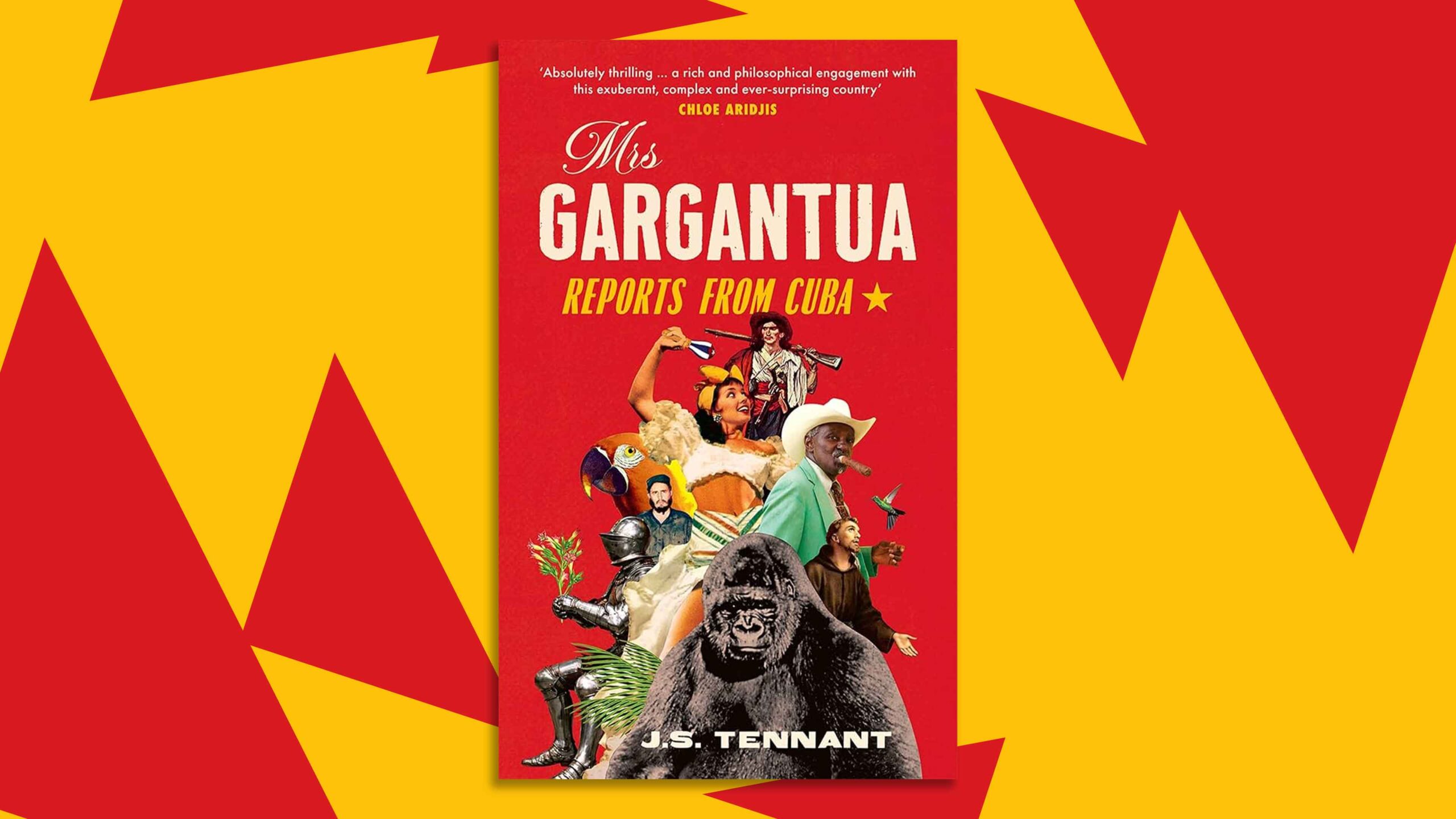
There is something surreal about colonialism, about its unimaginable violence and its unquenchable avaricious greed.
For Gabriel García Márquez, this surrealism, the criss-crossing of fiction and fact in colonial histories and the early accounts of conquistadores and even cartographers, are what created the literature of South and Central America. It is a mode of storytelling which blends the sublime with the ridiculous, the unimaginably horrific with the comic. The shock is that some of the most astonishing parts of the story are real, and some of the more plausible are false. Such is history.
JS Tennant’s book draws on his own long history with the region to weave a tale of mythical lands and incredible creatures, of romance and horror, capturing the mystery alongside the mundane. This ranges from Cuba’s “discovery” by Europeans through its bloody colonial exploitation at the hands of the Spanish and later, the English and the French.
Suggested Reading

The Irish women who refused to stay dead
It plots a history with a backdrop of slavery and tragedy but with a very real and captivating magic powered by serendipity and happenstance. Of a place alive with feelings of its own and a sense always of its own direction beyond that of those who have tried and failed to master it.
It was Rabelais who can be held accountable for the eponymous Gargantua, naming his huge monster after the mythical giant of Arthurian legend and ancient myth. The Mrs Gargantua of the title is a gorilla who comes to Cuba and – in a metaphor for her adopted homeland – is adopted and enslaved, becomes, by turns, a symbol of power, an obsession, a romantic symbol and a source of fascination, first for one damaged European seeking redemption and later for whole continents seeking reconnection to some ancient and lost part of themselves. Such is Cuba’s lot.
Gargantua represents just one of a cast of real-life characters who pepper the narrative, offering insight into the ways in which Cuba has been seen, portrayed and understood throughout its history. Reminiscent of John Gimlette’s exploration of Paraguay, At the Tomb of the Inflatable Pig, it conjures the implausible history of a place which is flush with exotic splendour but whose story has been directed by a very odd cast of characters indeed.
The Americas have always attracted chancers, charlatans, eccentrics and war criminals from Europe, and both this and Gimlette’s book weave these characters into the narrative: at one point Cuba falls under the stewardship of Napoleon (whose death mask is still on display in Havana). Churchill enters briefly during a teenage sightseeing mission to “see some real war” after leaving Sandhurst; Cortés plots his Mexican invasion from here; there are British industrialists, errant heiresses and failed authoritarians to boot.
Despite this unlikely rabble, Tennant’s rich prose is a guide and a captor, drawing on Spanish and South American literary tradition to bring to life a spellbinding story. It ranges from the sublime – “To the edge of the green, pendulous flame tree seed-pods rustle in the breeze; there are mangos, mameyes, guavas and a giant, contorted jagüey, or banyan, tree” to the ridiculous: “The dancer, Isadora Duncan, visiting in 1916 remembered Rosalía welcoming “guests with a monkey on her shoulder and holding a gorilla by the hand.”
Suggested Reading

The first rule of holiday reading: Stop buying books at Gate 12
Tennant also heads high into the mountains to capture a pre-colonial Cuba which still exists among indigenous peoples, and the shape of his story is as much influenced from the periphery, from the forests, creatures and peoples of Cuba’s interior as it is from the colonial centres of Madrid, Paris or London. Each of these merely leaves a fingerprint on a history which Cuba takes up and shapes in her own fashion. As if the spirit of the place never had any intention of bowing to any coloniser.
What he captures is this spirit, which exists alongside the obsessions of the colonialists and their various descendants, and which defines itself not in defiance of them, but in conversation with something much older, something ineffable.
Mrs Gargantua: Reports from Cuba by JS Tennant is published by William Collins