It’s not clear what killed Oliver Cromwell in 1658, but it might have been malaria. Sepsis following a urinary infection is another possibility, but in any event he seems to have suffered malarial fevers. How did he catch that disease in Great Britain?
Well, malaria, commonly called the ague, was endemic in the British fens and marshlands until the early 20th century. It’s not clear why it vanished. The incidence of malaria is affected by climate – warmer years seem to have brought a slight increase in related deaths – but changes in cattle population (on which mosquitoes carrying the microbial malaria pathogen feed) and draining of wetlands also probably played a role.
Could climate change bring mosquitoes and malaria back to the UK and other parts of northern Europe? That concern was raised by the British government’s chief medical officer in 2002, who forecast that if temperature rises persist, “indigenous malaria could become re-established” by 2050.
A team of researchers from the London School of Hygiene and Tropical Medicine challenged that idea, saying that, given the extent of wetland loss (90% of East Anglian fens since 1934) and the availability of effective treatments for malaria, global warming alone won’t increase malarial infection and transmission enough to make it endemic in the foreseeable future.
Relief all round? Maybe – but this doesn’t mean Britons will escape being plagued by more mosquitoes. And malaria isn’t the only disease they spread: the insects can also play host to the dengue and Zika viruses.
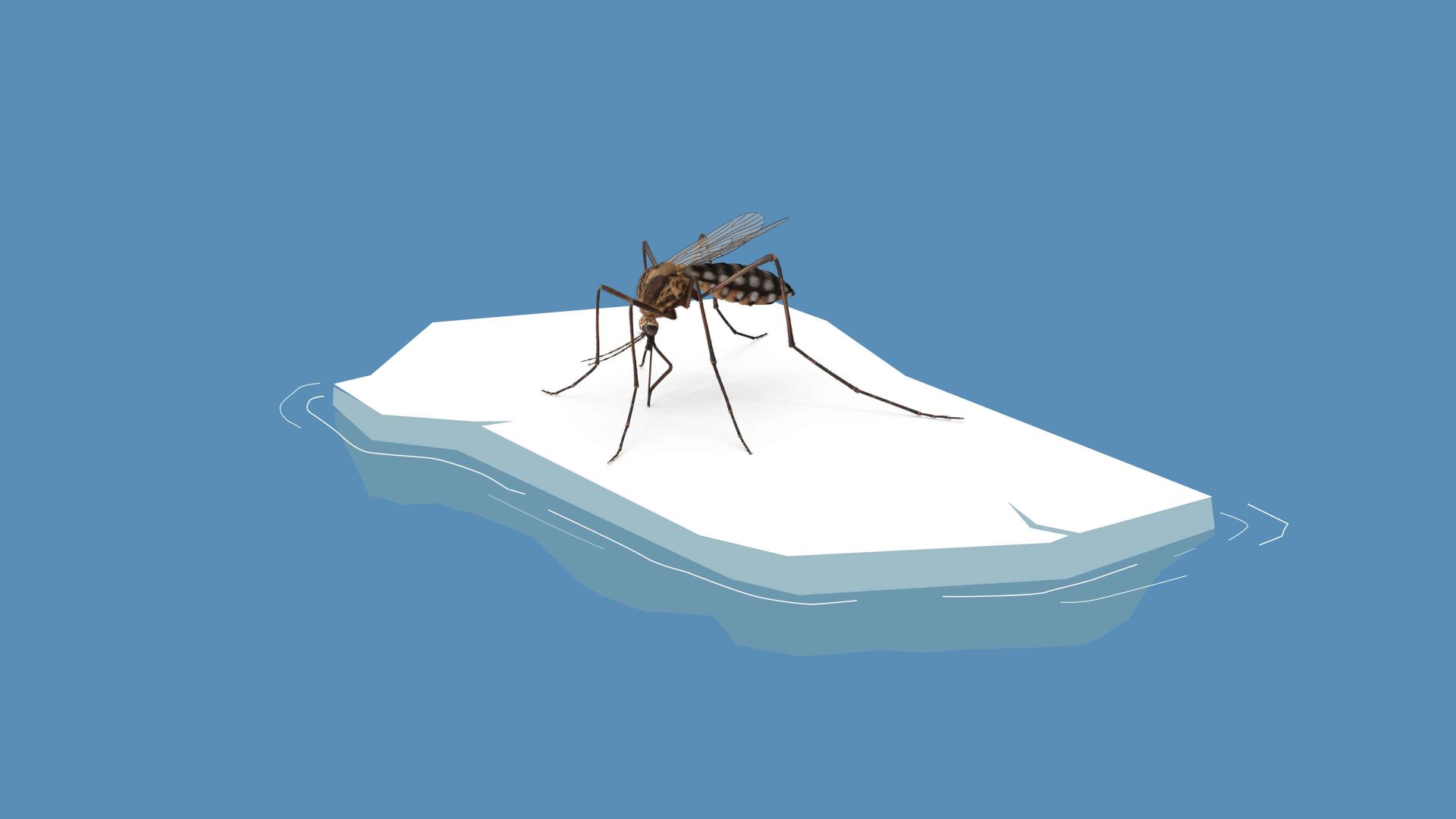
Of course, Britain is no stranger to mosquitoes already, and the pesky insects have long been observed even within the Arctic Circle, where a species specifically adapted to that colder climate preys on caribou and other wildlife, not to mention humans.
A study in 2015 suggested that Arctic mosquitoes develop faster from the juvenile stage in a warmer climate, making them less vulnerable to predators and potentially increasing the mosquito population – an outcome that could reduce caribou numbers by driving them to migrate to habitats to which they are less well adapted. What’s more, the warming of northern Europe makes it more inviting to disease-bearing mosquito species from more southerly regions: the Egyptian and Asian tiger mosquitoes have both been found in southern England.
What has really raised the alarm, however, is the identification last year of mosquitoes in Iceland, previously one of the few places in the world free of them. Although the invading insects weather the cold Icelandic winters in basements and barns, they surely wouldn’t have managed to get a foothold in the land of ice and fire if it hadn’t experienced rapid warming in recent times. Last year the country recorded its highest ever May temperature: 26.6C.
It’s a reflection of the way the Arctic generally has one of the most anomalous warming trends on the planet, being four times greater than the global average. Climate scientists say that if the current warming trends continue, Iceland’s glaciers will be gone in 100-200 years.
Suggested Reading


Do we really have a right to science?
The sea ice cap over the North Pole has been declining steadily for decades, and one of the biggest fears for the region is that the Greenland ice sheets, which are thinning and shedding ice at an alarming rate, could become unstable and collapse catastrophically, leading to a massive rise in sea levels.
In the face of such threats, the expansion of mosquitoes in the Arctic might seem the least of our worries. But it’s one of the warning signs for the allegorical frog in the pan of boiling water. Shifts in habitat driven by global warming not only alert us to the significant ongoing changes to the planetary environment, but also have profound ecological impacts in themselves.
Ecosystems are intricate webs of interdependence. If one species ups and leaves because global warming has opened up new pastures, others may be bereft of their food source, as is happening for example with some Arctic birds whose chicks feed on insects when they hatch. And the arrival of new species can disrupt a previously stable equilibrium, as when plant-eating insects brought north by warming denude Arctic vegetation on which large animals like reindeer depend.
As a recent editorial in Science says, “shared biological risks create compelling reasons for cooperation across borders” – but there is currently a lack of “an operational pan-Arctic system for keeping track of important bellwethers of the ecosystem”. Needless to say, the threat of an invasion of Greenland does nothing to foster that.