Has your reality ever been called into question? The term for this psychological torture comes from Patrick Hamilton’s play, Gas Light (1938). Set in Victorian London, it tells the story of strange happenings at Bella Manningham’s home, where lights keep dimming for no apparent reason and footsteps seem to be coming from the unoccupied apartment above.
It turns out that Bella’s husband, Jack, has orchestrated these events. His aim is to drive his wife insane, so he can eventually steal from her.
On the surface, gaslighting is about lies and deceit. Fundamentally, though, the abuser’s end goal is absolute control and domination. The victim eventually starts to distrust their own judgment and sanity. “If you talk to a person who has been in a relationship with a psychopath, odds are that, at some point, you will find a mention of gaslighting,” Emma Kavanagh writes in The Psychopath Effect: The Mind-altering Power of the Psychopaths Among Us.
The book cites numerous examples of individuals who have engaged in gaslighting.
Some have taken pleasure in extreme acts of violence, cruelty and sadism too.
On that list is Diane Downs. In May 1983, aged 27, with a 22-calibre pistol, she murdered her daughter and attempted to kill her two other children, in Springfield, Oregon.
We also read about Rudolf Höss. During the Holocaust, the Nazi SS officer was commander of Auschwitz. At the Nuremberg trials in 1946, Höss spoke about his victims without remorse or guilt. “We knew the people were dead because their screaming stopped,” Höss explained matter-of-factly.
Those with high levels of psychopathic traits do not find kindness rewarding. Instead, their social reward system is triggered by being cruel to other people and they “have been shown to experience lower empathy when viewing another person in pain,” writes Kavanagh, a Welsh crime author, whose novels include To Catch a Killer (2019) and The Devil You Know (2020).
Most of us tend to associate the word psychopath with famous sadists, rapists and serial killers, like Myra Hindley, Ian Brady, Ted Bundy, Josef Fritzl, Harold Shipman and Fred and Rosemary West. These figures fascinate us because they allow us to glimpse pure evil from a safe distance.
Statistically, though, the average person is unlikely to have any dealings with a clinical psychopath. But what about psychopaths who never make the news headlines?

These individuals are unlikely to break the law or go to prison. In fact, chances are they will lead successful lives and have lasting relationships.
Kavanagh draws a line here between clinical psychopaths and those who are “a little bit psychopathic”. To make that distinction a little clearer, she provides us with a brief history of psychopathy.
The first major work to be published on the topic was Hervey M Cleckley’s, The Mask of Sanity (1941). The book’s title referred to the socially acceptable coating psychopaths seem to wear, which disguises the darkness that lies beneath. “Psychopaths are sometimes simulating parental devotion to their children,” the American psychiatrist observed.
In 1975, Canadian forensic psychologist Robert Hare organised a conference on psychopathy in a ski resort near Saint Moritz, Switzerland. Some 85 psychiatrists attended and contributed their opinions and observations on the minutiae of psychopaths’ behaviour.
Their conclusions eventually became the basis for Hare’s now infamous 20-point Psychopathy Checklist-Revised (PCL-R). This includes traits like glibness/superficial charm, lack of realistic long-term goals, impulsivity, and failure to accept responsibility for one’s own actions.
Hare is an important figure in The Psychopath Test (2011) by British author and journalist, Jon Ronson. In one memorable passage from the book, Hare shows Ronson a large-scale, close-up photograph of a man who’d been shot in the face at very close range.
The writer responds by speaking about feelings of weakness and debilitation. Hare describes Ronson’s reaction as the central nervous system shooting signals of distress. “Psychopaths are incapable of experiencing this feeling,” Hare tells him.
If we use Hare’s PCL-R test, it has been assessed that psychopathy within the general population stands at roughly 1.2 per cent. Kavanagh finds fault with some aspects of Hare’s model, however. “It treats psychopathy as a discrete category, as something you either have or don’t have,” she writes.
Suggested Reading
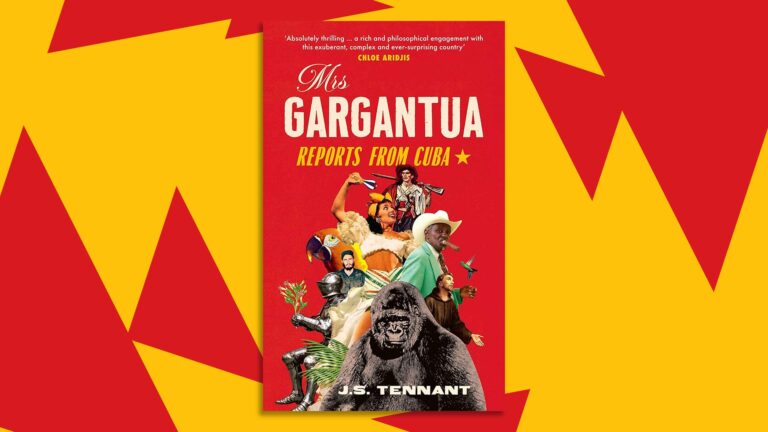
Ghosts, gorillas and the surreal history of Cuba
Other researchers have started to assess psychopathy from a different perspective. The Triarchic Model of Psychopathy (TriPM), for instance, published in 2009, does not consider psychopathy as a unitary disorder. Instead, the psychological framework argues that psychopathy encompasses three distinct phenotypic constructs:
1. Boldness: those who are socially dominant and high in emotional resiliency.
2. Meanness: these individuals tend to be hostile, angry, irritable and show reactive aggression and predatory behaviour.
3. Disinhibition: this includes things like lack of impulse control, and an inability to regulate emotions. When we use the TriPM model to study psychopathy, the figure among the general population rises to an astounding 4.5 per cent.
If we take these figures at face value, right now, there are approximately 3,150,000 psychopaths in Britain.
For decades, black-and white thinking has plagued our understanding of psychopathy. Kavanagh encourages us to start thinking about this topic with shades of grey, or what she calls the iceberg beneath the waterline.
“Psychopathy is something that is within our communities, within our workplaces and our social circles, often within our very own families,” she contends. “So, if you are looking at your partner and they fit all the criteria we have discussed so far but are having a whale of a time at the pub quiz, it may be worth remembering that psychopaths are not so very different from us after all.”
Robert Hare spoke of “subclinical psychopaths”, or “the psychopaths among us.”
The latter phrase featured in his bestseller, Without Conscience: The Disturbing World of the Psychopaths Among Us (1993), which Kavanagh has pilfered for the title of her book too.
Are these subclinicals all that different from the rest of us? In a 2001 interview with Canadian magazine Saturday Night, Hare claimed all the evidence seemed to say that, yes, they are. But his answer was nuanced.
Psychopathy, he also subtly suggested, could just be a natural variation of human behaviour that deviates from social norms. “True saints, completely selfless individuals, are rare and unnatural too,” said Hare. The difference is that we don’t talk about them having a disease.
The Psychopath Effect by Dr Emma Kavanagh is published by Seven Dials
 Most popular

Will AI kill capitalism? I built a new kind of simulation and found the answer
Westminster’s outrage machine has embarrassed itself over chicken nuggets

Inside the cult of Anthropic: The ‘good guys’ who could kill us all
GB News made him a star.. now he’s calling for the mass deportation of Jews