
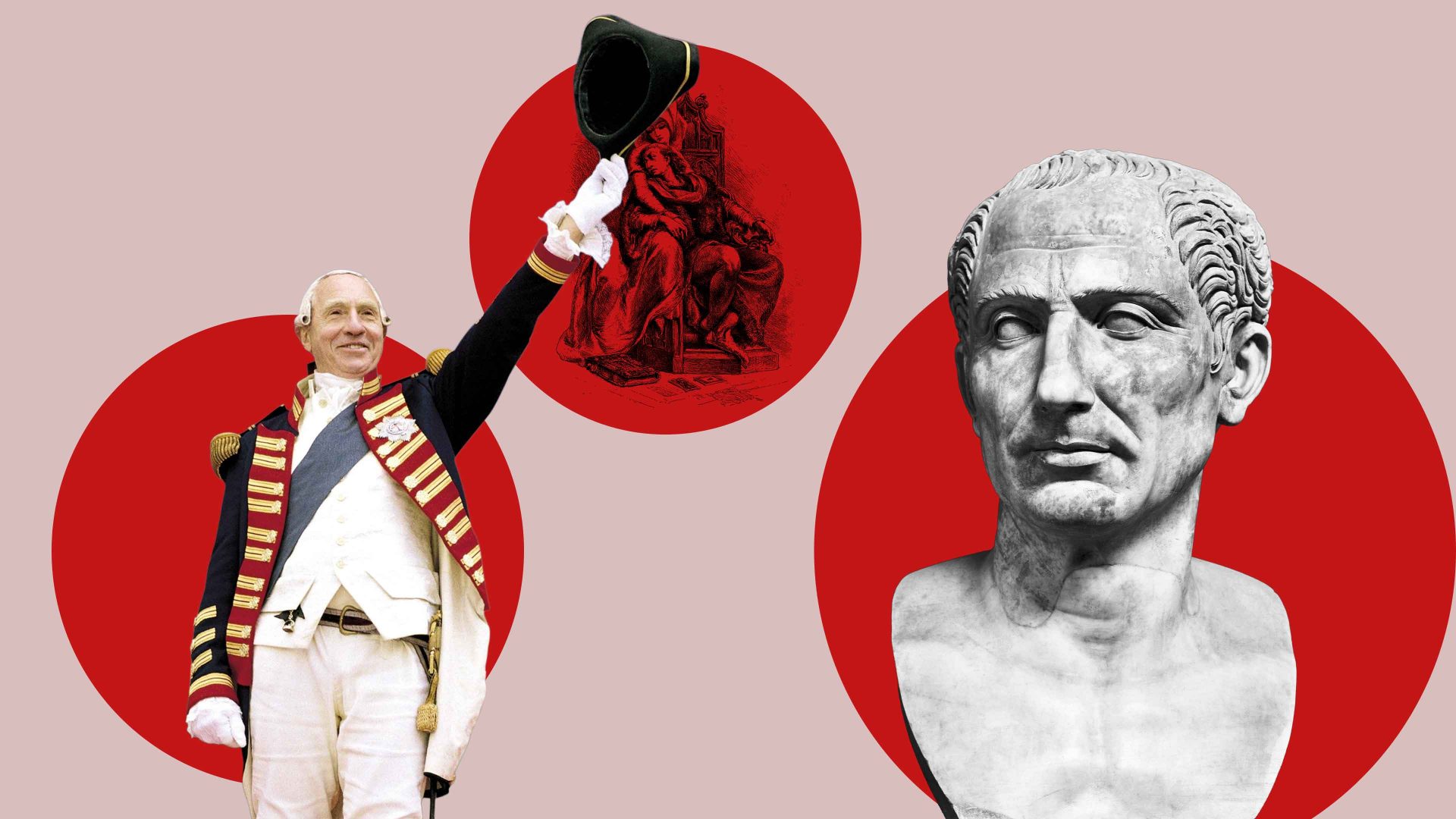
1. For all the high-minded talk about how monarchs were chosen by God to rule over somewhere or another, there is actually a long and proud history of political elites removing monarchs they don’t like. A 2011 paper in the British Journal of Criminology found that, of the 1,513 monarchs who ruled 45 European monarchies between 600 and 1800, fully 15% – over one in seven of them – were murdered. That, corresponding to one murder for every 100 ruler-years, is more than twice the rate at which they died gloriously in battle.
2. Still, they could think themselves lucky: as many as half of Roman Emperors were murdered by the people they purported to rule. Barely a third died of natural causes.
3. Because there are few things more destabilising than having an ex-king loitering around the place, even for those deposed peacefully, things rarely end so. Edward II was persuaded – sure – to abdicate in favour of his son in January 1327. He died in Berkeley Castle in mysterious circumstances before the year was out. A similar fate befell his great-grandson Richard II in Pontefract Castle within a few months of his own deposition in 1399, albeit with slightly fewer scurrilous homophobic rumours about the exact manner of his death by hot poker attached.
4. The latter deposition led to a rather more literal mad king: the grandson of Richard’s replacement, Henry IV. Henry VI was prone to severe mental breakdowns, most notably a year-long catatonic state that followed a series of military defeats in France and led to the wars of the roses. Removing him took two goes: the first time the Yorkists left him alive and in 1470, nine years after he was first deposed, the Lancastrians brought him back for another go (the “readeption”). The Yorkists learned their lesson and killed him.
5. Henry’s mental health problems – sometimes diagnosed as a form of schizophrenia – were likely inherited from his other grandfather. Charles VI of France, also known as (bad sign, this) “Charles the Mad” suffered from melancholy, paranoia, violent rages, and delusions, most notably a belief that his body was made of glass and at risk of shattering. Despite this resulting in a long civil war, and military humiliation by England, he actually died of natural causes.
6. Another literal mad king was George III, whose periods of mania and depression were once credited to the genetic disease porphyria but are now more widely imagined to be bipolar disorder with just a hint of arsenic poisoning from his own medicines. By 1811 though, the monarchy was weaker and regicide viewed as upsettingly French, even though we started it – so his eldest son ruled as prince regent instead.
7. The US, of course, is not a medieval monarchy, and has – so far – been able to withstand the continuing existence of former presidents. In 1965, in the wake of the assassination of John F Kennedy, Congress passed the 25th amendment to the constitution, which formalises the process by which the vice-president becomes president, including in situations in which the president declares himself incapable. It was ratified in 1967, and has been used temporarily several times while presidents underwent medical procedures.
8. More relevantly in 2026, it also includes section 4, under which the vice-president and a “majority of either the principal officers of the executive departments or of such other body as Congress may by law provide” may declare a president unfit and remove him. This section has, to date, never been used.
Suggested Reading

Nerd’s Eye View: Nine things you need to know about Burns Night
15%
Chances of a European monarch dying by murder between 600 and 1800
68%
Chances of a Roman Emperor dying in a violent manner
8
Number of US presidents who died in office (four natural causes, four assassinations)
0
Number of occasions on which Section 4 of the 25th amendment has been invoked