1. Valentine’s Day – more properly St Valentine’s Day, or, for the foodies among us, the Feast of Saint Valentine – was not, in fact, the invention of greeting-card companies who wanted to sell us stuff while making us feel bad. February 14 has been associated with romance since the Middle Ages, and people were exchanging Valentine’s messages by the 16th century. Indeed, Ophelia describes herself as Hamlet’s Valentine in the Shakespeare play of his name, for all the good it did her.
2. The greeting card companies did, however, popularise the practice, and were flogging sentimental bits of tat by the start of the 19th century. In Britain, the practice went into overdrive after 1840, thanks to the introduction of postage stamps and envelopes, all of which added an element of privacy previously missing from proceedings.
3. The identity of the eponymous St Valentine is a bit uncertain. Possible candidates include a priest who died in Rome; the bishop of Interamna (today’s Terni in Umbria), who may or may not have been the same person; and an unrelated Christian martyr who died in Africa. Between none and three of these people were martyred one February 14 in the third century.
4. What they were martyred for is, frankly, not much clearer. One account has Emperor Claudius II (not Derek Jacobi) taking the odd decision to ban marriage on the grounds that single men make better soldiers. The priest and/or bishop continued to perform marriage ceremonies in secret – dead romantic, that – got arrested, imprisoned and executed.
5. An only slightly less baffling version has him persecuted not just for his Christianity, but for having befriended/fallen in love with/cured the blindness of (accounts, you’ll be stunned to learn, differ) the daughter of his jailer, and having sent her a letter signed “From your Valentine”. Only, presumably, in Latin.
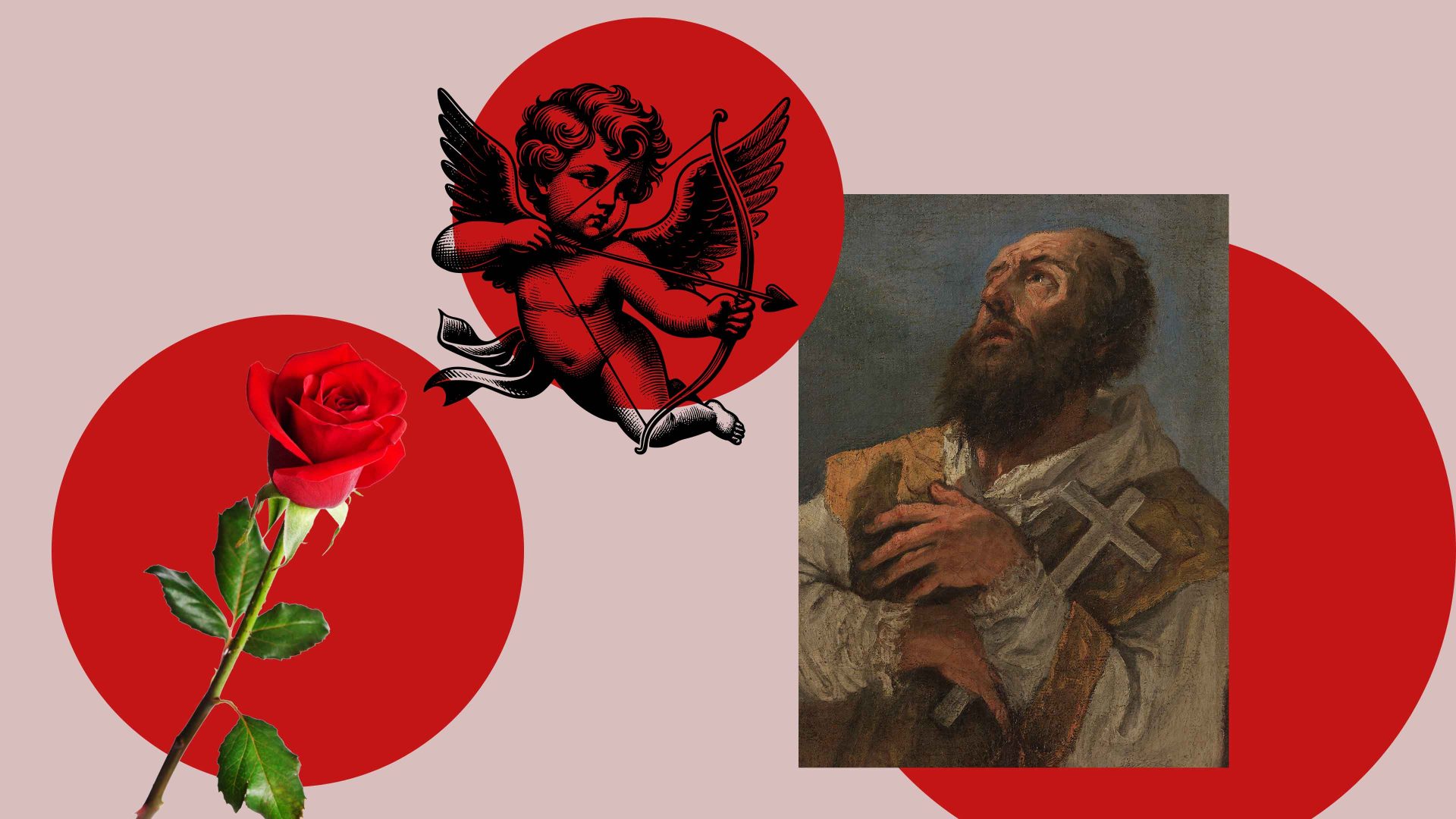
6. All this Roman stuff explains the presence of Cupid, son of Venus, who – despite being a child – is somehow also god of erotic love.
7. It may not be a coincidence that the Roman fertility festival of Lupercalia – half naked men in goatskins whipping women who hoped to conceive – took place on February 15 and marked the start of spring. Some sources reckon a pope deliberately replaced the filthy pagan ritual with something cleaner when banning it in 494 – but that seems unlikely since no one started celebrating it for nearly a thousand years.
8. A less Roman explanation for why people came to associate mid-February with romance is that it’s roughly the start of birds’ mating season.
9. The Welsh have their own equivalent of Valentine’s: St Dwynwen’s Day, celebrated each January 25. Dwynwen was a hermit who is thought to have spent much of the fifth century pining for her lost love on an island off Anglesey.
10. Valentine’s Day is hugely popular in the Philippines, too: February 14 is the most popular date for weddings and renewals of vows, and mass weddings are not uncommon.
11. Call me unromantic, but I continue to feel that a festival that makes one part of the population feel lonely and another part feel pressured is bad, and should, like smartphones, be banned from schools.
Suggested Reading


Nerd’s Eye View: 16 things you need to know about sharks
£1.5bn
Approximate amount the UK spent on Valentine’s Day in 2025, although this, like all the other widely varying aspects, is suspect.
£52
Average spend, although men (£63) spend more than women (£40)
25 million
Number of cards sent
4 million
Number of bouquets of flowers bought
5%
Proportion of annual rose sales represented by one single day