Majed Abu Maraheel
June 5, 1963 – June 11, 2024
Immaculately dressed in a grey suit and beaming with pride, Majed Abu Maraheel waves the Palestinian flag. Doing so in his own land would at the time have seen him facing arrest and imprisonment, but here was Maraheel before the entire world at the opening ceremony for the 1996 Atlanta Olympics.
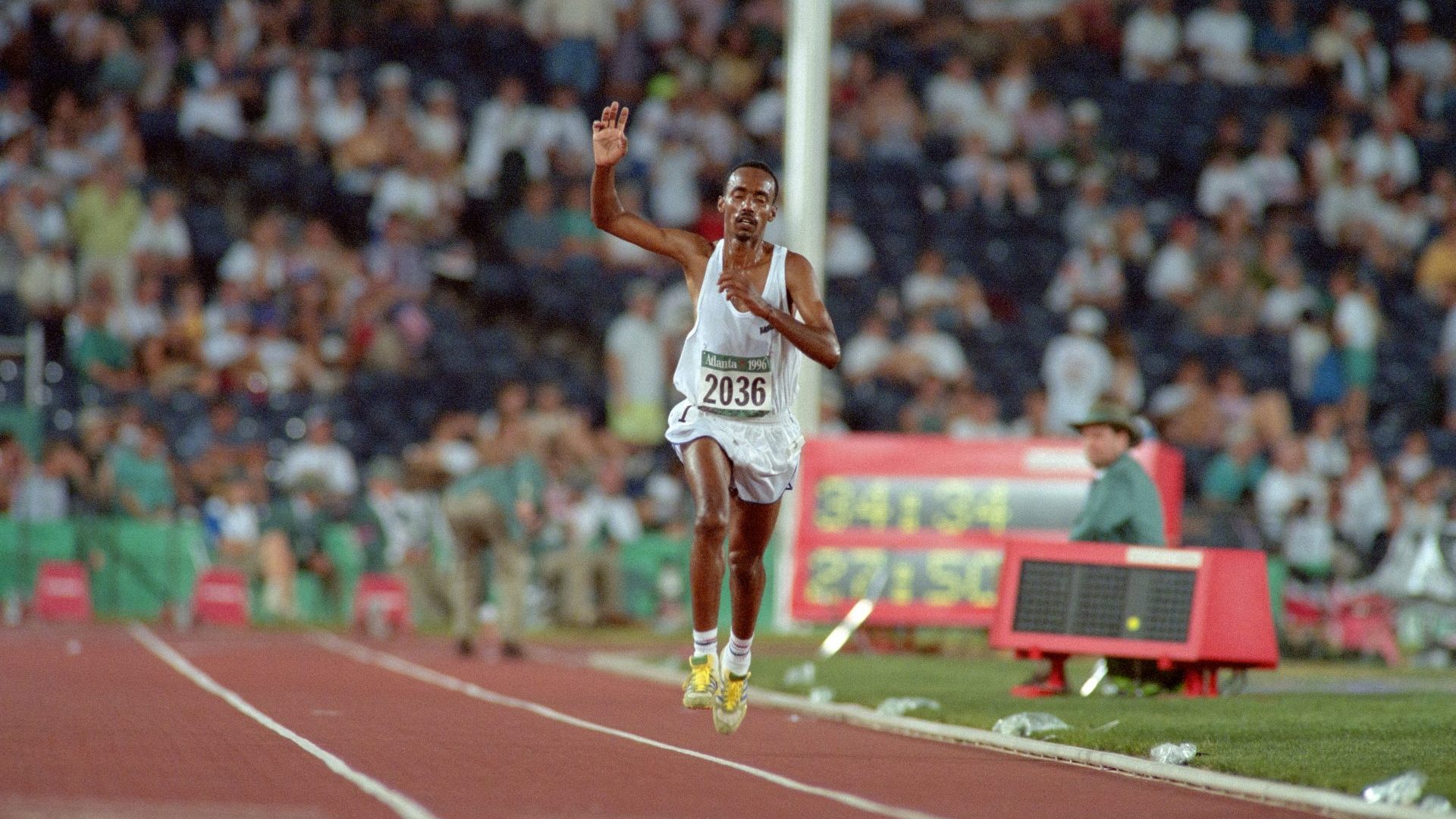
To get ready for his 10,000-metre event, he has been running along the Gaza coastline, taking daily runs from his home to the Erez crossing and into Israel. He has no coach, no facilities, no sponsorship.
He is a man running on determination and pride, the first-ever representative of Palestine at the Olympics. “We want to establish in these Games the name of Palestine so that no one can eradicate the name of Palestine from history,” he says.
Back home, a population under siege watches him parade around the Centennial Olympic Stadium. Inside it, a Palestinian delegation is watching, and one will later describe the moment that Maraheel entered the arena, waving the flag: “The tears come, the happiness tears, and the sadness that we were excluded from the world in the past. But here we are, part of the world.”
Maraheel was born into a refugee family in Nuseirat on the Gaza Strip, going to school at the Al-Zaytoun School for Refugees. His parents had been landowning maize farmers in the Negev until they were displaced at the beginning of what Palestinians call the nakba (“catastrophe”) of 1948, when 750,000 people were forcibly displaced from their homes to make way for the new state of Israel.
Suggested Reading
The secrets of the Iron Sheik, the man America loved to hate
Maraheel’s family eventually settled in Gaza and he took up his dad’s passion for football, playing as a defender for Al-Zaytoun Sports Club and eventually captaining a side, also containing two of his brothers, that qualified for the 1985 Gaza Strip Premier League.
In 1994, Nabil Mabrouk of the Palestinian Athletics Federation saw him play, noted his stamina and suggested he think about long-distance running. The following year, Majed competed in his first international competition – the 1995 Arab Championships, where he finished 10th in the 10,000 metres. In June the same year he won an 8km race during an Olympic Day sports festival in Gaza, an event attended by Yasser Arafat, who personally presented him with a trophy and a kiss. Maraheel then entered the 1996 Paris marathon, but was unable to compete because of restrictions from the Israeli government.
Palestine’s representation in Atlanta was always going to be divisive, with memories still relatively fresh of Munich in 1972, when eight Palestinian terrorists from the Black September Organisation broke into the Olympic Village, killing 11 members of the Israeli team before being shot themselves. Maraheel met members of the victims’ families at Atlanta, and Ankie Spitzer, widow of the Israeli fencing coach Andre Spitzer, supported his inclusion, saying: “We raised our children for 24 years without hate in their hearts because we feel that that is not in the Olympic spirit.”
He knew he had no chance of a medal, and in his heat he finished in 21st place, tears filling his eyes on the final lap. His time was 42nd of the 48 runners in the event. But, he said, “with my presence, we have already won the gold medal. This will help heal wounds and erase some bitter images of the past.” Here was one occasion in sport when taking part could genuinely be counted as a victory.
Shortly after Atlanta, Maraheel moved to Germany, graduating from Leipzig University with a degree in Arabic language. He retired from competitive running and dedicated his life to training Palestinian athletes, working with Nader el-Masri, another long-distance runner born in Gaza, who competed in the 5,000 metres at the 2008 Beijing Olympics. He helped 400-metre runner Bahaa Al Farra prepare for the London 2012 Games, and also worked part-time as both a labourer and security guard.
Days after his 61st birthday, Maraheel died of kidney failure at the Nuseirat refugee camp in Gaza. It is a fate that many in Gaza face, with power outages and medical shortages a regular part of life. An attempt to take him for medical treatment to Egypt had to be aborted after the closure of the Rafah border crossing.
Suggested Reading
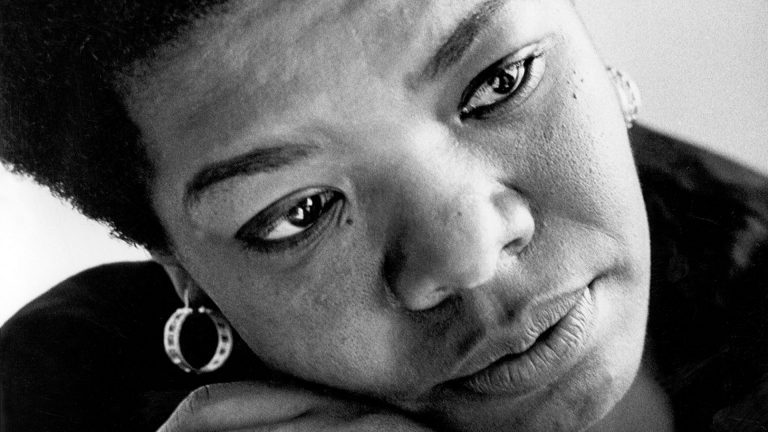
The childhood trauma that left Maya Angelou mute for five years
Despite his achievement back in 1996, his death went almost entirely unreported in the western media. At home it was a different matter. The Palestine Athletics Federation said: “The great is gone. The Olympic runner is gone. He left after carrying the flag and running crying on the Atlanta track. He left, the one who stopped the world in 1996.”
Since those memorable days in Atlanta, another 31 Palestinian athletes have competed at the Olympic Games, all of them inspired by his appearance – drenched in sweat in his white vest, white shorts, the 1996 Games logo across his chest. “He was a Palestinian icon, and he will remain as such,” his brother told Palestinian television after his funeral.
While the Olympics can sometimes be a place in which privilege and economic and political might are rewarded, Majed Abu Maraheel brought something else to people across the globe: hope.