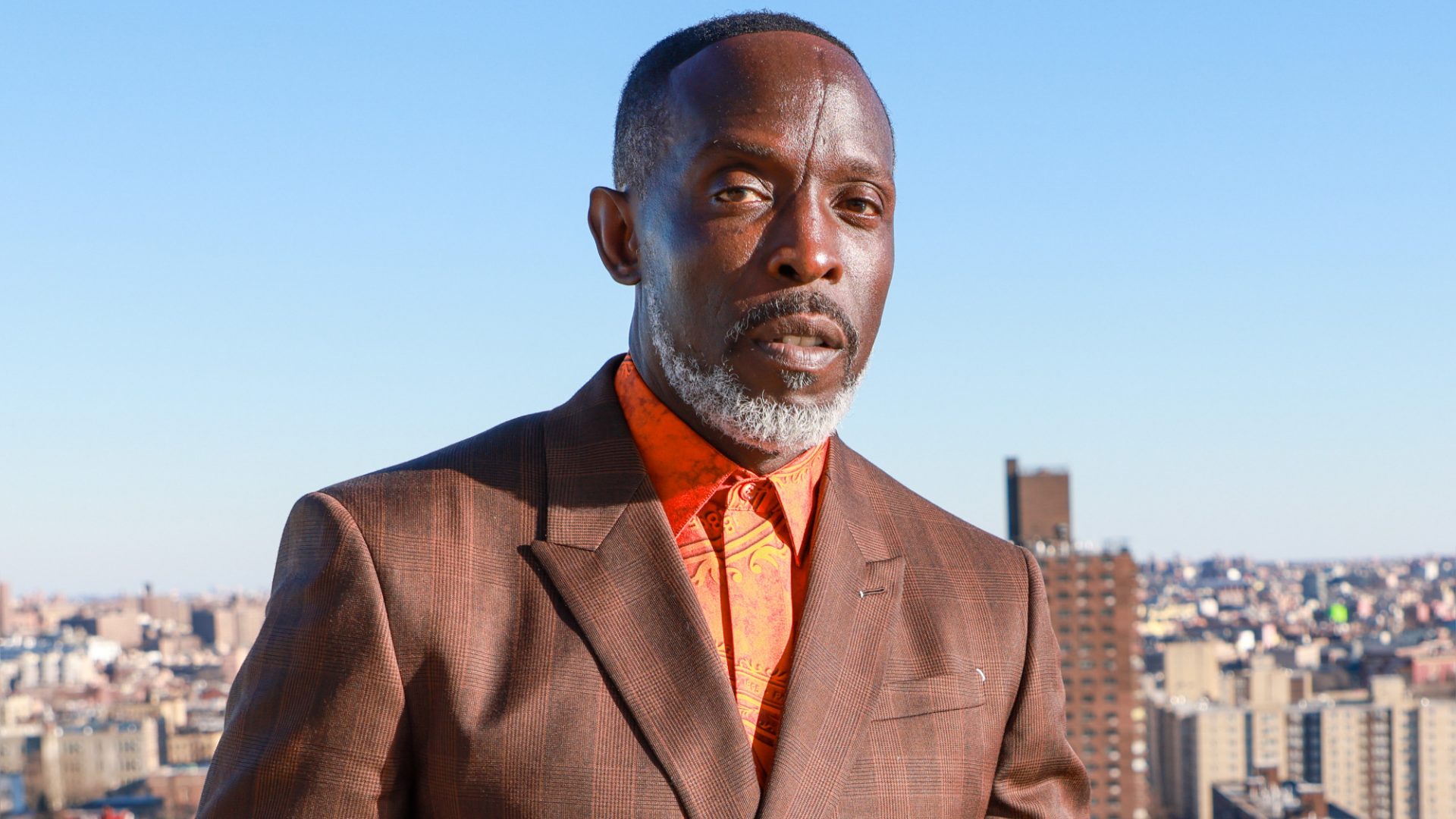
November 22, 1966 – September 6, 2021
“I don’t think we should ask anyone. I think we should just do it.” Michael K Williams is certain this is the way to shoot the next scene. Co-star Michael Kevin Darnall suggests they check with the director, but Williams instinctively knows what his character, Omar Little, would do. “We should go all in,” he says.
This is not a guns-blazing suicide mission or seeking revenge after a drug deal gone wrong, it is something even more explosive: the two men share a tender kiss. Nothing like this has been on screen before.
“Twenty years ago, men, especially men of colour, were not kissing on television,” Williams said, looking back on the unscripted kiss that Omar, the quietly malevolent stick-up man, shares with his boyfriend Brandon in The Wire. “I don’t mean it was rare; I mean it did not happen.”
A life plagued with self-doubt started in sixth grade for Williams, when a teacher told the whole class, “Some of you are not going to make it.” To the young Williams, this was confirmation of what he had always suspected: he had nothing to offer the world.
A brittle self-confidence remained with him throughout his life. By the age of 22, struggling to make it as a dancer and actor, he had been in rehab twice, both times unsuccessfully. A razor wielded in a bar fight on his 25th birthday gave him the vertical forehead scar that made him instantly recognisable.
In his mid-30s, with only a handful of roles as drug dealers and gang members to his name, Williams had almost given up on acting completely. “The phone was dead. Nothing happened.” For money, he helped out at the daycare centre his mother ran.
One evening after work, he caught a glimpse of a brief appearance he’d made in the third season of The Sopranos. This didn’t make sense: how could someone who had appeared in such an iconic show stop now? Determined, he decided to give acting one last shot, and sent out his showreel again.
This spark of rejuvenated ambition paid off with an audition for a new show called The Wire. He was told Omar would be a small role, a few episodes maximum. “I quickly decided that I didn’t want to play this guy like an alpha male,” Williams decided. “I wanted to play him with sensitivity and integrity. He wouldn’t scream or shout or get respect by intimidating people.”
Omar gave Williams a power he himself had never had; this shy man was now able to live vicariously through the character he was embodying. But being the breakout sensation on television’s new cult hit came at a cost.
Suggested Reading
Inside the wild film flop that unlocked Robin Williams
Williams was earning money he had never experienced before, allowing the drug addictions he had struggled with in his teens and 20s to return with a vengeance, when he had spent time “in scary places with scary people.” He remembered the exhaustion of loneliness, the emptiness of having nothing. “When I look back on it now, I don’t know how I didn’t end up in a body bag.”
Williams’s vulnerability was evident when interviewed. Compliments and accolades were met with a shy laugh, every answer he gave doused with self-deprecation, every success a “lucky break”. With an endearingly shy smile, he’d always talk of his immense gratitude to every person who had shown belief in him, from his days being a dancer alongside Missy Elliott, George Michael and Madonna through to multiple, belated Emmy nominations.
When Omar died in The Wire’s final season, Williams again felt lost. “If I wasn’t Omar any more, then who was I?” It became all too easy for him to believe that his career was a fluke, his immense talent valueless, his fame only a brief distraction from a life of poverty and addiction. He had experience of being rock bottom and felt he would never be far from returning there.
Despite his success in post-Wire shows like Boardwalk Empire and The Night Of, where again he could be both hugely personable and deeply threatening, the fear never really went away. Nor, completely, did the addictions that so belied the control he showed in his work, though he tried to quell them with social justice activism and community work for the underprivileged.
It was not just for his acting skills but his generosity that The Wire’s creator, David Simon, remembered him after his death, as “one of the most thoughtful, gracious and charitable souls I could ever call a friend.” He offered audiences a glimpse into a world he was able to make uniquely compelling, one that took its toll on the man who inhabited it, who in his final months could recognise that he was an addict, but one who still had much to give.
Among the violence and the criminality, Williams brought truth and fragility.
Most of all, he brought soul.