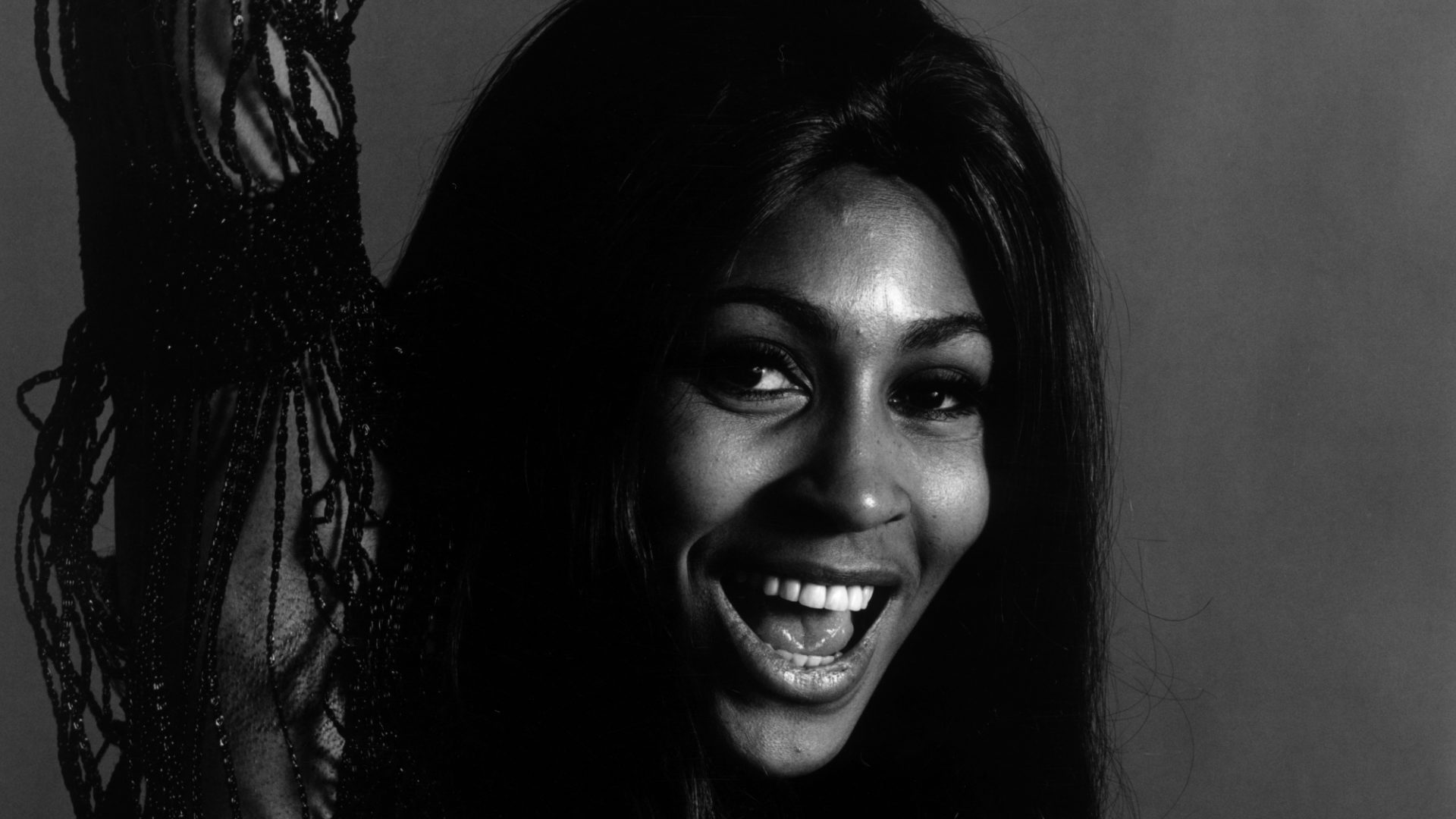
November 26, 1939 – May 24, 2023
“I don’t want them to come to a show in the future and say ‘Oh, she used to be good’,” Tina Turner says to her husband, Erwin Bach, calm and resolute as they head to the airport after the final show of her tour. She has made the decision: “That’s it. No more singing. I’m done.”
Legends do not normally choose Sheffield for their final bow, but that night’s ferocious, vibrant performance at the city’s arena felt like the perfect Tina Turner show. Best to leave a party before it’s over.
She had only made it to Sheffield at the age of 69 because of Beyoncé. When Tina made a rare public appearance at the 50th Grammy Awards in 2008, she was joined by the powerhouse singer of her generation, and the two matched each other beat for beat, thigh for thigh during a performance of Proud Mary.
It was one of the ceremony’s all-time great performances, an act of torch-passing and for Beyoncé, hero worship. Here she was alongside a pioneer who had sold 100m records and been the first Black artist on the front cover of Rolling Stone.
Turner had officially retired in 2000, but wherever she went in the weeks that followed the Grammys people stopped to ask when they could see her live again. “I called my manager and said ‘It’s time!’” she said, announcing a tour marking her 50th anniversary in music. It was time for one last round of costume changes and power ballads, one more chance to let loose the explosive roar within her and hear it matched by that of a sold-out crowd.
To do it, Tina had to leave the fresh air and rejuvenating silence of her haven, Küsnacht near Zurich. There, she had found somewhere to experience the peace she had so long lacked. “When I sit at Lake Zurich, in the house that I have, I am so serene. I have no problems,” she said.
For most of her life, being at peace never felt possible. As a little girl her parents separated and she was sent to live with her grandmother. She became a mother as a teenager, before a relationship and then marriage to Ike Turner that was scarred by his physical and emotional abuse.
Fifty years before that final tour, she had stepped on stage for the first time, in Missouri, aged 18 with Ike and his band, the Kings of Rhythm. She made her recording debut in 1958 as Little Ann and two years later, Ike and Tina Turner released the intense A Fool in Love.
They toured and recorded together to huge success, but as Ike became more and more controlling, she recognised her whole life was tied to his. Walking out would have meant losing everything, and he knew it.
Suggested Reading
Was Andy Kaufman the most creative comedian of all time?
With absolute determination to be free again, she finally found the strength to leave. Mounting debts and no clear idea of what a future career could look like left her performing to small audiences while trying to deal with the shadow of abuse.
What’s Love Got to Do with It was the song that allowed her audience to forget she was once one side of an ampersand, propelling her into a superstardom all of her own. It reached number one in 1984, selling 2m copies worldwide and earning her three Grammy awards, including Record of the Year for a song that had originally been offered to Cliff Richard.
With that song as part of her repertoire, alongside Ike-era hits like River Deep, Mountain High, she made the stage her own, building up a catalogue of Tina Turner anthems she would belt out at iconic performance after iconic performance.
In 1986, on her Private Dancer tour she met Erwin Bach, a German music executive. Friends at first, they became inseparable. Bach supported her through the severe illnesses she suffered throughout her life, with kidney problems that left her contemplating assisted suicide. The sadness and hardships were never far away. Her son Craig died in 2018, followed by her son Ronnie in 2022.
She practised Nichiren Buddhism after being introduced to it in 1973, but the inner peace she found through both Switzerland and Buddhism did not completely remove all of her rock’n’roll sensibilities. She was granted a personal audience with the Dalai Lama, but was late, leaving him waiting as she got stuck in Zurich traffic.
When Tina Turner died at the age of 83 at her home in Küsnacht, candles were lit at her beloved Lake Zurich, alongside flowers and handwritten tributes, thanking her not just for her music, but for her courage, her humour, her positivity. That evening, during the interval of the musical Tina at London’s Aldwych Theatre, the news of her death was announced to an audience in disbelief. After observing a minute’s silence they were told, as the star would undoubtedly have insisted, that the show would go on.
Turner never performed a full concert again after that night in Sheffield in May 2009. “We really had fun that night,” she remembered. “I’m sure anyone who was in the audience remembers Tina Turner’s last show.”