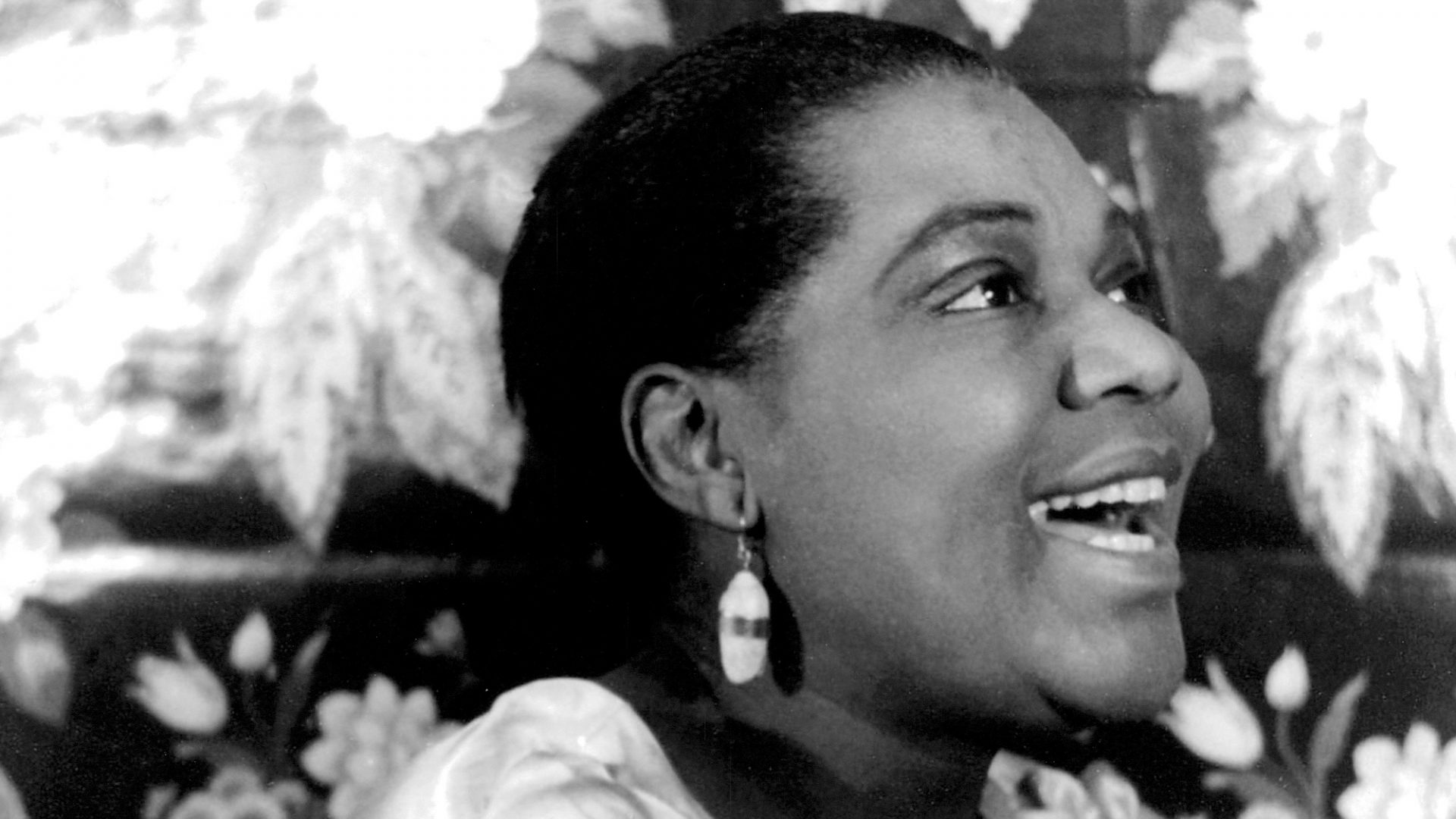
April 15, 1892 – September 26, 1937
As Bessie Smith performs to a packed crowd in Concord, North Carolina, in the summer of 1927, an army of men and boys is assembling outside, determined to kill her and her audience. Word gets to her on stage. She has to get out of here as fast as she can. This is Klan country.
Instead of fleeing, Smith heads outside, mid-show, lips pursed. Hand on hip, she stands with them, face to face, and shouts out: “You are not welcome here. Pick up your sheets and run!”
Bessie Smith’s sheer presence was so great that the Ku Klux Klan did as she told them, allowing her to walk calmly back on to the stage. And there is that voice again, the Empress of the Blues, picking up where she left off. No one stops a Bessie Smith show.
The idea of threats from white supremacists was something Smith always knew was possible. It was not just her fame and the money she was earning that made her a target; it was her determination to live as she wished, her refusal to behave as society expected Black women to behave.
Then, as now, a confident, talented Black woman doing things on her own terms made certain groups feel intimidated. The 1920s was the decade of abject racism across America, but it was also the decade of blues and jazz, and no one did it better than Bessie Smith.
She performed to packed crowds who would gather in huge marquees that were part of an expansive but necessary touring operation, including a specially fitted Pullman railroad car. As well as being the ultimate power move, owning her own train meant she could tour throughout the segregated South without having to adhere to laws that made life intolerable for Black people.
Smith had been refused service in too many hotels, bars and boarding houses, so this was her compromise, a private train that had capacity for 35 of her musicians, friends, family members (and others) to eat, sleep and drink, giving them the freedom to go where they pleased.
As the train pulled into each town, the entourage would disembark, erecting a huge canvas tent in a field, creating their own venue, their own culture, their rules, their terms. They sold their own tickets, making them completely in charge, and would watch as the empty field filled with hundreds of people, there to spend a night with Bessie Smith.
Her songs were full of sex and love, of heartbreak and confession, exactly what the blues are for. She sang of female suffering, of cheating husbands, of sexual abuse. There are songs of sadness and despair, but Bessie Smith did not contemplate defeat. Her songs burst with resilience and positivity. No other voice hit the notes and judged the mood like hers did.
Inspiration, as the genre demands, came from tragedy. Both her parents died before she was eight years old, leaving her and seven siblings orphaned. She was married twice, her first marriage ending with the death of her husband, the second resulting in a painful divorce, all of which Smith was open about in her songs.
Suggested Reading

Hiroshi Yamauchi, the unlikely genius behind Nintendo
When she found out her husband had been having an affair, she pulled out a gun and started shooting at him. In turn she had equally volatile affairs with several members of her entourage, beginning romantic relationships with both men and women while on the road.
Smith was a star. People wanted to be in her company, which often involved speakeasies and cabaret clubs late into the night. With Prohibition, alcohol was not readily available, but for someone with Smith’s charisma and prowess, there was always a way, although it often did not end well. Sidney Bechet spoke of the way alcohol changed her: “She had this trouble in her, this thing that wouldn’t let her rest sometimes, a meanness that came and took her over.”
The story of Bessie facing up to the white supremacists mid-show is a story of courage and defiance passed down to later generations. That night in North Carolina, a legend was born.
It was Janis Joplin, on realising the person who had inspired her to sing lay in an unmarked grave, who raised the funds for Bessie Smith’s headstone. That memorial reads: “The greatest blues singer in the world will never stop singing.”