
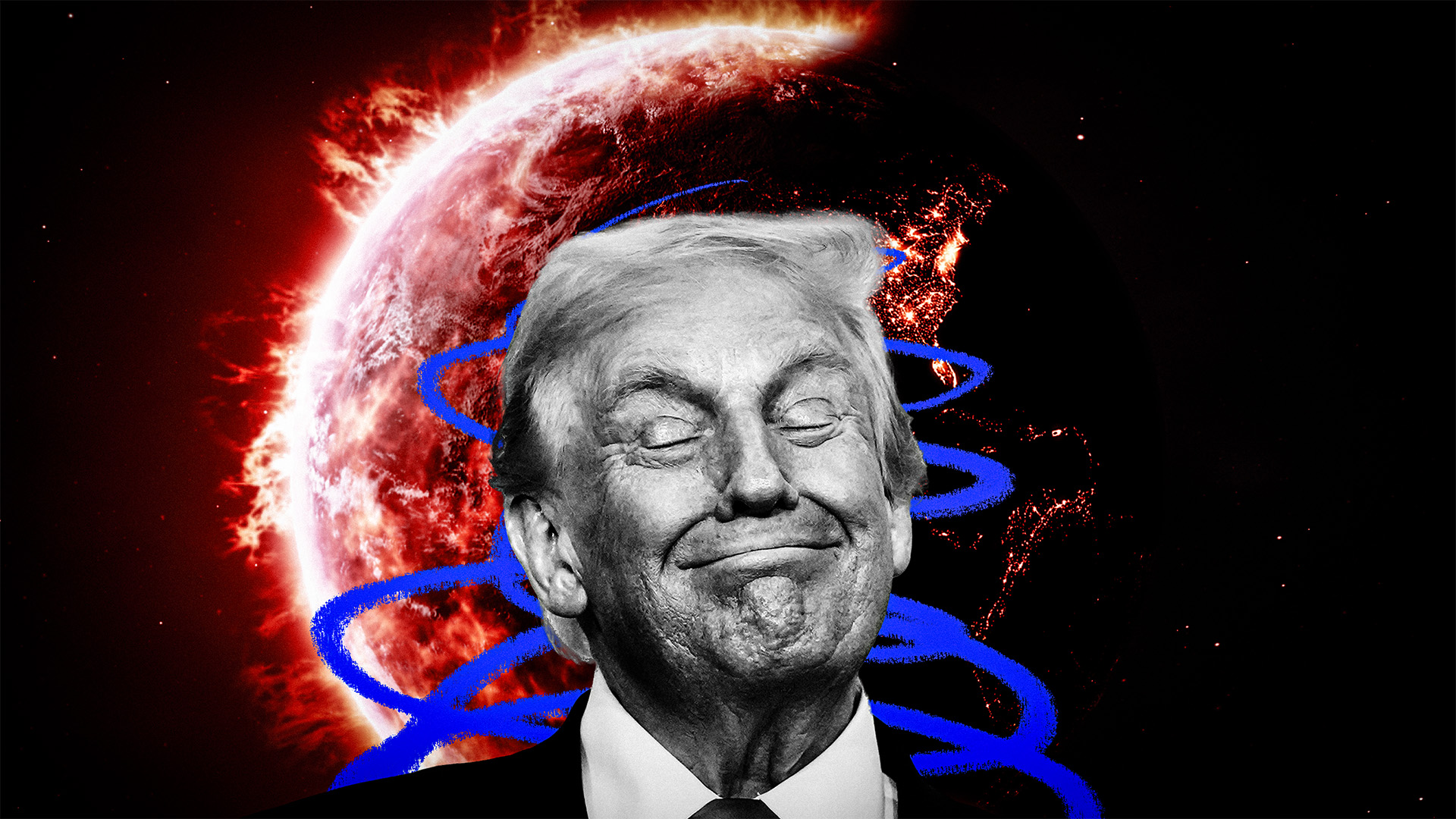
He was only ever going to do this. From the get-go, it was inevitable that it would lead to disaster. That’s the core problem with populism. It must end badly. The populist like Trump, or Orbàn, or Farage only comes to power by promising to make everything sweet again.
But that’s impossible. No politician or single political idea can solve everyone’s problems and make a country great again. Confronted by the reality that nothing they do is actually working, the populist makes more and more bad decisions that become increasingly damaging and idiotic until eventually, well – here we are.
Trump’s demented brand of populism has now curdled into a crisis that combines elements of both the Iraq War disaster and the 2008 financial crisis rolled into one. Which, in one sense, is very on brand for him. He was always going to do it bigger and nastier than any of his predecessors.
Not for him a small, discreet political disaster, like the running Mandelson employment tribunal cat-fight that’s currently engulfing Keir Starmer. Boring guy, boring scandal. No – for Trump, only a global hypershambles will do.
On the military part of the current disaster, well, you only have to change one letter. Just as a generation ago the US went into Iraq with no idea of the country it was invading, no grasp of the culture it was up against, and no sense of the opposition it would face, so Trump has wandered into a confrontation with Iran, and repeated those failures.
And it seems that, again like Iraq, he has no plan for how to get out of it. Part of that is because the US is incapable of negotiating at the necessary level of sophistication, on account of having fired all of its Iran experts. In their place, the negotiations – if we can call them that – have been led by Trump’s golf partner and his son-in-law.
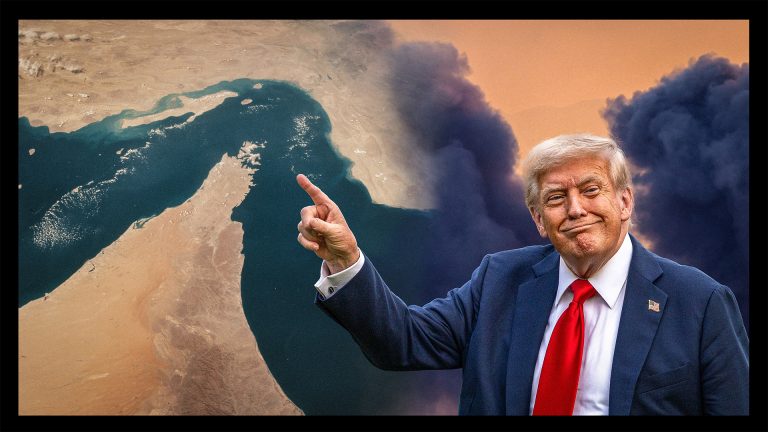
The position they have “negotiated” is one in which Iran has blocked the Strait of Hormuz, the most consequential waterway in the world, and Trump has responded by sort of blockading it again, saying that until the Iranians remove their blockade, he won’t unblock his blockade.
Perhaps aware this is not a good position, Trump has resorted to simply stating things that he would like to be true, for example that the Iranians are desperate to reach a deal with him. The Iranians have said that they are not.
Trump has also said that Teheran was on the verge of agreeing to hand over all of its “nuclear dust”, by which he might have meant their uranium hexafluoride. But whatever – again, the Iranians said that no, they were not. And all the while, the strait remains shut.
The consequence of this diplomatic constipation is a sharp cut in global fuel supply, weakening economic growth, and inflation, not just in the US but around the world. The International Monetary Fund has downgraded its growth forecasts for the UK from 1.3% to 0.8%, for Saudi (4.5%-3.1%) along with Canada, France, Germany, Japan – all down. It also predicts that inflation will rise to 4% by the end of the year. This is a recipe for widespread economic misery.
The fuel shortage also means that global air travel is beginning to shut down. Lufthansa has already cut 20,000 flights this summer. KLM-France and Delta have also reduced the number of flights. If this carries on, more companies will follow.
More importantly, entire nations risk grinding to a halt. There are already fuel shortages across Africa and all the way across south Asia. That includes not only fuel for vehicles, but for the supply of cooking gas.
In China, the signs are also looking pretty glum. House prices are down over 3%, unemployment is going up and retail sales are weakening.
As for the US, well, the economic cost of the war, for now, is most clearly expressed by the cost at the petrol pump, where prices are heading for $4 per US gallon. Inflation recently jumped from 2.4%-3.3% and existing home sales are beginning to fall.
Suggested Reading
The biggest losers of Trump’s Iran fiasco: Israel and the US
Something is definitely up in the US economy. Whether that something will be enough to bring about the expected AI crash and the ensuing financial firestorm – well, we must hope not. But what we can say is that Trump’s war in Iran is not helping. The circumstances he has created will already mean greater economic hardship for millions of people around the world.
But worst of all is the reduction of fertiliser exported from the Gulf. The World Trade Organisation has called this its “No 1 issue of concern”, and with good reason. India, Thailand, Australia, New Zealand, Sri Lanka, Uganda, Pakistan – even the US – are all reliant on fertiliser from the Gulf. Malawi imports over half of its fertiliser from the middle east.
Which means that Trump’s global disaster has the potential to combine the grinding effects of military and financial-economic catastrophe with a global food shortage.
In the face of these mounting horrors, it can be difficult to know what to make of it all. But there is a moral to this story, and it is this: that populism doesn’t work. In fact, populism has disaster baked into its foundations. Its outlandish promises inevitably come to nothing, and the populist needs a constant stream of confrontations and triumphs to maintain his image as “saviour of the people”.
So once you’ve beaten the Dems, and trashed the media, then you have to take on Greenland, then Venezuela, then Iran, perhaps then Cuba, and so on…
Anyone who votes for a populist – at the British local elections next month, at the US mid-terms in November, or whenever – will do so while ignoring the global catastrophe that Trump has created. And this catastrophe is only just beginning.