The result of a by-election can often feel like an anticlimax. After weeks of national media attention, there is a sudden reminder that in purely practical terms, very little was at stake: just one parliamentary seat out of 650. The government almost never changes, and neither does the parliamentary maths – but the narrative can.
In the case of the Holborn & St Pancras contest, caused by former Labour leader Keir Starmer’s decision to break one final political promise – to continue to serve as an MP for the rest of this parliamentary term – by resigning his seat, very little has changed for the government.
Labour’s Sagal Abdi-Wali – the leader of Camden council, who arrived in the UK aged seven as a refugee from Somalia – comfortably won the election, with a vote share only a few points lower than Starmer achieved in 2024, when Labour won a landslide election victory.
Yes, this seat is very much one of Labour’s 21st-century heartlands, and as such an absolute must-win for the party, but the party won it. By-elections are often tricky for incumbents, as they provide an opportunity for voters to register their dissatisfaction with the government, without the fear of letting an even worse option into Number 10.
The voters of Holborn & St Pancras have essentially confirmed the ‘Burnham bounce’ is real, and the prime minister will surely be looking forward to welcoming a new colleague onto the back benches. The government will be more than content with the narrative it gets out of this by-election.
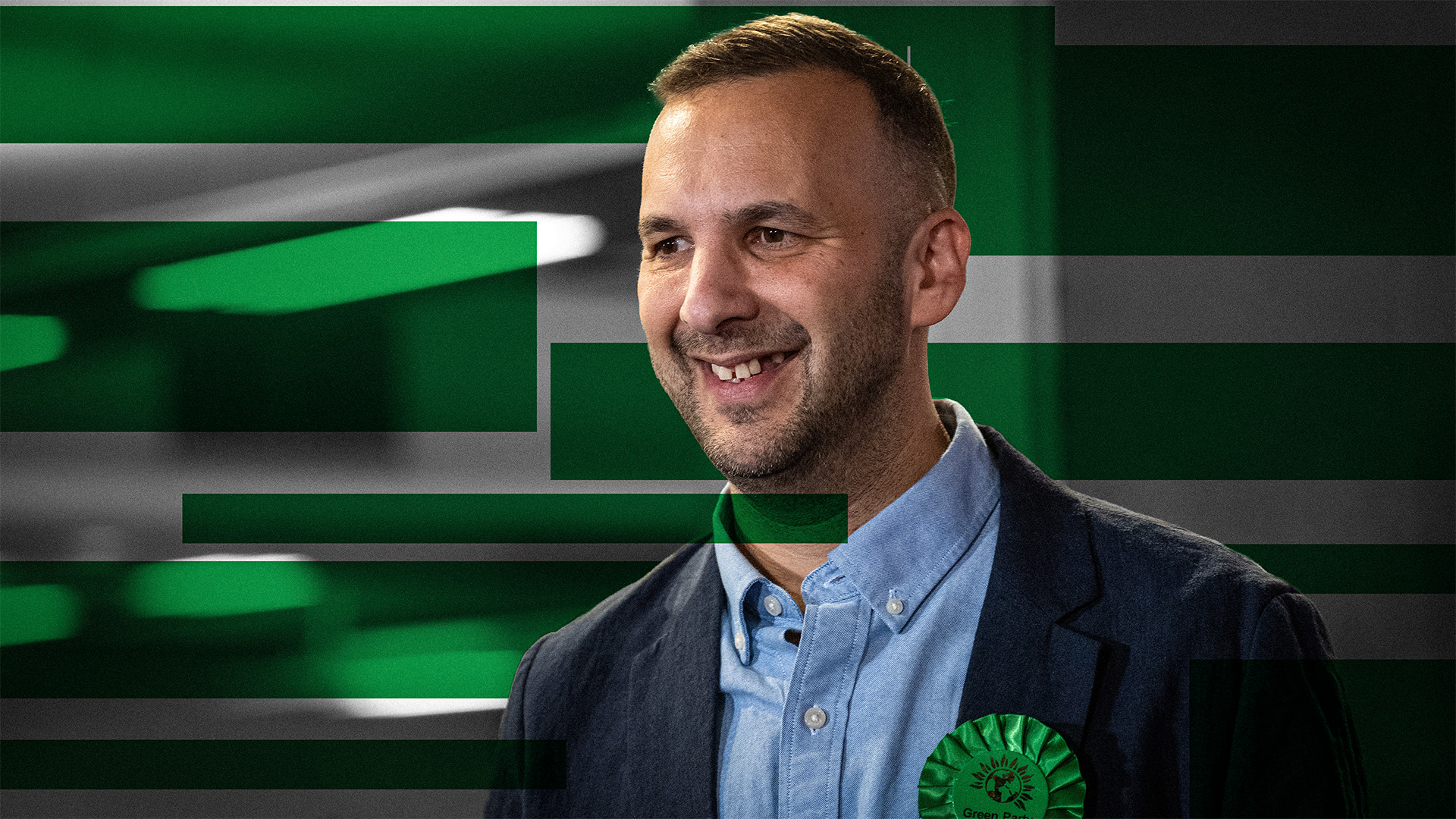
It is the Green Party of England and Wales who might have a harder task spinning this contest in the cold light of day. Under Zack Polanski’s leadership, the party won its first-ever by-election victory in Gorton and Denton earlier this year, and its polls briefly touched 20% – threatening to overtake Labour at the nadir of Starmer’s popularity.
Polanski himself, who had publicly said he wanted to challenge for a seat in London, decided to be his party’s candidate in Holborn & St Pancras – a move unprecedented for a party leader in modern UK politics. Though Nigel Farage endured seven parliamentary losses before finally becoming an MP the eighth time around, he never challenged a by-election personally as leader of UKIP, the Brexit Party, or Reform.
Suggested Reading

The Greens’ foolish anti-Zionism vote is a disaster for Zack Polanski
This move was an unusual one: on paper, Holborn & St Pancras might have looked like a tempting Green target – it is a liberal, inner-London seat, with a sizeable student population. But in reality, the Greens never performed as well here as in some of their other London heartlands – particularly Hackney – and Polanski himself had little in the way of personal connection to the area.
Polanski and the Greens can spin a positive narrative about this election. In 2024, their candidate achieved just 10.4% of the vote. Polanski might have come a distant second place, but he can say he more than tripled his party’s vote share, to 32.8%.
While that would be true, that headline figure is flattering. In 2024, the second-place candidate was the independent Andrew Feinstein, of the Camden People’s Alliance, who stood aside in this race in favour of Polanski, and formally endorsed him. The combined vote share of the two groupings in 2024 was just under 30% – and thanks to lower by-election turnout, Polanski netted several thousand fewer votes than their combined 2024 total.
Polanski may have simply consolidated most of the seat’s hard left bloc behind him, rather than grown it at all. It is difficult to argue that momentum is on your side after such a result, especially when hundreds of party activists from across the country campaigned so hard for it.
One explanation for the Green Party loss is likely to loom over all of the others. Last weekend, the party narrowly voted in favour of a “Zionism is Racism” motion at its conference, which elided Zionism – the belief in Israel’s right to exist, and for many a core component of Jewish identity – with support for Israel’s current government.
The motion has been widely condemned, including by former Green leader Caroline Lucas immediately after polls closed in Holborn & St Pancras. Polanski, who is Jewish, largely absented himself from the debate around the issue, and did not vote on it – instead taking himself and dozens of party activists away from the conference to campaign in Holborn & St Pancras.
This may prove to be a mistake that defines his leadership. Fewer than 2,000 members – the party is believed to have more than 200,000 – voted on the “Zionism is racism” motion, and it passed by just 200 votes. Had Polanski campaigned vigorously against it, he might have been able to stop it.
Instead, he will be answering questions about it, or fighting battles over it, for the foreseeable future. Already in broadcast interviews on Friday morning, he was suggesting Labour might have deliberately timed the by-election to raise the profile of this issue.
This is a somewhat bizarre suggestion: conference is usually the best chance of the year for a party to get its own narrative across to the nation, and the most coverage it gets in national media. Typically, it would be an advantage to a party to have such a spotlight in the final days of an election contest – but Polanski is now complaining this was unfair.
Suggested Listening
A disaster for the Green Party
One criticism of Polanski is that he often leads by vibes, or shoots from the lip. His decision to stand in the relatively safe seat of Holborn & St Pancras seemed impulsive, and hasn’t paid off as a gamble. His party might be largely sympathetic, but any air of invincibility he once had is gone – he has, after all, just lost an election, and it wasn’t close.
Similarly, Polanski seemed to hope that by ignoring the “Zionism is racism” motion, it might resolve itself without his intervention. Instead, he is likely to spend the next few months, if not years, dealing with its fallout. The surge in Green Party polling that followed his election as leader has dissipated – the party is back where it began, and needs to find a new path forwards.
Holborn & St Pancras hasn’t changed the parliamentary maths at all. But the result is, in many ways, the mirror image of Gorton & Denton. No 10 can feel reassured that the left has, at least somewhat, come home to Labour. Now, it’s the Greens’ turn for some soul-searching.
 Most popular
I was at Eton with Charles Spencer – this is how it explains his battle with the royals

Emily Maitlis’s diary: My deep dive into Jeffrey Epstein’s hidden empire – and the network that let him get away with it


The linguistic logic behind dropped syllables
Putin’s wartime economy is heading for catastrophe