
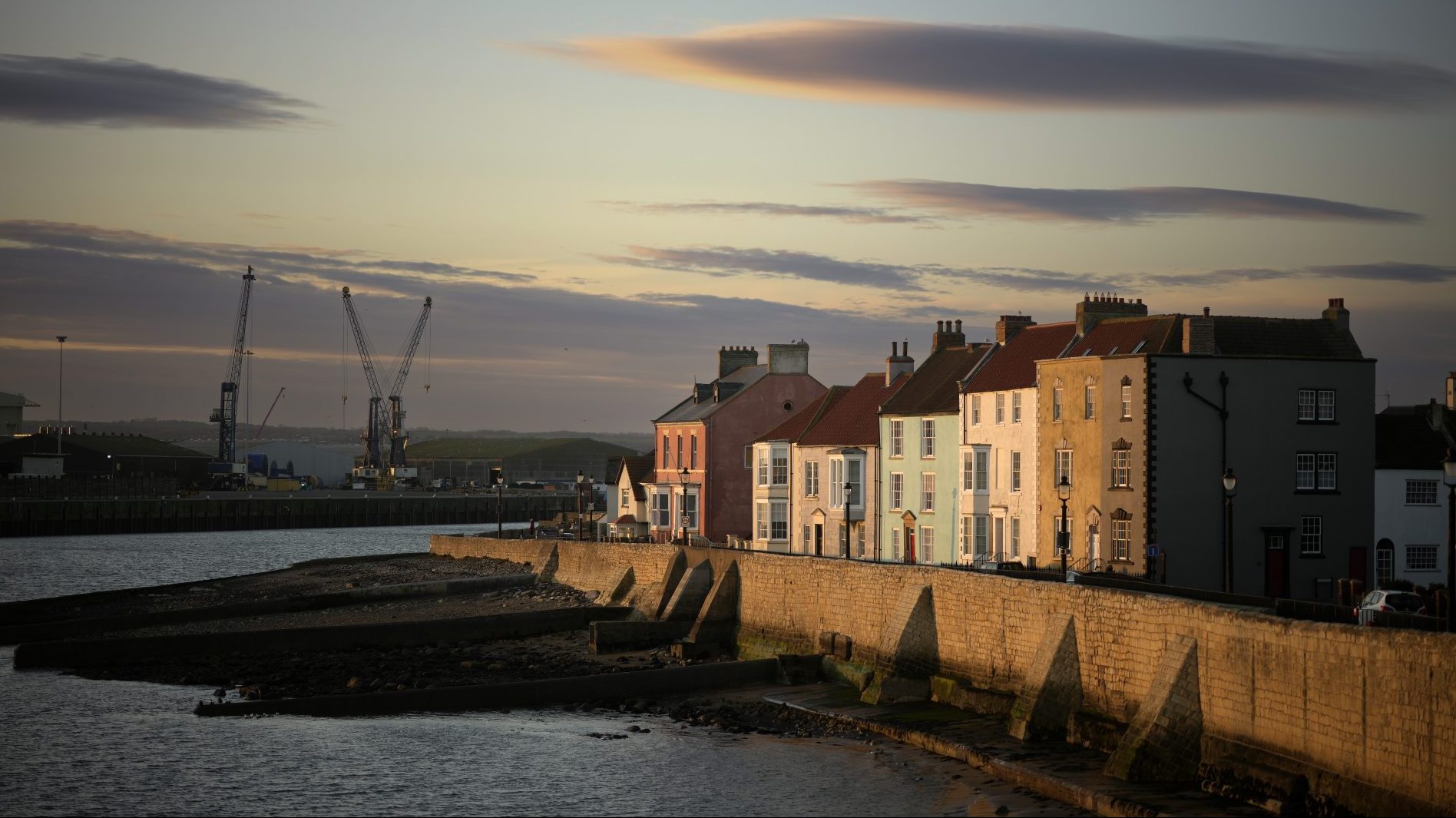
County Durham should be Andy Burnham country. It has been at the heart of the labour movement, and the Labour Party, since its very birth. It was the home of the largest and most powerful miners’ trade union in England, and Durham hosts the Miners’ Gala – a festival of the working class and of unionism – to this day.
Three Labour leaders had their seats in the county, including the party’s first prime minister, Ramsay MacDonald, and its most successful PM electorally, Tony Blair. Before that, Durham was the first-ever county council to be run by Labour, in 1919.
Beyond that history, the new PM seems to have a genuine belief in devolution, and seems to understand that Labour’s political fortunes – and the country’s economic fate – rely upon regenerating areas like County Durham.
When he opened his new No 10 North, Burnham told assembled staff that: “Opportunity has not been evenly spread around the country and not all places have felt that they’re part of the national story. That is what No 10 North is all about: putting power in every postcode so that people can turn things around for themselves”. But “the north” is not one homogenous lump. Manchester has a unique set of economic, cultural and commercial attributes, which means “Manchesterism” doesn’t map on to places like County Durham.
There’s no doubt that Burnham has identified one of the most persistent, unfair divides in Britain. But without a genuine and deep policy programme, Burnham might find himself greeted with just as cynical a reception as his predecessors and the prospect of his defining political ambition coming to nought. If that happens, a generational opportunity would have been lost.
Suggested Reading

Andy Burnham’s high street fantasies make me worried about the PM
The county of Durham is perhaps the clearest example of the challenge that Burnham will face across the greater north. Once you leave the historic city itself behind, it is easy to stereotype. The closures of its pits devastated town after town, though that’s now 40 years in the past – a blow to the career of the grandparents of those entering the workforce now, not even their parents.
The employment rate in County Durham, like much of the north-east, is low and the jobs that do exist are low-paid: around £6,000 a year below the national average. Educational outcomes are generally poor, and many people in the region suffer from sickness – healthy life expectancy is four years below England’s average. Reform’s hold on this left-behind region is visible all over, not least in the increasingly tatty England flags that hang off many of the lampposts.
But the area defies easy cliche, too. The beaches of the north-east still reveal its industrial history. Some are blackened anew on a daily basis, as each high tide washes in a new wave of coal dust to stain the sand. The beach at Seaham, County Durham’s only true seaside town, still has beads of glass from Sunderland’s old glassmaking industry.
Visiting the beach on any early morning reveals more than the usual dog walkers. Local artists collect the glass for artworks to sell in seaside galleries. The True Jesus Church – a Chinese Pentecostal church with a big presence in the region thanks to 1970s immigration from Hong Kong – occasionally performs sea baptisms on the east coast.
The area is more diverse than nativists like to imagine. As a port town, Hartlepool has had a large Eastern European population for decades. Further north, South Shields has a big Bangladeshi populace. And the broader north-east region has had a major Italian presence for a century.
Even economically, the region is a mixed picture. Newcastle and Gateshead are thriving, at least in the city centre, with a bustling cultural quayside regeneration. A similar riverside development hopes to replicate the same in Sunderland, with a brand-new city hall building surrounded by new flats.
Long before Burnham ever conceived of No 10 North, the last Conservative government relocated some Treasury functions to a northern base in Darlington, on County Durham’s southern border. Regeneration efforts are nothing new here, either: successive governments promise to fix the region, launch multimillion-pound projects, which are cut off after three years or so, and change little. A few years later, another one comes along.
That’s what the Rev Joanne Thorns tells me over coffee at the Beehive cafe – a social enterprise whose profits fund a community pantry on the same site – in the former mining town of Bishop Auckland. Thorns works with Communities Together Durham, a charity coalition mostly run by the region’s churches, which works on poverty alleviation, social support and aid to refugees.
Thorns was born, raised, and educated in the region – “I never moved away” – and is somewhat sceptical of efforts to help it from outside, without properly listening to the people who actually live there. The new PM’s home base of Manchester might technically be closer to County Durham than London, but it doesn’t really feel that way. London and Manchester take about the same time to get to by train, and a drive to London is at least a straight drive down the A1: a single road gets you there, even if it’s a long one. Manchester is just as remote.
Suggested Listening

Andy Burnham vs Geoffrey Howe… and a side order of Jason Arday
No 10 North is “a lovely gimmick”, she says. “But I think Andy Burnham is in danger of upsetting the rest of the north by comparing us all to Manchester and assuming that if he was to live within Manchester, he’s been to the north. There is a lot more to the north than Manchester.”
The problem in County Durham, Thorns says, is precarity. Manufacturing never really went away here: as the mines disappeared, the Nissan factory in Sunderland was opening up – bringing a new wave of skilled jobs with it, even if those are dwindling now. But most work here is relatively low-skilled and low-paid: one of the big new employers is Amazon, which has opened warehouses in the area.
The combination of low-paid work and insecure housing means that one unexpected expense causes a chain reaction that pushes a family into poverty. The car breaks down, and someone can’t afford to repair it. They try to use public transport to keep their job, but it’s not reliable enough, so they quit. Or their landlord evicts them and they have to move 20 minutes further away from their work, and it no longer lines up with their childcare. People borrow to fix a washing machine and the debt mounts up. Once people get behind, they can’t catch up.
Thorns’s own role with Communities Together Durham focuses on supporting refugees and asylum seekers – but she explains that the influx of these to the region has created problems of its own. “County Durham, for all sorts of reasons, refused to take part in the wider dispersal scheme,” she says. “Partly that was about them saying ‘sort it out first’, and partly that, because we haven’t got a mosque, we haven’t got any halal food shops. How can you put people in an area where there’s no public transport system?”
For a time, authorities in Durham essentially argued that predominantly Muslim asylum seekers – with no ability to drive in the UK, and no money to afford bus fares – would be left without basic amenities, having to travel to Darlington or Newcastle to worship or buy edible food. In 2022, though, the scheme was made mandatory, and over the course of the following three years County Durham went from housing no asylum seekers to having almost 600 scattered in a few towns across the region.
Something else was happening too. Councils in London and the Midlands, facing a responsibility to house people and families who had been given refugee status – but lacking the homes in which to put people – have been sending them into County Durham, often putting them in private homes. This has been especially lucrative for those landlords, because London councils pay higher rent than the local authority does – pushing up rents and reducing the number of properties available to those who rely upon housing allowance for their home.
County Durham often has homes available at auction for £1,000 or less, to be renovated by new landlords, who can easily earn the cost of purchase and renovation back within a year. But locals are finding themselves priced out by the deep pockets of southern councils managing their own housing problems. Inevitably, Thorns says, it is fuelling resentments in the area.
“They’re already opening their windows and seeing boarded-up houses, their parks are not being replaced, schools are rubbish and they can’t get a GP – all of that stuff, so they’re already angry,” she says. “Then suddenly somebody says we’ll just put three houses in your street and we’re going to put four HMOs [houses in multiple occupation] in, with no consultation, and of course, what then happens is they take that out on the actual refugees.”
The picture Thorns paints is a complex one of cascading state failures. Underfunding of the local council means public services and housing in the region are often failing or badly maintained. Shortages elsewhere mean that desperate London councils will pay over the odds to house their former residents across the country, pushing up prices.
The last government’s crackdown on asylum led to a huge backlog, ironically meaning many more people in the asylum system, while this government’s determination to stop using hotels means putting asylum seekers on residential streets where people’s tempers were already fraying.
But even with those frustrations, the people of County Durham are hardly a monolith. Thorns asked to meet in Bishop Auckland because, after we speak, she is due to run a drop-in session to help support some of those asylum seekers herself. She has, she tells me, learned a lot about halal food in the last year or two – did I know most of the meat in the Farmfoods chain of supermarkets is halal, she asks me, because it turns out it is. That’s one bit of advice she’s now able to pass on to people she’s supporting.
Thorns was 15 minutes late to meet me because she had to stop to pick up cash. As we’re leaving, she tells me what it’s for – it’s to pay the cross-county bus fares so at least some of the asylum seekers can make the long bus journey to attend a mosque. A Christian vicar is distributing money raised from the dwindling number of regular churchgoers in County Durham, so that Muslims can practise their faith.
Fixing the issues that have made places like County Durham “left behind” won’t be quick or easy. People have seen three-year regeneration plans come and go for decades now, leaving behind a few shiny new buildings but little else.
Thorns believes an actual programme to address the connected issues – education, jobs, housing security – will take decades, and will have to come from within the community itself. Without that commitment for the long haul, and that genuine commitment to localism, nothing much will change.
Andy Burnham is something genuinely new in British politics. He might not be the first mayor to become PM – that honour goes to Boris Johnson – but he is the first mayor from outside London to make the jump, and the first person to move into No 10 after a decade fully away from Westminster.
No one, not even Andy Burnham himself, seems quite sure what “Manchesterism” was, even if most people think it has worked for the region. Is it about public-private partnerships, relaxing affordable housing rules to let developers build skyscrapers, nationalising local buses, or something else entirely? Devolution will have to mean more than pushing what worked for Manchester on to the rest of the country – and it is places like County Durham that will be the real test of Burnham’s vision.
If there was a time when the county of Durham was devotedly loyal to Labour, that era is over. In the space of the last decade its loyalties have shifted to the Conservatives, back to Labour, and then across to Reform. Where the people of County Durham go, so too might the nation. Andy Burnham waited for decades to become the leader of the Labour Party, but Durham has been waiting even longer for someone to deliver for them.
If Burnham can’t secure some wins for the people of the north-east, his own stay in No 10 – whether the north or south variety – might be a short one.