
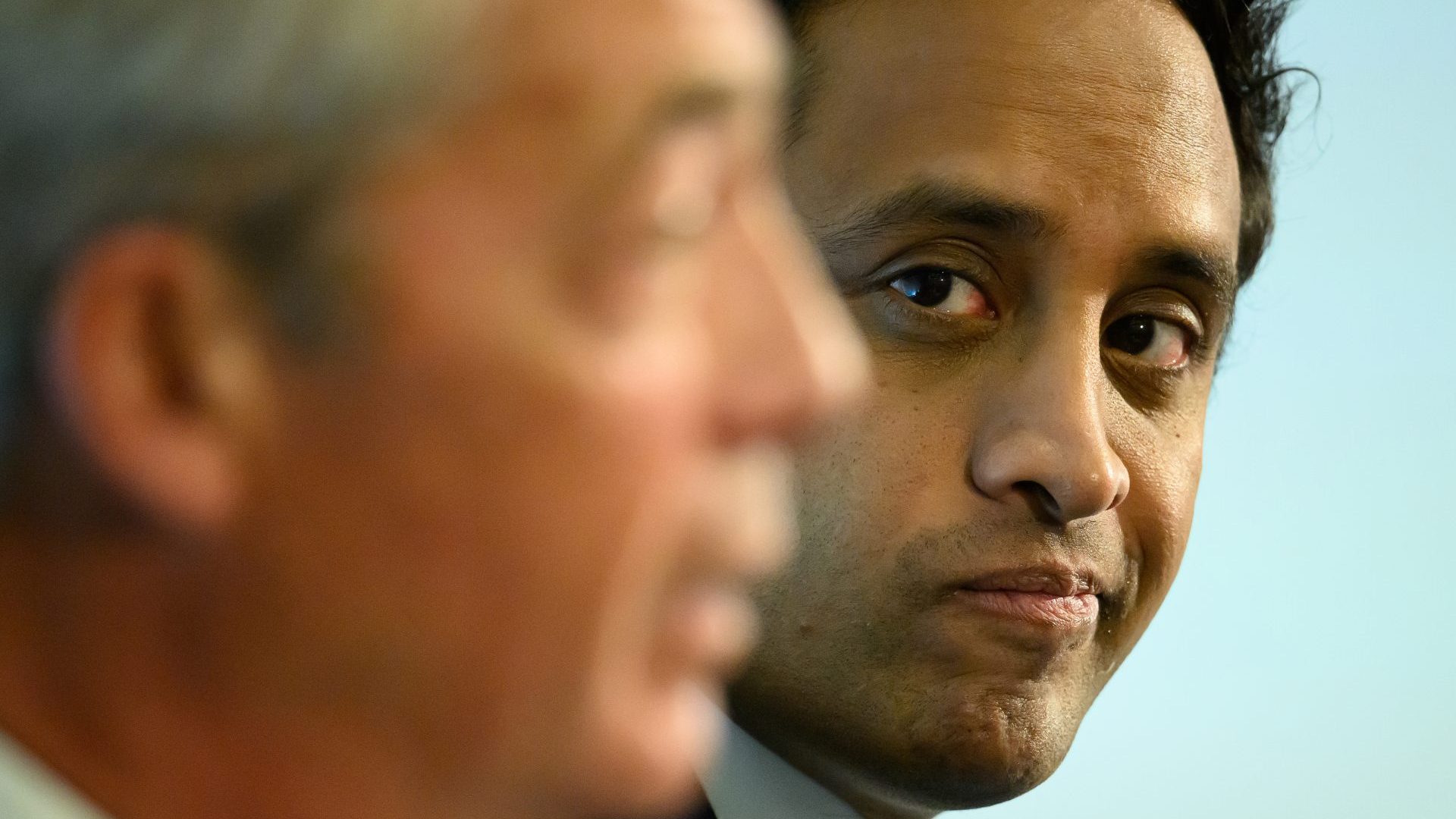
Despite deputy leader Richard Tice’s claims – amid widespread water shortages, wildfires, and excess heat deaths – that everyone should “enjoy it” while “it’s a bit warm”, Reform UK itself seems to be having a miserable summer.
Whereas last summer the right wing party managed to set the news agenda with weekly press conferences about mass immigration and small boats, this summer it was batting off multiple scandals about its finances, even as Nigel Farage fought a totally unnecessary by-election to retain his seat against Count Binface.
That alone might be enough for any challenger political party to handle, but Reform is proving itself to be endlessly capable of making things even more difficult for itself. Now, it is embroiled in an increasingly fractious civil war, with Zia Yusuf becoming something of a lightning rod at its heart.
Compared to most of the prominent faces in Reform – the majority of whom are now former Conservative MPs – Yusuf is a relative newcomer to politics, having previously become a multimillionaire after founding a concierge company. The 39-year-old Muslim businessman first came to public notice after he donated £200,000 to Reform during the 2024 election campaign.
He soon became one of Reform’s public spokesmen, but has failed to last for long in any of his roles since. He was first appointed as party chair, but after less than a year resigned from the post after Sarah Pochin, shortly after winning the Runcorn and Helsby by-election, called for the UK to support a ban on the burka. “I no longer believe working to get a Reform government elected is a good use of my time,” Yusuf posted in June 2025.


Yusuf was persuaded by Farage to rescind his resignation a few days later, but was not restored to the role of party chair. Instead, he was given the newly created role of head of policy, only to be shifted out of that in February – when Cambridge academic James Orr was given control over Reform policy, working alongside Conservative defector Danny Kruger.
Since then, Yusuf has had control of the home affairs brief for Reform – by far its single most important issue area, as it governs immigration policy. In the role, Yusuf has taken to announcing splashy but unworkable policy ideas on Reform’s behalf.
Styling himself, falsely, as Reform’s “shadow home secretary” – a title reserved only for the official opposition’s home affairs spokesperson – he has promised to use the Royal Navy to return asylum seekers crossing the Channel on small boats to France, something which multiple retired admirals have repeatedly explained is impossible in practical terms as well as illegal.
He has also, locked in a competition with Rupert Lowe’s Restore UK, shifted Reform’s migration policy even further to the right, endorsing mass deportations and the stripping of benefits even from EU citizens with settled status.
Even a quick glance at Yusuf’s replies on social media shows the relentless media storm in which he’s always embroiled. Dozens of replies condemn him from the left. Dozens more insult him from the right, some using incredibly racist or Islamophobic language. Others goad him on to fight for “true” Reform against Conservative interlopers.
Yusuf himself seems to have picked up this energy. In recent weeks, he has
denounced former Conservative defence secretary Ben Wallace – who served as a soldier in Northern Ireland – as a “traitor” to the UK, prompting Farage to promise to “have a word” with him over the incident.
Suggested Reading
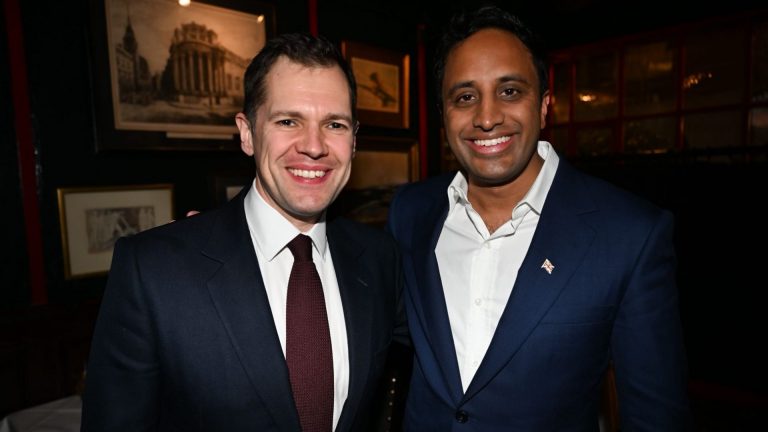

Zia Yusuf’s not-very-coded attack on the Right Honourable Robert Jenrick
But the offending social media post was not deleted, leading some to suspect that the party leader enjoys having an attack dog to do his dirty work and others to conclude that Yusuf still has some hold over Farage, who remains embroiled in financial scandal. The shadow home secretary, meanwhile, is said to have been unimpressed by being called out in public.
“Traitor” seems to be one of Yusuf’s favourite insults, and one that in the past he has hurled at people who are now his colleagues, including former justice secretary Robert Jenrick. Most recently, former Conservative Home editor Tim Montgomerie was suspended from Reform after publicly criticising Yusuf’s polarising role in Reform.
Montgomerie said Yusuf was “loyal to Nigel as he has to be if he wants to succeed him” but was not a “team player”, adding “A lot of people are on not-speaking terms with Zia, and it’s nearly always Zia who initiates it. It needs to end.” Montgomerie also revealed that Yusuf “did not talk to me” for three months after he encouraged Jenrick to join the party, and said he had behaved “like a child”. “
Even as Farage seems determined to try to mend fences with Conservatives – at least enough to poach MPs and voters – Yusuf seems to have become the head of a faction within Reform rejecting Conservative transplants.
A source close to several Conservative/Reform defectors say that relations within the party – especially between Kruger and Yusuf, and Jenrick and Yusuf – are at an all-time low. Yusuf was also at the heart of the row used by Farage to expel Rupert Lowe from Reform, leading to the founding of its new rival Restore, which threatens its vote share.
More than one person familiar with Reform’s internal politics has suggested Yusuf is simply difficult to get along with, and not well suited to politics. In business, the boss gets what he wants. In politics, it’s all about bringing people along with you – at least for a while.
Yusuf has failed to be selected as the candidate for any of Reform’s by-election contests – a notable omission given the poor calibre of the party’s candidate in Makerfield. At the same time, it is impossible to dismiss the obvious fact that Zia Yusuf is by far the most prominent Muslim in Reform, and that his presence is often used to dismiss claims the party is racist or Islamophobic.
Suggested Reading
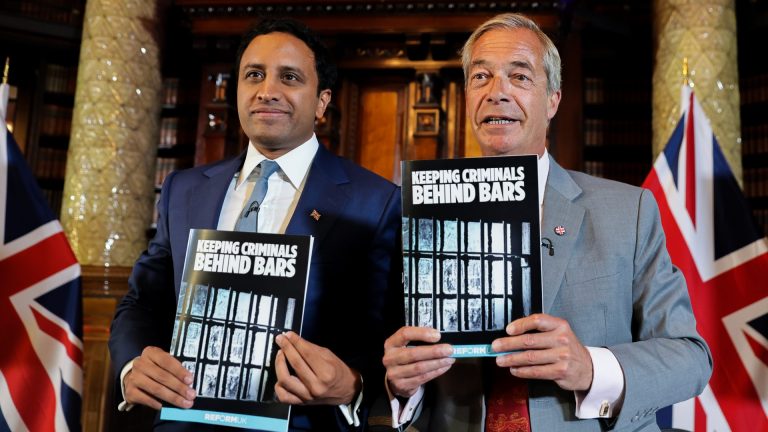
Has Zia Yusuf finally gone too far for Farage?
Having Yusuf be the face of announcements of mass deportations helps to neutralise some criticisms of Reform, even as it alienates some of the far. right voters who might otherwise consider Reform, but have instead defected to Restore.
Whether for reasons of his race, his faith, his personality, or his politics, Yusuf seems an increasingly isolated and volatile figure within Reform – attracting criticism from previously friendly right wing papers even more than the left. There have been reports, which he denies, that his personal polling is unfavourable, especially among women.
One party insider told The Sun‘s Harry Cole that they believed the rise of Rupert Lowe had pushed Yusuf into more and more extreme positions, saying “Zia is just reeling from suddenly not being the most right wing person in the public eye any more, so he’s going further and further for attention.”
Yusuf himself claims that “the entire Tory client press is now out to get me because they’ve seen the same polling I have,” though he has not specified what poll this is, or what exactly it shows, other than to add: “I am a lethal threat to their party.”
He has rounded on Tory-friendly journalists for what he calls “hit pieces” against him in the Daily Mail and Spectator, asking on X: “So why are Tim Shipman, Christian Calgie, Michael Gove et al all so obsessed with publishing such easily falsifiable lies each day? Because they recognise the electoral threat I pose to their corrupt establishment.”
He added: “A poll just last week by Freshwater Strategy/City AM revealed that I have the 3rd highest Favourables of any right wing politician prompted in the poll.” But a look at the data revealed that only five right wing politicians were listed in the survey – Kemi Badenoch, Farage, Richard Tice, Jenrick and Yusuf himself. In terms of favourability, his 14% narrowly beat Tice’s 12% and Jenrick’s 11%, but was way behind Badenoch’s 35% and Farage’s 31%. Some 32% of those surveyed said they had never heard of him.
Since his initial £200,000 donation in 2024, Yusuf has given only £6,000 more to Reform. He is no longer among the party’s top donors, and has an increasingly uncertain power base in the party. He seems to be at war with at least half of its most public figures – and is now in another public spat with one of its top outriders. Reports suggest Farage is losing patience with him.
Yusuf might believe he is a “lethal threat” to the Conservative Party. It might turn out, he’s more of a threat to Reform – or just to his own political ambitions.
 Most popular


Is this the real reason Trump keeps falling asleep in public?

I was at Eton with Charles Spencer – this is how it explains his battle with the royals

The New World at 500: Independence isn’t our marketing slogan. It’s our business model
Why is Farage so keen to protect Russia’s right to lie and cheat?