I was 12 when I got into music. Thirteen when I got into gigs. My mates were 16 and 17, and started taking me to the Dublin Castle in Camden, where bands like Madness and Blur played.
On Saturday nights, we went to the Dome in Tufnell Park, a mecca for music lovers and underage drinkers alike. One of my mates would be on the guest list, and I’d shuffle into the middle of the crowd to get in. The place was known for admitting underage kids, and anyway, the 90s were more relaxed about that kind of thing.
Midweek, we’d hit Syndrome at the bottom of Oxford Street. Andy, who ran it, managed Swervedriver, a band signed to Creation, pre-Oasis. It was a hub for young musicians and music journalists, a great little indie scene where everyone hung out, a petri dish of talent and ambition before Britpop exploded.
Being so young, I stood out like a sore thumb. A young 13-year-old in the pub watching bands 10 years older than me, I was a curiosity.
I left school at 14 and got a job flyering for Syndrome. From there, I went to work for Andy at Backstreet International, a music merch company. For me, this wasn’t just casual labour, this was my in. I wasn’t just folding T-shirts, I was folding T-shirts in the music business.
By some miracle – or clerical error – I landed a job talent-scouting for Sony when I was 16, having been interviewed by a man called Muff. I had no idea who he was, and it was only later I found out that he was a founding member, along with his brother, Steve Winwood, of the Spencer Davis Group. To me, he was just an adult in a suit.
I had no business being there. I couldn’t even legally buy a pint, but I was being sent to gigs to spot up-and-coming talent. I had a bloody expenses account! They’d probably have given me a car if I could drive.
I did a bit of everything: booked studios, ran errands, pretended I knew what “A&R strategy” meant. In reality, nothing I did mattered – but I didn’t care. I was in my element, absolutely buzzing to be anywhere near it.
It wasn’t all glamour. Flying to Glasgow for a half-hour gig in a pub sounded cool in theory, but in reality it meant sitting alone in some five-star hotel eating crisps for dinner because I didn’t know how to order food. And being young, restless and completely unequipped to handle the loneliness, the obvious solution was to drink and take drugs.
By 16, I’d moved out of my dad’s house and into a flat in Kilburn with a girlfriend. The road was actually called Shoot-Up Hill, which in hindsight was less of a quirky coincidence and more of a cosmic warning label.
Growing up in the 1980s, the big message was Nancy Reagan’s slogan “Just Say No”, as if drugs were a piece of cake that you could politely decline at a birthday party – “no thanks, I’ll stick with the trifle’.” For me, from a broken home, no guidance, too much freedom too young and the constant itch to crawl out of my own skin, drugs filled in the gaps where love and stability should have been. They dulled the silence, gave me a false sense of belonging. It was like tossing pennies into a bottomless well: the sound was satisfying, but the well never filled.
After Sony, I stumbled into Creation Records. I was 18 and thought I’d made it. Creation! Oasis! Alan McGee!
One of my main gigs was still talent-scouting, which sort of sounds important but mostly meant me, terrified, standing in dingy venues half-cut – with other A&R scouts who had usually gotten their jobs because of their dads, uncles, family friends – worrying I was about to miss the “next Oasis” or whatever, and ruin British music for ever.
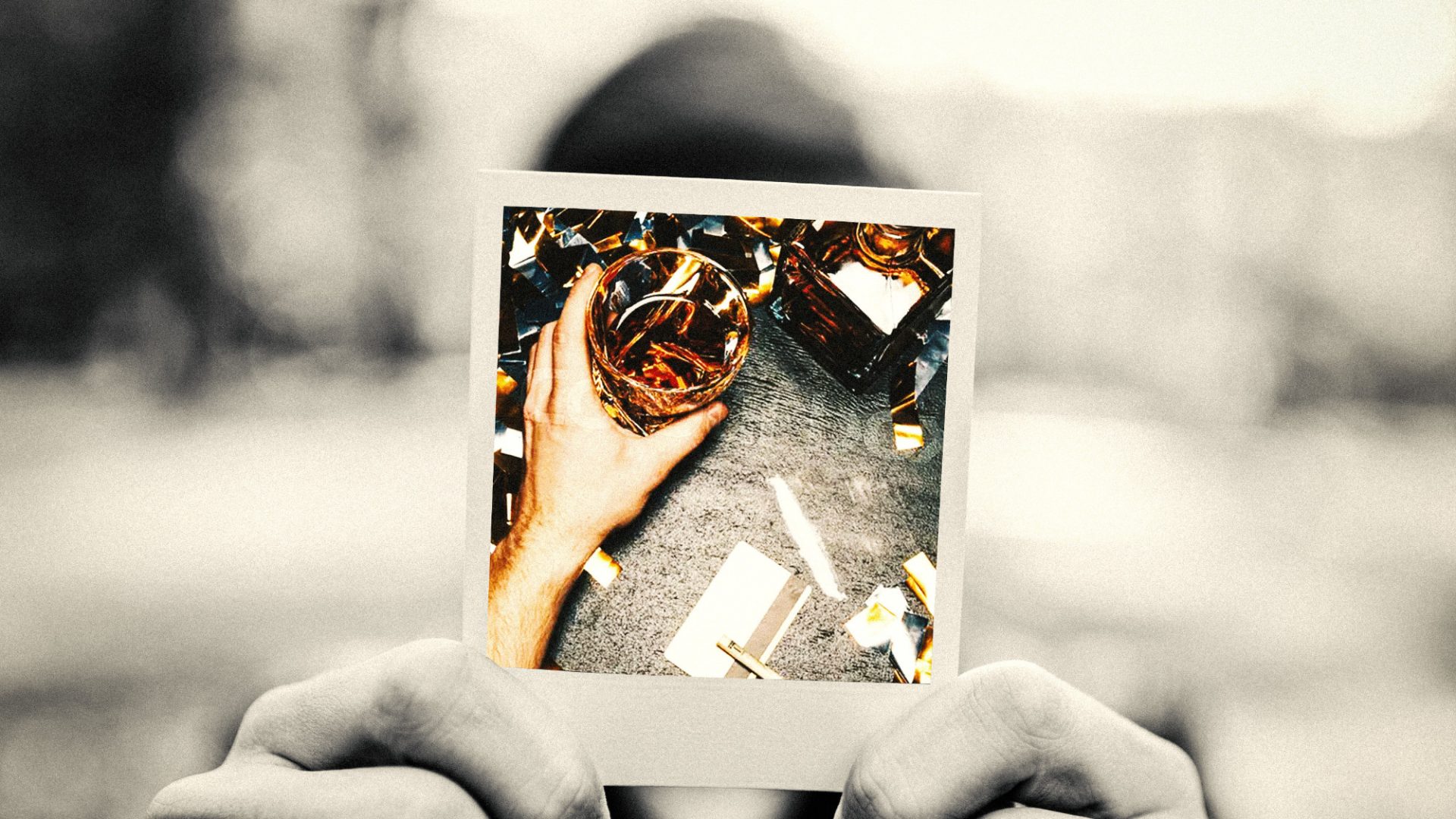
So I overcompensated. I was out every night, watched every band, drank every pint, took every pill and snorted whatever came my way. It was less “A&R scout” and more “young professional degenerate with an Access All Areas laminate”.
Within months, I’d developed the kind of routine only an idiot could keep up with: all-nighters, straight into work, no shower, no shame. Picture it: me, at nine in the morning, plonked on the pavement outside the office, waiting for the manager to unlock the door. I’d have a warm can of Red Stripe in one hand, the metallic tang of last night’s powder still dripping down the back of my throat, and all the glamour of a young adult who’d mistaken the “music business” for the “business of slowly killing yourself”. Honestly, I couldn’t risk going home in case I passed out and missed work entirely. That was my idea of professional commitment – better to arrive stinking and twitching than not at all.
It didn’t take long before the whole thing went sideways.
Suggested Reading
A shot of hope
By 21, I’d unravelled. In a desperate, last-ditch attempt at cleaning up, I booked myself a DIY detox holiday. Greece, two weeks, on my own. Sun, sea, sobriety.
My plan was simple: no drugs. And, technically, I succeeded. But at that stage, I thought alcohol was just a beverage. Not a drug. So I’d drink myself into blackout most nights, staggering around the island like a one-man cautionary tale. Back home, things came to a head. I got sacked from Creation. It was inevitable, really. My dream job, gone. I was 21, and already washed up.
My shitty attitude – rolling in late, not working, refusing to follow instructions – didn’t help. But truthfully, they’d been watching me implode for years. The cuts on my arms, the scabs and dried blood I never bothered to hide, the way I wore short sleeves like a walking cry for help. No one pulled me aside. No one asked if I was all right.
When I wasn’t working, I was hanging around flats, getting stoned like I had since I was 13. A lot of my mates were dealers, and hanging around with them was a non-stop party that, in our minds, would never end. We would steal cars, play our music super-loud and have kickabouts in the middle of the street – all while normal people were at work.
Every so often, I’d land another job and try to “pull it together”. In music, you had to at least pretend to give a shit about the bands, which meant showing up to gigs.
And I loved that part. Music was the only thing that made me feel alive, the one connection that cut through the fog. So I’d hit the shows, night after night.
Soon enough, I was out on tour, flapping merch, living the “dream”. Except my version of the dream was nosebleeds from too much coke, shagging anything that moved, and stumbling through days in a haze of groupies, powders and lager.
That summer, at Reading Festival – three days of mud, lager and questionable decisions – I ran into a guy from Mercury Records. He got me in without too much effort on his side, and just like that I had another foot in the door.
I was shaken after what happened at Creation, but not shaken enough to actually learn anything. Reflection wasn’t my strong suit in those days. I was still locked into the same patterns, same excuses, same chaos – just accessorised with a slightly different laminate pass.
By the time I walked into Mercury, my drug use had escalated to the point where functioning was more of an optimistic concept than a reality. I could bluff it – that was my gift – but beneath the surface, I was running on fumes, hangovers and the sort of bravado that only works when you’re young enough to get away with looking like you don’t care. My entire approach to work could be summed up as laissez-faire, a polite way of saying that I showed up, did as little as possible and coasted.
For about three years, I drifted along at Mercury. The guy who gave me the job jumped ship to EMI. Without him, I was exposed.
Nobody else in the office had much time for me or my attitude. And why would they? I didn’t go to the same universities as them, I didn’t like what they were signing, I couldn’t step out of my lane and – God forbid – actually sign a band.
I was rude, disengaged and arrogant in that special way you can only be when you’ve confused “potential” with “achievement”. I also didn’t have the faintest clue how to operate in an office environment. I’d never learned how to play politics, how to network, how to kiss the right arses without it looking like you were kissing them.
The office itself didn’t help. The fluorescent lights cut through my perpetual hangover like Stanley blades, amplifying the horror of every comedown and every sleepless night. The hum of photocopiers, the smell of cheap instant coffee, the endless parade of meetings – which could easily have just been memos, but everyone loved the sound of their own voices – the platitudes, the buzzwords… all of it made me feel like an alien trapped in a sitcom I didn’t understand.
Eventually, there was a shake-up at the company and I was out. Twenty-four, unemployed again, another bridge burned. That was the end of my music career. At 24, I should have just been getting started. Instead, I was already limping off stage. It got ugly fast, and within a few years, I’d completely unravelled.
I was almost 30 when I went to my first Narcotics Anonymous meeting on June 12, 2007. My life felt like a complete mess. I had nothing to show for the years that had passed, no achievements big or small that I could take pride in. Just a row of burned bridges, failed relationships and missed opportunities.
I didn’t ever really think that I was truly going to stop using drugs. I just wanted to be more successful at it. I still had the twisted notion that I could outsmart addiction, which is mad because it’s like thinking you can outwit gravity.
I fought against addiction for years; if I just do a bit of this, a bit of that, with the right mix of Valium, coke and weed, it’ll hit the spot. I am baffled at just how deluded I was. It really clicked for me when someone explained it was just like a peanut allergy. “If you’re allergic to nuts, you can’t just eat two nuts.”
In the past 18 years I’ve found strength I never knew I had. I’ve found power in being vulnerable, in owning my weaknesses and asking for help. I’ve found strength in being honest, in facing the truth about myself and my actions. And I’ve found peace in acceptance, in acknowledging that I can’t change the past, but I can shape my future.
And while it’s not always easy – in fact, sometimes it’s fucking hard – it’s always, always worth it.
Extracted from The Diary of a Secret Drug Addict, published by HarperNonFiction.
The Secret Drug Addict is on social media @scrtdrugaddict