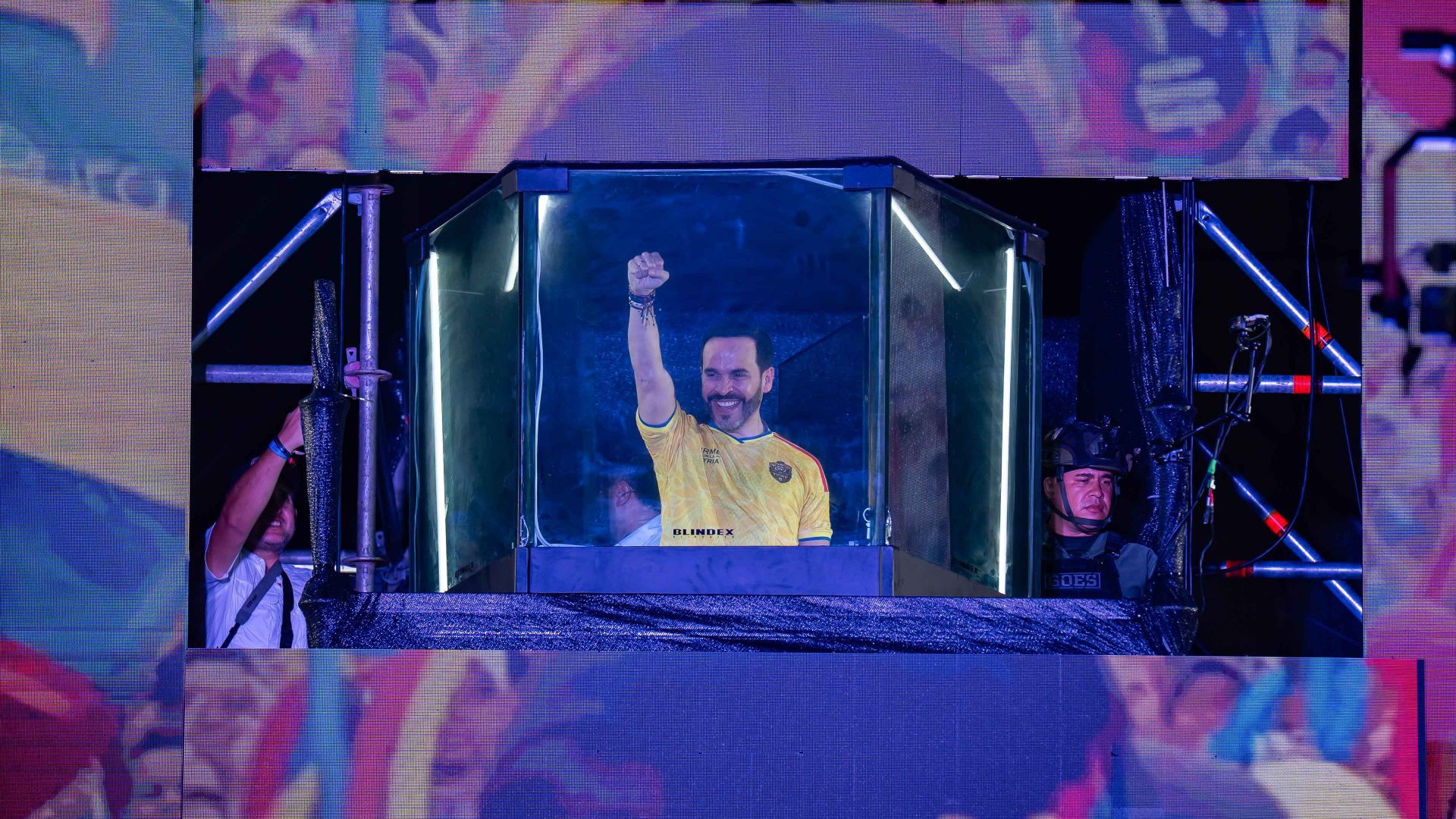
He looked less like a president-elect than a headline act waiting to drop the bass.
Suspended high above a cheering crowd in Barranquilla, Abelardo de la Espriella delivered his victory speech from what looked like a DJ booth – except this one was wrapped in bulletproof glass. Below him, crowds sang, vuvuzelas sounded and fireworks exploded across Colombia’s Caribbean coast.
The self-styled outsider had just pulled off one of the most improbable victories in recent Colombian history. A millionaire lawyer with no previous political experience, de la Espriella won the presidency by a razor-thin margin of less than one percentage point, ending four years of left-wing rule under Gustavo Petro and signalling a sharp turn to the right in one of Latin America’s biggest economies.
His campaign was pure political theatre. He criss-crossed the country in Colombian football shirts despite openly admitting he dislikes football. He wrapped himself in patriotic symbolism, and promised to restore national pride. His supporters, for their part, sported red caps emblazoned with the slogan: “Make Colombia Great Again.” When the result came through, Trump celebrated online with a triumphant “He Won, BIG!”
The 47-year-old, nicknamed El Tigre, is a political hybrid of Trump, Argentina’s Javier Milei and El Salvador’s Nayib Bukele. Like each of them, he has built his appeal on promises to sweep away the establishment and tackle crime with a mano dura, “iron fist”.
Security was the centrepiece of his campaign. For decades, Colombia has been ravaged by an internal armed conflict involving left-wing guerrillas, right-wing paramilitaries, drug trafficking organisations and state security forces. With violence once again on the rise – bringing more drone attacks, killings, kidnappings and forced displacement – many Colombians have grown increasingly frustrated with peace negotiations.
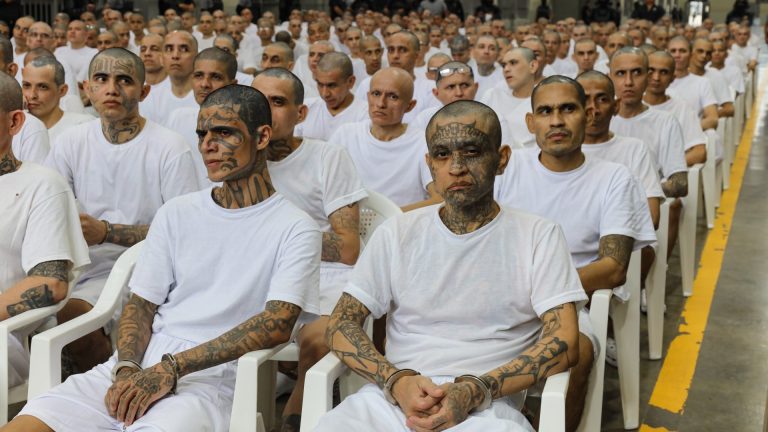
De la Espriella has promised to end those peace talks and launch an intensive 90-day military offensive against criminal organisations. He has also proposed building a network of mega-prisons deep in the Colombian jungle, inspired by Bukele’s crackdown in El Salvador.
Suggested Reading
The nation where 1.7% of the population is now behind bars
“Colombia will no longer be governed by an administration that is complacent towards narco-terrorism,” he declared during the campaign, saying he would kill criminals “like rats and cockroaches”.
But de la Espriella’s ambitions extend beyond security. He has pledged to reverse many of Petro’s domestic and foreign policy initiatives, withdraw the country from the UN, extradite Petro to the US, restore ties with Israel and move Colombia’s embassy to Jerusalem, mirroring a move made by Milei in Argentina.
He has also promised to introduce austerity measures and shrink the state, which he says is bloated, another copy-and-paste from the Argentinian.
A dual Colombian-US citizen who spent years living and working in Miami and who obtained American citizenship in 2023, de la Espriella also holds Italian citizenship.
A criminal defence lawyer by trade, he built his legal career representing some of Latin America’s most controversial figures, including Alex Saab, the Maduro ally accused by US prosecutors of money laundering, and David Murcia Guzman, mastermind of one of Colombia’s biggest fraud scandals. De la Espriella has always defended that work as part of a lawyer’s professional duty.
Suggested Reading
How to charm Trump, Colombian style
Long before entering politics, he cultivated a celebrity persona. On social media, where he invested heavily throughout his campaign, he frequently showed off his lavish lifestyle that included yacht trips, private jet travel and time spent between his various homes. His rallies looked more like pop concerts than traditional political events, with booming music, elaborate staging and carefully choreographed entrances designed to go viral online.
But behind the showmanship lies a more confrontational attitude. Over the years, de la Espriella has filed more than 100 lawsuits against journalists, moves opponents say were intended to intimidate or silence critical reporting.
The showman who campaigned as a political wrecking ball may find governing harder than campaigning. Colombia remains deeply polarised and his electoral mandate is wafer-thin. Petro’s political movement retains significant influence in Congress, meaning many of his most ambitious proposals will face resistance.
Indeed, there was a notable softening of tone on election night. After a campaign in which he vowed to “disembowel” Colombia’s left, de la Espriella struck a more conciliatory note as the scale of his mandate became clear. With fewer than 245,000 votes separating him from his rival, the president-elect promised unity rather than retribution.
“I will govern for all Colombians,” he told supporters. “There will be no retaliation, no persecution, because in a democracy there are no irreconcilable enemies.”
Harriet Barber covers human rights abuses, migration, women’s rights and politics in South America