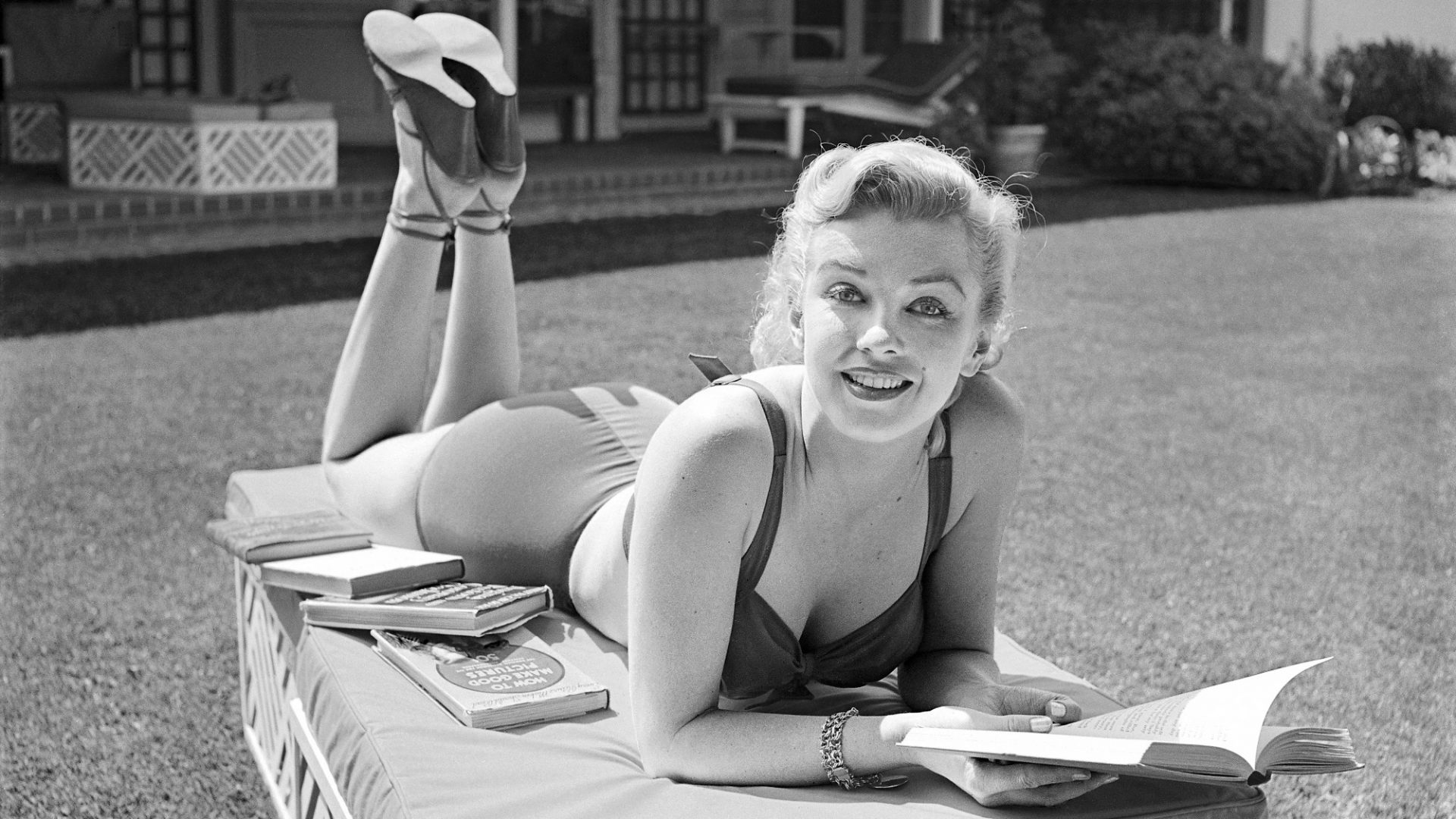
During an interview in the 1950s, Marilyn Monroe was asked the following question: “If your house was on fire and you had to save one thing, what would it be?” The reply was simple: “Books.”
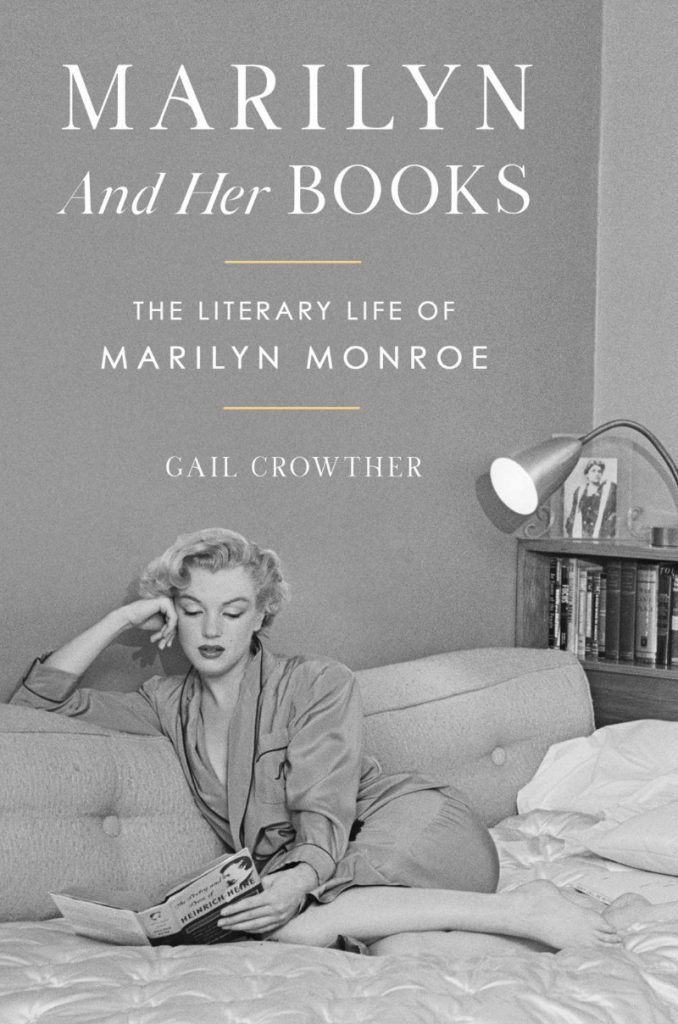
In 2026, as we celebrate 100 years of Monroe, my new publication, Marilyn and Her Books, explores an aspect of her life that often gets overlooked – her literary life. She is well known for her films, her beauty, her business acumen, and her rightful place in popular culture history. What she is less known for is being an avid, informed, and intelligent reader who loved, and was loved by, a large number of writers.
The range of books in Monroe’s personal library was astonishing. Contemporary novels, psychology, plays, poetry, philosophy, science, gardening, pets, religion, travel, and a special love of Russian literature. In fact, Monroe so loved Dostoevsky’s The Brothers Karamazov that she campaigned (unsuccessfully) to play Grushenka in a Hollywood adaptation of the novel.
After her death, Monroe’s books, more than 400 of them, were taken from her home in Brentwood, Los Angeles, and her apartment in Sutton Place, New York. They were placed in white, coffin-shaped boxes and put into storage for 37 years.
Most of her estate and possessions (around 75%) had been left to her beloved acting coach Lee Strasberg. Perhaps not quite knowing what to do with them, he kept them locked away.
When Strasberg died in 1982, Monroe’s personal property passed into the hands of Anna Strasberg, Lee’s third wife, whom he married in 1969, seven years after Monroe’s death. As Anna Strasberg had not known Monroe, this emotional distance allowed her to take a more active approach to Monroe’s legacy. She struck deals worth tens of millions of dollars first with CMG Worldwide, then later Authentic Brands Group, to represent the estate of Marilyn Monroe, branding her name and image.
In 1999, as part of this endeavour, Anna Strasberg commissioned Christie’s auction house in New York to catalogue and sell all of Monroe’s memorabilia and personal property. The boxes that had stayed in storage for so many years were unpacked, and the contents photographed, then listed with reserve prices.
For anybody who has worked in an archive, or handled the personal possessions of dead people, it is quite a moment unpacking or pulling items out of a box. So many senses are engaged as you brush the metaphorical (and sometimes physical) dust away to encounter the eerie remains of somebody else’s life. There is touch, there is smell – often especially strong if the person was a smoker – and there is sight.
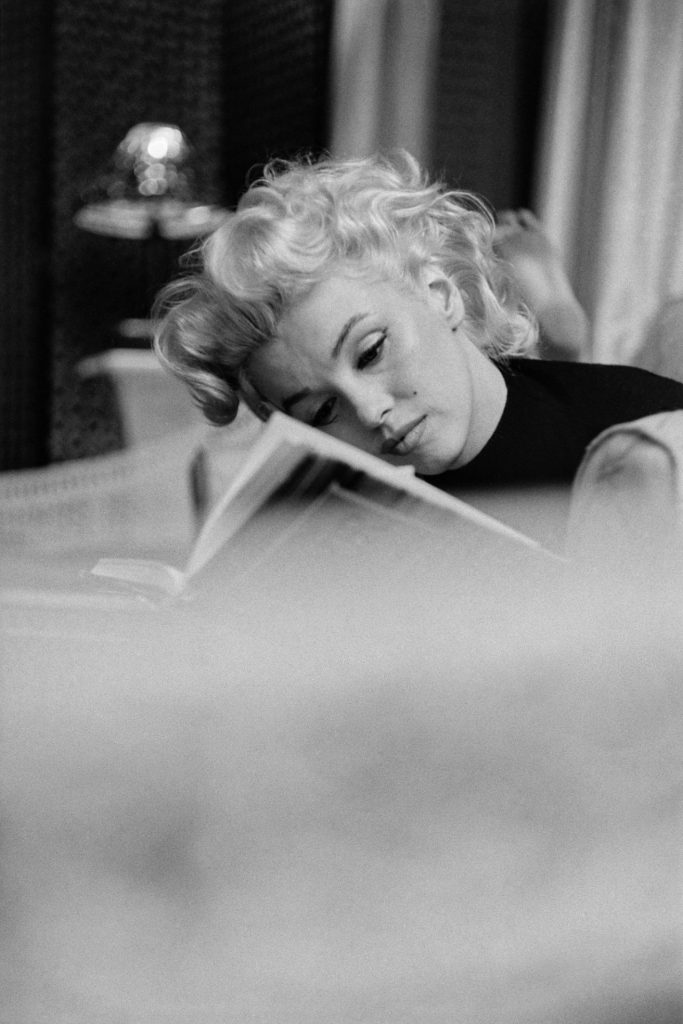
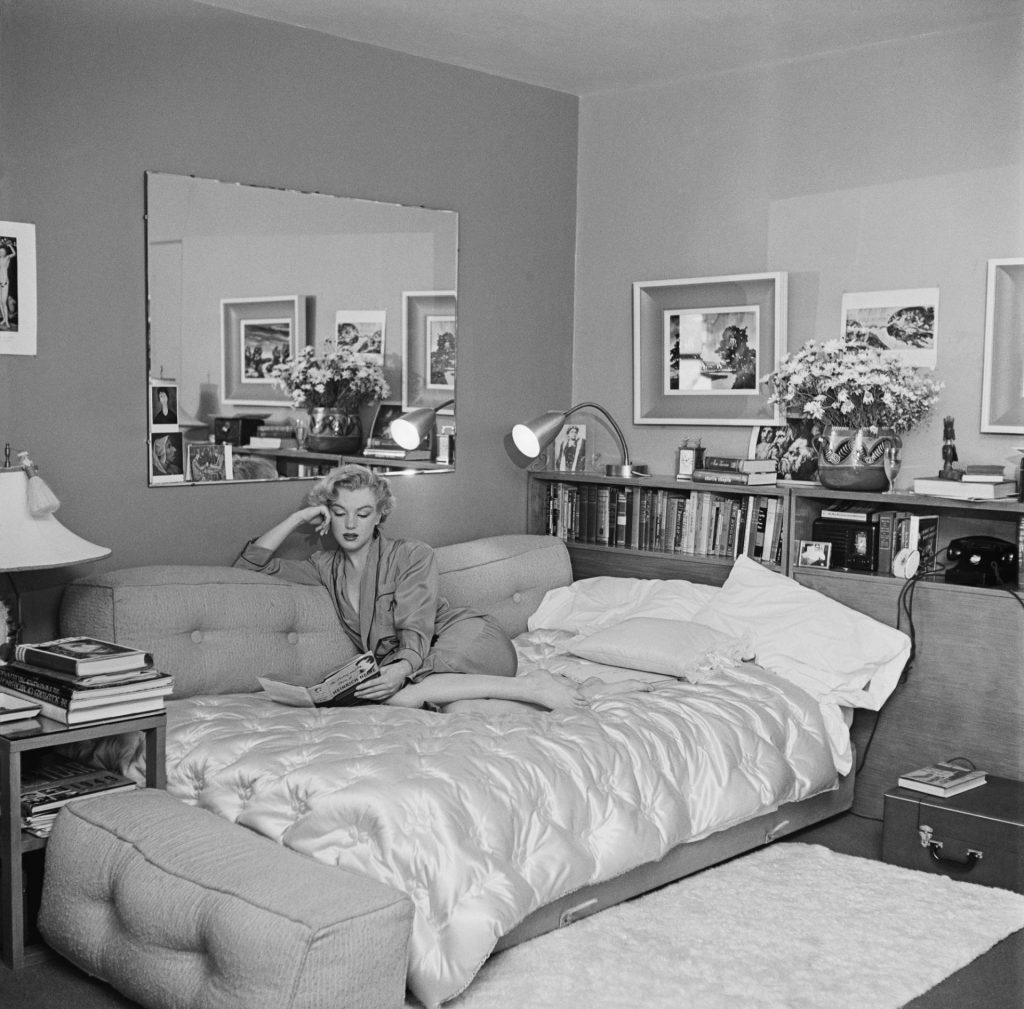
Monroe’s books looked mostly in relatively good condition. Some contained annotations and marginalia, others had slight tears in the dust jackets or fell open at certain pages. Here were books that had been read, with evidence that Monroe was an active and engaged reader.
Her cookbook contained newspaper cuttings of recipes and handwritten instructions. By all accounts, Monroe was no great cook. When she attempted to make homemade noodles and they didn’t dry out in time, she took her portable hairdryer to them to “speed up the process” (note: it worked).
Monroe’s copy of The New Joy of Cooking by Irma Rombauer and Marion Rombauer Becker (1953) was torn in the top-right corner, and the cream cover was stained, as with many recipe books used in a kitchen. Unlike most recipe books, however, this was listed with a reserve price of $500-$700. It sold into private hands for $29,900.
Often the type of books a person chooses to read can tell us something about their personality. Do they stick to one genre, or are they an adventurous reader? Do they have a favourite author? How are their books arranged on the shelf? Do certain books reflect particular biographical moments?
MARILYN and her books raises many questions because exploring her literary life is a questioning venture. Monroe the reader is especially fascinating, because we get to see a whole side of her that has previously been overlooked.
At the beginning and end of my book, I daydream my way around Monroe’s house, shelf-snooping and pulling out books to read as the light fades across a warm Los Angeles evening. One of these is the Collected Poems of Dylan Thomas, a literary figure Monroe had not only read, but also met in Hollywood through her roommate, Shelley Winters.
In 1950, the two women had been sharing an apartment on Holloway Drive in West Hollywood. Thomas, who was on his first reading tour of America, travelling coast-to-coast and stopping off at various cities and universities, had two wishes when he arrived in Hollywood. One was to meet a “beautiful blonde starlet” (this wish also included doing something to said starlet, but we don’t need that level of detail), and the second was to meet Charlie Chaplin. Luckily for Thomas, he had both his wishes granted on the same night.
Sadly, the myths about this meeting and what did or did not happen or what was or was not exaggerated are unclear. It is the sort of story that, however ludicrous it sounded, could well be true.
According to some, Thomas had worked his way across America leaving a trail of disappointed and outraged people in his wake as the poet drank excessively and behaved outrageously, especially when he was off stage. His lewd jokes, leery behaviour to women, and the occasion on which he did not quite make it to the toilet in time, horrified the literati.
When he got to Hollywood, he was, some claim, introduced to Winters by the writer Christopher Isherwood. Through Winters, Thomas got an invite to a party at Chaplin’s house, but first he went for dinner with Monroe and Shelley at their apartment.
Monroe, as we have already established, was no great cook, so she decided to decorate the dinner table, and even travelled into the suburbs of Hollywood to pick fresh wildflowers to adorn it. Shelley took control of the cooking, but when she had to dash to the store, she left Monroe to wash the salad leaves. She returned a half-hour later to find Monroe religiously and diligently washing every single leaf individually with a Brillo pad and with great care.
When their guest arrived, the drinks started flowing immediately, though it’s fair to assume they were not the first of the evening, for Thomas at least. They drank several martinis, bottles of beer and wine, and then decided in their drunken wisdom to drive to Chaplin’s house party.
Suggested Reading

The last ride of James Dean
With Thomas behind the wheel and the two women as passengers, they made quite an entrance as Thomas lost control of the car and crashed into Chaplin’s tennis court net. Once inside, Thomas ignored many Hollywood luminaries, declaring that the only person he wanted to meet was Chaplin. When he finally did meet him, Chaplin told him off for his drunken and rude behaviour, so Thomas walked into the solarium and went to the toilet in a large potted plant. It’s a terrific story, and some of it will probably be true.
But it is indicative of Monroe’s relationship to writers. So many loved and admired her and liked being with her: John Steinbeck, Truman Capote, Jean Cocteau, Jean-Paul Sartre, Carson McCullers, Dorothy Parker, and Edith Sitwell, to name but a few. She was, of course, famously married to one of America’s greatest playwrights, Arthur Miller.
By exploring Monroe’s literary life, we encounter a woman who was hungry for knowledge. A woman who devoured books and used what she read to inform her acting and to enrich her personal and professional life. Monroe was serious about her books. In her 36 years of life she lived in at least 49 different homes. Each time she moved, she diligently packed up her library and took it with her.
Because at the end of her life, it was not her jewels or her furs, her shoes or dresses that she cared about. It was her books.
Dr Gail Crowther is the author of Marilyn and Her Books: The Literary Life of Marilyn Monroe, published by Corsair and available now