In the week of July 13, a group of experts including Nobel laureates, former heads of state and leaders from AI companies such as OpenAI and Anthropic met in the Vatican. They were there to discuss the perils of AI and to devise possible recommendations around limiting AI’s potential role in nuclear war.
In attendance were the former European Commission president and former Italian prime minister Romano Prodi, former Colombian president Juan Manuel Santos, former chief adviser of Bangladesh Muhammad Yunus and former Costa Rican president Óscar Arias Sánchez.
Prominent scientists and AI leaders included the theoretical physicist David Gross, winner of the 2004 Nobel Prize in physics; Miles Brundage, former head of policy research at OpenAI; and Kim Stachenfeld, a senior research scientist with Google DeepMind.
Suggested Reading
The pope vs MAGA
The goal of these talks was to draft the “Rome Declaration for an Unarmed and Disarming Peace in the age of artificial intelligence, nuclear and autonomous weapons, new digital protocols and emerging models of digital development.” It was signed in the Julius Caesar Hall of Rome’s Palazzo Senatorio on the Capitoline Hill. “Humanity finds itself in a decisive moment of our history,” it reads.
The subject was the integration of artificial intelligence into nuclear systems and the role of human judgment in a crisis. In some cases, this can be completely substituted by AI.
It also says that AI will probably cause massive job losses and lead to increased economic competition between nuclear powers. Its development also heightens the risk of cyber-attacks that could compromise civilian infrastructure and create a new form of information warfare.
It calls for AI creators to publish the principles that guide their models and to be held legally accountable to those guidelines. Governments should not allow automated recursive self-improvement processes in AI systems without monitoring systems that interrupt their function. The final decision to use a nuclear weapon should never be entrusted to an automatic system.
The declaration also asks for the adoption of an international treaty that prohibits the “irresponsible integration” of AI in systems that control the launch of nuclear weapons, and requests fail-safe reviews for nuclear weapon states that ensure their weapons are not at risk of being hacked or controlled by AI.
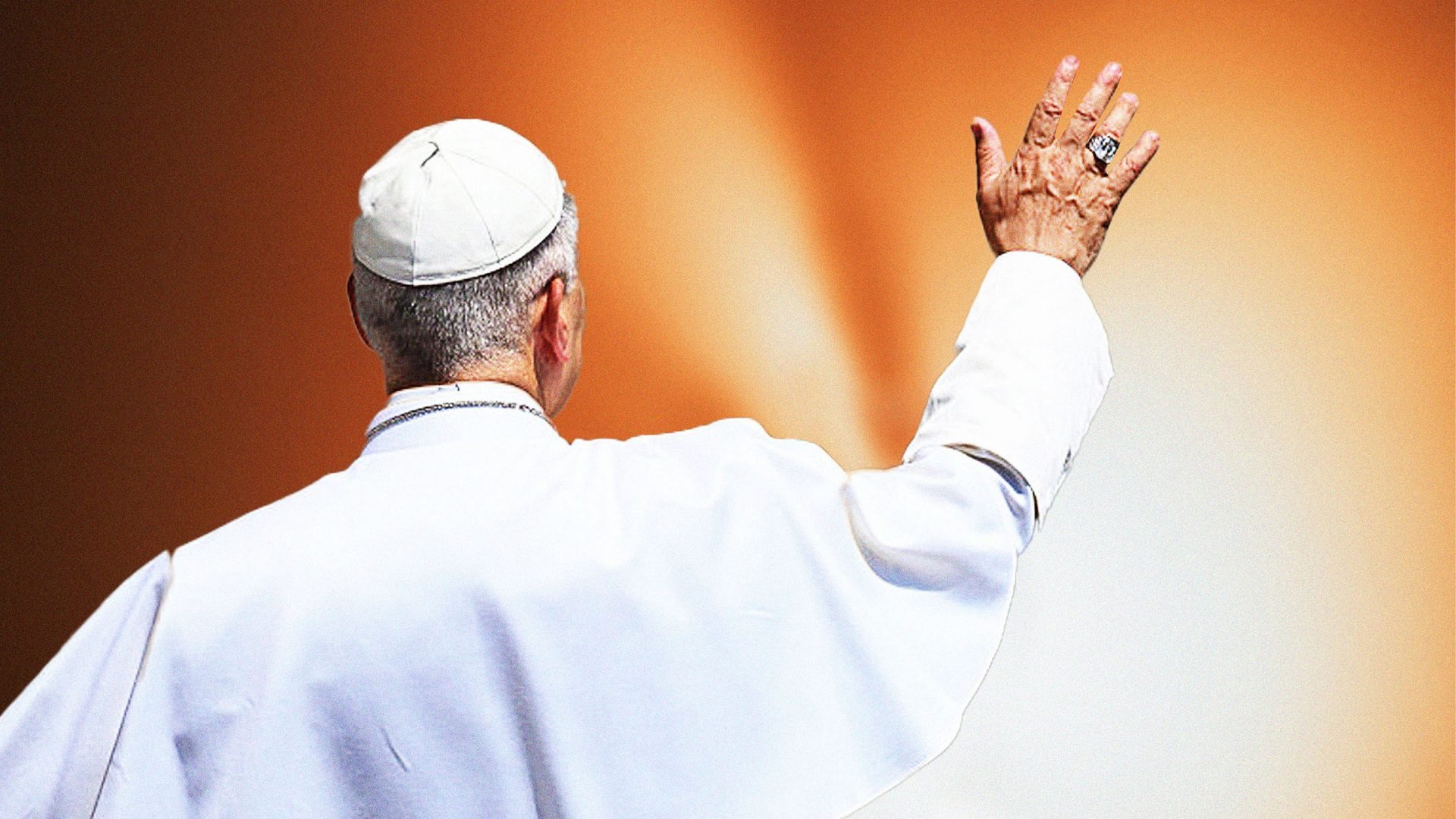
The Vatican’s hosting of the assembly represents the way in which Pope Leo’s influence is widening. But how much the pope’s organising efforts have to do with the actual results is hard to say, said Charles Camosy, a professor of moral theology at the Catholic University of America. He has attended multiple meetings at Anthropic’s headquarters with Christian academics and leaders.
“It is correlation rather than proof of causation, but it has been interesting to see how Anthropic, OpenAI and the head of Google DeepMind have explicitly called for and at least seem to be working for a slowdown,” Camosy wrote in an email.
“Genuine interest in engagement continues, though, including in private arenas, which clearly aren’t done for PR reasons, and private meetings related to matters of policy and regulation.”
Suggested Reading
Pope Leo: the moral voice of the technological world
While AI leaders appear to be invested in conversations led by the Church, the entire process begs the question: why is it the pope leading these discussions and not world leaders? Shouldn’t it really be the responsibility of a political leader rather than a spiritual leader of a church, even one followed by 1.4 billion people?
Camosy says that the feedback he has heard, including from “secular tech folks”, has been positive. “Everyone knows that these issues are central, but few people can step up into this role and on these issues with the kind of credibility required,” he said.
“The pope is maybe the only person in the world who could have done it, and he appears to have been successful.”