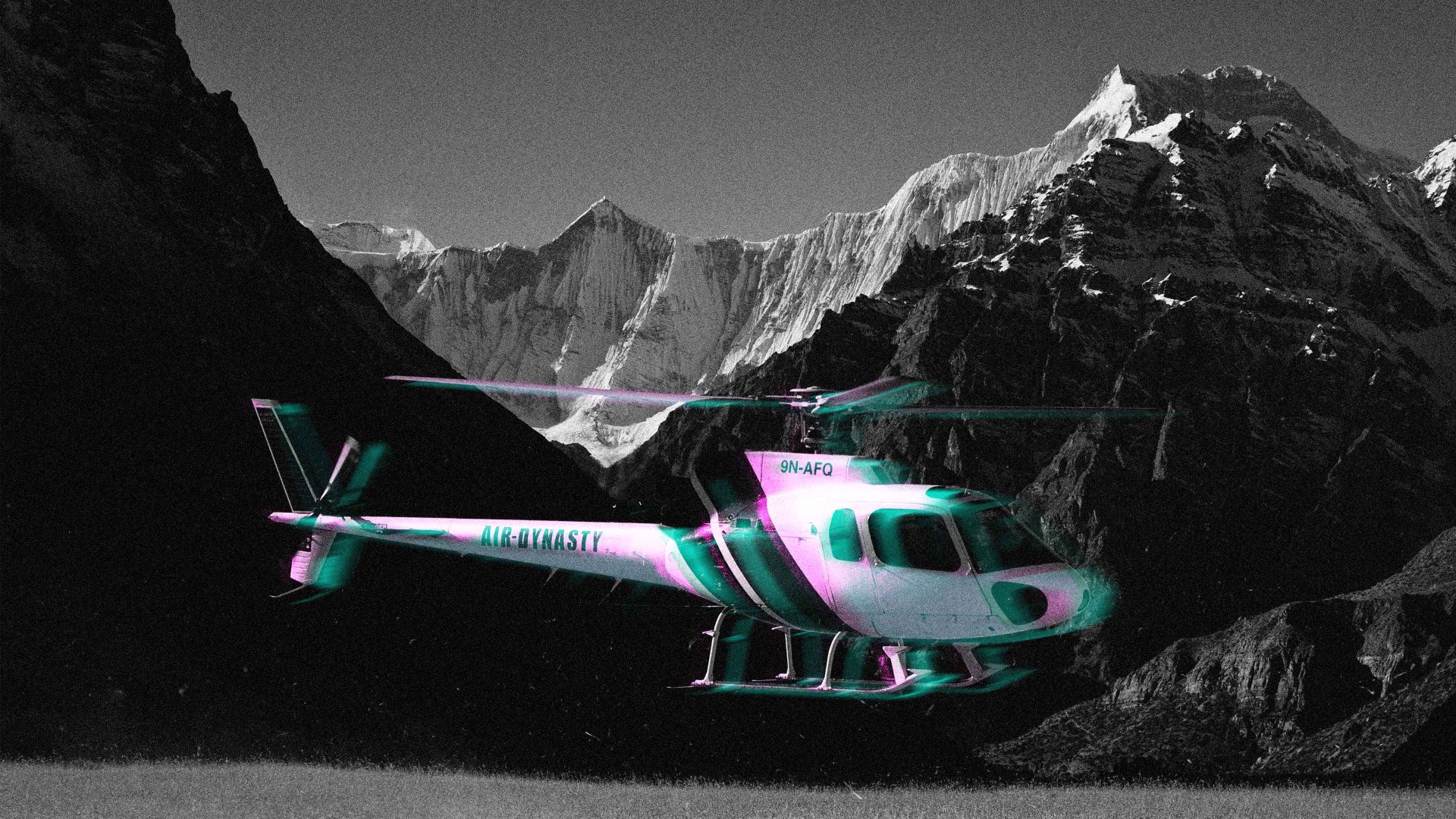
In the spring of 2025, Sudeep Kandel, a Nepali trekking guide, was taking an Irish father and son along the Manaslu Circuit, a remote trail in northern central Nepal. They had crossed Tsum Valley and were heading toward Nubri in the shadow of Manaslu, the world’s eighth highest peak.
After breakfast in Deng, at around 1,600 metres, the group set out along a narrow, stone-paved path cut into the hillside. The older man, in his early 60s, stopped to rest against a stone wall. Kandel urged him on. “I think you should keep moving.”
As he reached for his bag, he lost balance and fell, splitting open his forehead with a wound nearly two inches deep. Blood poured down his face. Kandel placed him in the recovery position and applied first aid. The man regained consciousness, but internal injuries were still a concern.
They took him to a village health station, but a helicopter evacuation was the only option. Kandel called the client’s UK-based insurer, and a helicopter company. The response was immediate but conditional: payment had to be guaranteed.
After the insurer confirmed coverage, the helicopter company’s manager made Kandel an offer. “How much commission do you want?” Kandel declined the offer.
Suggested Reading

To the island: in search of Janet Frame
The helicopter arrived late due to bad weather. The pilots stayed overnight in the village. That night, something felt wrong. The pilots changed the destination hospital several times, before choosing one in Kathmandu that catered to expatriates. By morning, the man was airlifted to the hospital.
The injured man received treatment and flew home. The son continued the trek. But for Kandel, the episode lingered. He sensed something was wrong in his industry.
Less than a year later, Nepal Police arrested dozens of people in connection with the helicopter insurance scam that Kandel had encountered.
In recent weeks, police have charged trekking agents, doctors and helicopter owners in what investigators call a sprawling fraud scheme involving foreign trekkers. Tour operators allegedly staged or exaggerated medical emergencies, put pressure on tourists to be evacuated, and filed inflated or falsified claims. The investigation has identified at least $19.7m in suspect payouts – one of the largest fraud cases in Nepal’s tourism sector.
On popular trekking routes – Everest, Annapurna, Manaslu – routine altitude sickness or minor ailments were turned into lucrative rescue claims. Some flights were billed multiple times. One company alone arranged 171 “suspicious rescues,” earning more than $10m.
The fallout was swift. International insurers have either pulled coverage or increased their premiums, raising concerns about Nepal’s reputation as a safe destination. But the problem has been building for decades.
“When Nepal opened tourism to the private sector in the early 1990s, virtually anyone could start a trekking agency,” said Jyoti Adhikari, a tourism entrepreneur (no relation). “Many chased quick bucks, investing little in training or capacity.”
Suggested Reading
Day trips to hell
In the early years, the damage was not immediately visible. Nepal’s trekking industry continued to draw travellers, buoyed by the pull of the Himalayas.
For more than a decade, the industry held together. Then, in the mid-2000s, as the Maoist insurgency ended, politics crept into tourism.
“Instead of investing in professionalism, money started going into political donations,” Adhikari said. “Every party protected its own clique in the sector.”
The number of tour agencies grew from 200 to more than 3,000. Many existed only on paper and few invested in staff, equipment or safety. Prices fell, corners were cut and standards slipped.
The scam created perverse incentives, flooding the market with cheap trekking deals. Hospitals and helicopter companies colluded with trekking agencies. “At one point, even private hospitals were offering commissions for referring sick trekkers,” Adhikari said.
By 2017, the scam had peaked. A government investigation in 2018 named agencies and hospitals involved and for a moment, the industry pulled back.
After the Covid-19 pandemic, as tourism struggled to recover and oversight weakened, the scam resurfaced. “Tourism professionals became aligned with political parties,” Adhikari said. “Parties protected those who could fund them.”
Even now, he said, crackdowns barely scratch the surface. “Minor players get arrested. The major actors are rarely touched.”
Early international coverage seized on claims that Everest climbers were being deliberately poisoned to trigger rescues. Police say that is not the case. The fraud lies elsewhere – along trekking routes, where altitude, isolation and uncertainty create opportunity.
Helicopter rescues remain a lifeline in Nepal’s mountains. But the arrests have exposed an industry shaped by weak regulation, political protection and the erosion of trust.
For Kandel, the scam was revealed after his client’s fall. But the system had been slipping for years.
“The image damage is already done,” Kandel said. “Everyone in the sector knew something was wrong.”
Deepak Adhikari is an investigative journalist based in Kathmandu