In the hit Brad Pitt adventure thriller Heart of the Beast, it’s a German Shepherd. But it could be a spider, a goldfish, a big cat or a bear. Every animal that appears in a film needs a wrangler to ensure that it is well-treated, and that legal requirements are met.
More often than not, the animal is part of the moving scenery of the narrative, helping to flesh out a living, breathing world. Heart of the Beast puts the animal – and indeed the natural environment – centre stage.
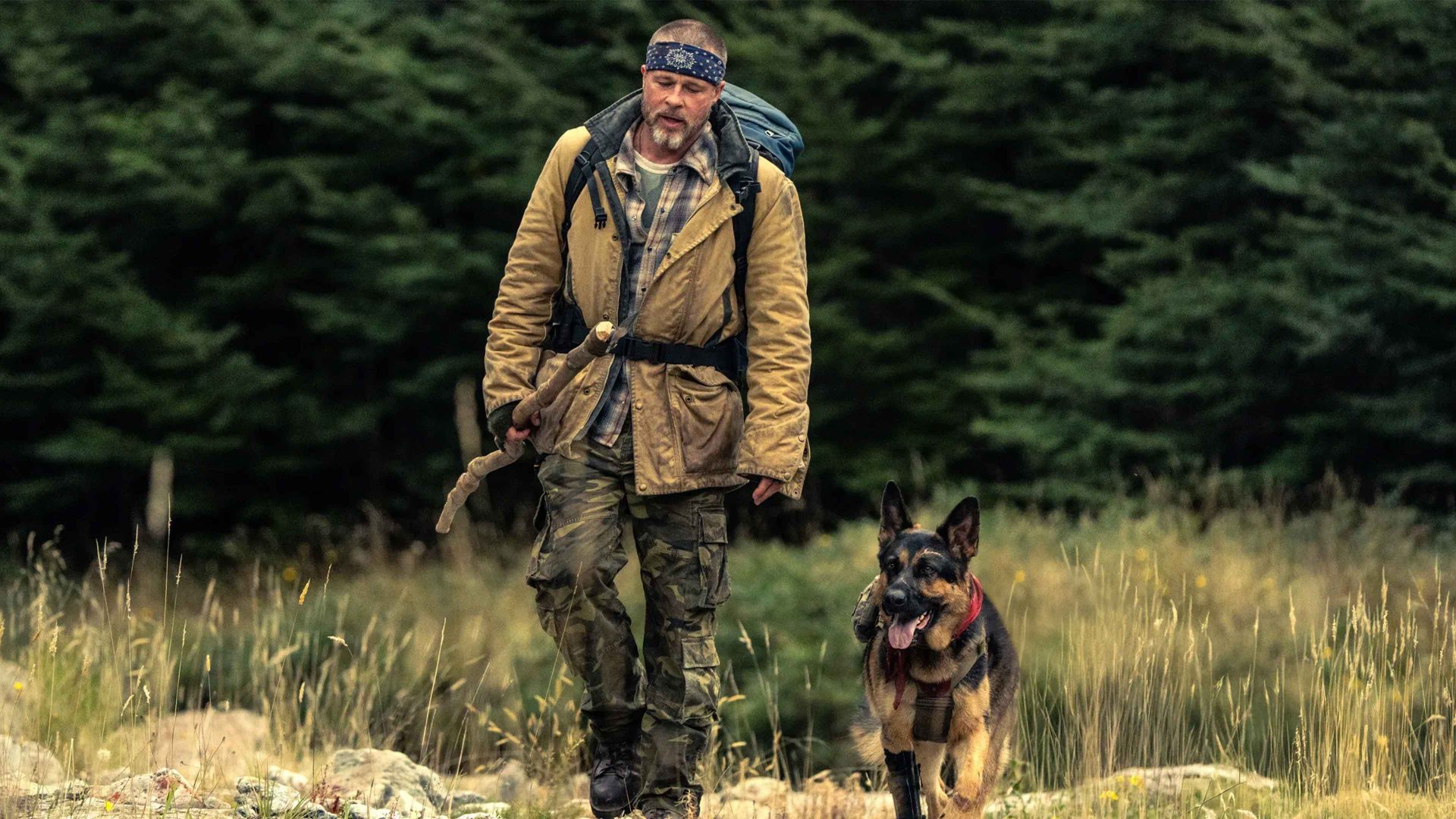
Pitt plays a retired Special Forces officer, James Belmont, and Uber, the German Shepherd, stars as Odin, his combat dog. The pair survive a plane crash in the Alaskan wilderness and have to trek 58 miles across vast stretches of unforgiving terrain to get home.
The intimate bond between man and beast is the film’s main focus and appeal. Speech is minimal; it is the glances exchanged between the two, the shared affection and physical closeness that impresses, in a landscape of monumental mountainous scenery, treacherous rapids, wolf-ridden forests and swampy bogland, all of which become this former military man’s deadliest enemy.
“A lot of people are calling it an action thriller,” says Andrew Simpson, animal coordinator on the film. “But deep down it’s a love story between Odin and James.”
The work that went into developing this relationship began five weeks before the filming in New Zealand and involved more than one dog. Alongside Uber are three other German Shepherds, Seeka, Ryker and Hondo, each in the role of Odin. In real life, these are Uber’s offspring, who contribute to particular sections of the action.
The four dogs were each assigned a dedicated trainer and Pitt visited them daily over three weeks.
“We’d start with the basics,” continues Simpson. “We’d sit down with the dogs, have a conversation, let them smell Brad and feel his energy. The movie wouldn’t work if there’s no rapport between them and you have to let that develop naturally. One of the greatest joys is sitting together in silence: in the film, James looks at Odin and Odin looks at James and they know what the other’s thinking.”
Suggested Reading
Who put the penises in the Bayeux Tapestry?
As the four dogs are related, their fur markings are a close match but elements of costume and make-up also served to create the illusion of one animal; these included scars on the face and leg, the collar, bandana, survival vest and prosthetic limb. This latter was made from a cast of the dogs’ legs and custom-fitted, the wearer trained to perform in it.
“The dogs had their own facility trailer and make-up trailer and they would have a call just like Brad,” Simpson says. “He would have to get into character, and so would they. They’d turn up early and fall asleep on the make-up table. Odin was number one on the call sheet, and that’s never happened in my career.”
Greg SmithAldridge, who has been an animal wrangler for 23 years and whose credits include two John Wick films and We Bought A Zoo, was responsible for Hondo in Heart of the Beast. For him, patience is key.
“Every trainer knows that what’s going on in your heart and nervous system travels right down the leash to the animal and they feed off it,” he says. “You’re not helping anything by trying to rush on set. Everyone has to let the dog do what the dog’s going to do.” Simpson agrees. “Uber would chase bees all the time, and when we were shooting this very dramatic scene one night, Ryker saw a possum, so we had to wait until the possum disappeared.”
SmithAldridge is nervous at the prospect of AI creating lifelike simulations of animals in movies. “It’s less protectable than an actor’s identity. You can clip another German Shepherd up on the screen and make an exact replica of the dogs in Heart of the Beast. We would know that’s not Uber, but who else would?”
A film that celebrates the relationship between man and dog would surely be undermined by the use of an AI stand-in, but for SmithAldridge it goes further. “You’re taking that animal’s agency and decision-making out of the performance and giving it to a writer or director. It becomes one single thought process, one less presence and that’s narrowing.”
The use of animals in the entertainment business has evolved over the years. Things once commonplace – finding an elephant in the big top or a chimpanzee dressed in a bowler hat to advertise tea on the telly, or having a tiger de-clawed to stand next to a celeb – are considered cruel today.
Animal welfare legislation, licensing and ethical standards of training and treatment mean their appearance in live theatre shows is now rare. “At one point, animals were seen as props,” explains Paula Stewart, founder of UK-based The Animal Talent Ltd, which hires out domestic and exotic animals for film, photo shoots and events. “Now they’re physical beings.”
Animal wranglers accompany a wide range of animals to the film studio, not just dogs. “In the last month I’ve worked with pigeons, goldfish, cats, and a tortoise,” she says.
Her job is to ensure they have adequate rest breaks, while lighting and noise are kept to a minimum. The training is reward-based (as it was for the German Shepherds in Heart of the Beast).
“When they do what you want them to do, they get a reward,” she says. “We don’t use punishment. There’s no negative reinforcement.”
But how exactly do you train a spider for its moment on camera? “I worked on a BBC television series called Virdee,” Stewart recalls. “It was a torture scene where a black widow had to crawl across the victim’s arm. You can’t really train for that, so basically it was a case of making sure the spider had been well fed beforehand and there weren’t any draughts or loud noises. Then we let the spider do what it wanted, and the cameraman worked with that”.
For the animal wrangler, sensitivity to the needs of another creature is a priority and also a privilege. In Heart of the Beast the take-home message is we’re less alone in the world because of our dogs.
Pitt called the experience of making the film “relentless and magical”. That was partly thanks to Uber, Seeka, Ryker and Hondo – and also to their team of animal whisperers.
Heart of the Beast is in cinemas now
 Most popular


Emily Maitlis’s diary: Trump doesn’t fear the AI apocalypse – but he’s terrified about the midterms

A new film about Elon Musk reveals him as so awful it’s almost tragic. Almost
My day out with Danny Tommo
I was at Eton with Charles Spencer – this is how it explains his battle with the royals