I know it’s not much fun to think about Woody Allen these days, but there’s a scene in Hannah and Her Sisters that I think about a lot. Michael Caine is trying to convince a rock star called Dusty to buy paintings from grumpy artist Max von Sydow to decorate his new house in the Hamptons, which has “a lot of wall space”. After Dusty requests something “big” and hopefully “puce” which won’t clash with his ottoman, a disgusted Von Sydow shrieks “I don’t sell my art by the yard!”
Selling art by the yard is the perpetual problem faced by all artists. Creating things is nice, while the art market is inherently evil. When Allen’s film was made in 1986, New York City was flush with Reagan-era money, colliding with the recovering 1970s degeneracy of the Lower East Side. People (usually old, rich, white) dared to venture downtown for the first time in a decade and were investing heavily in art, mainly by the yard.
One of the hotter things in art at that time was Jean-Michel Basquiat, then aged 25 and selling his large, colourful paintings to corporate lawyers, IBM executives and insurance brokers. Everyone wanted a piece of this Brooklyn-born wunderkind with a delectable whiff of the street about him. By the age of 27, he was dead.
Basquiat had craved fame but, like so many, once he’d got it, it got him. The pressure of being a Black artist serving the overtly white art world was one of the factors that pushed him into deeper drug use and bad behaviour.
The energy that pounded through his early work began to diminish as the 80s trundled on. He made some missteps. People began to have doubts. After being seen everywhere and selling to everyone, the last couple of years of Basquiat’s life were spent more reclusively, cycling through rehab stints while hangers-on grabbed doodles from his studio floor. By August 12, 1988, it was all over.
It took a surprising amount of time for Basquiat’s reputation to solidify. Even in the 1990s, museums were cautious about taking his work, unsure of where he stood in the art firmament. Then, ironically, it was rock stars like dear old Dusty, U2, David Bowie, Madonna and Metallica’s Lars Ulrich who got on the Basquiat train. Julian Schnabel’s 1997 biopic sealed the deal and the brand was born.
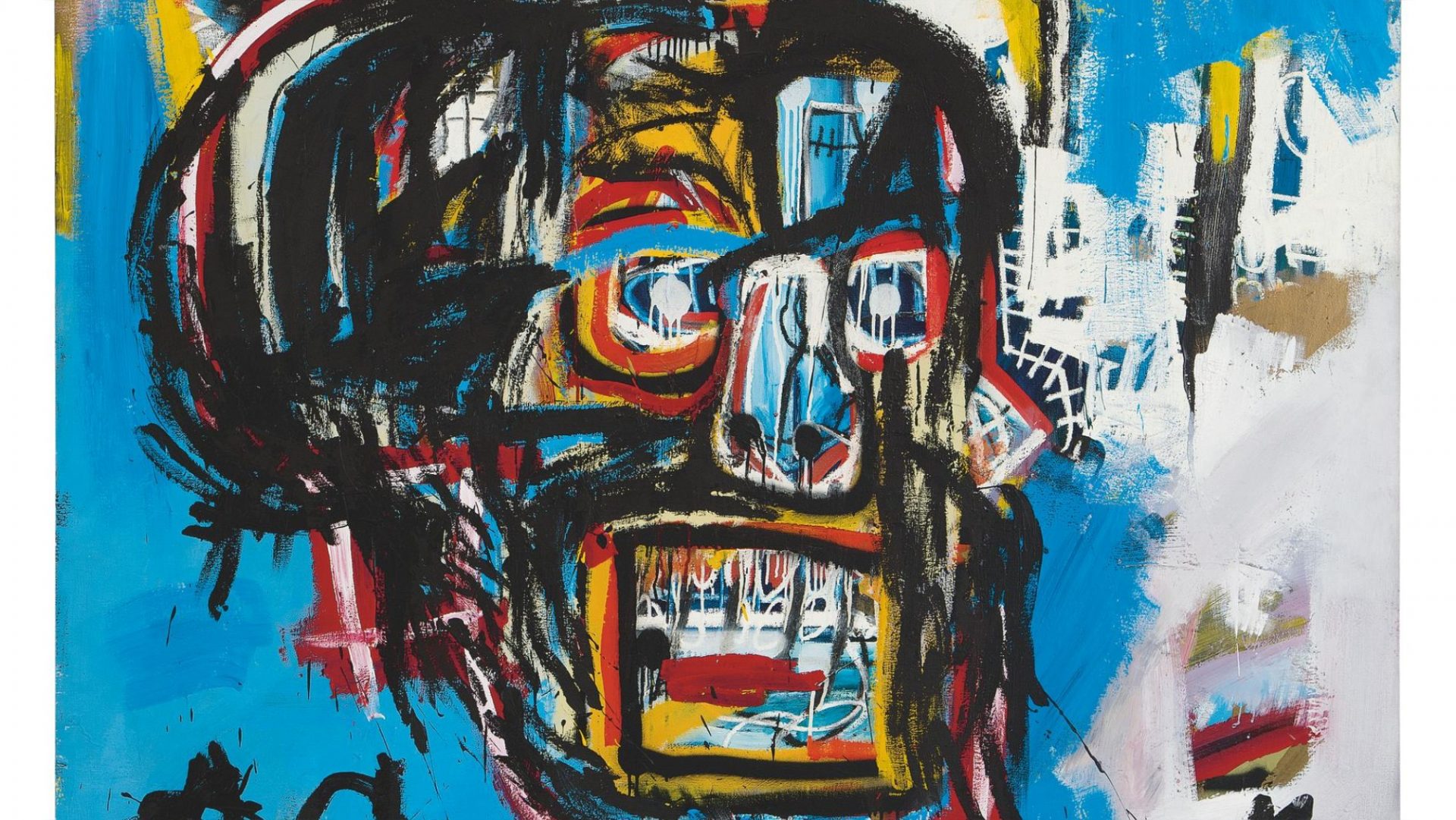
The Basquiat estate, run by his father, kept a tight leash on his work and reputation. Slowly his reputation rebounded. Basquiat’s instantly recognisable images started to appear on socks, skateboards and fridge magnets. In 2017, one of his paintings, a 1982 skull, sold for $110.5m.
It’s impossible to imagine how Basquiat would have wrangled all this. It was always hard to know what was going on in his head. He was a mass of contradictions and delighted in a lack of explanation (not that he had a huge amount of time to explain anything).
Do the 50 or so of his heads on display at Denmark’s Louisiana Museum of Modern Art in Humlebæk, north of Copenhagen, offer any clues into what the artist felt or feared or understood? It’s jarring to see such violent, vibrant works in the tranquil, sedate surroundings of one of Europe’s most beautiful art galleries. It’s the rarefied sort of environment where you feel like someone’s about to hand you a robe.
Basquiat – Headstrong is barely contained in three galleries which feature head after head after head. The drawings were completed in the artist’s formative years: 1981, 82 and 83, before his unravelling and the critical dip.
They were never exhibited or offered for sale during the artist’s life. He drew them and then hung on to them for some reason. They were created and then put away, like a diary or a secret.
One thing evident in the work is Basquiat’s fascination with bodies. When he was seven, he was struck by a car and hospitalised. His mother gave him a copy of medical textbook Gray’s Anatomy to keep him occupied.
It had an impact. A few weeks after his accident, his parents split up and his beloved mother had a breakdown. Mental illness troubled her for the rest of her life.
Suggested Reading
The mug tree of 1990s life: the genius of Signs of the Times
Basquiat quickly transformed from straight-A student to disruptive rebel. As a teen he was living on the streets and started making art to survive. He was obviously preoccupied with heads and their contents – his own, his mother’s, the people around him.
He wanted to be recognised, and this recognition was just starting to cement when he began drawing the heads. Using oil sticks, there’s fury in the lines and ferocity to the colouring. Footprints and scuff marks reveal they were made on the floor, rendered quickly and aggressively.
They don’t feature the usual Basquiat tics of random enigmatic phrases, recognisable figures, animals, arrows and diagrams. It’s mainly just heads. And, as Headstrong reveals, the heads aren’t happy.
Some are him, obviously. Others resemble a kind of muzzled, simian robot screaming in pain. More show blown-apart figures, the type he would have seen in his Gray’s Anatomy, the flesh stripped back and nerves exposed.
Skulls bark at you. Monsters stare you down. The colours astonish and the energy pumps you through the rooms at a clip. They feel like many, framed, individual cries for help, and the effect is mesmerising.
Were they some illustrated journal entry or his frenetic, mental workings-out as he tried to navigate the distended NYC art world of the 1980s? Or a reckoning; the turmoil inside his head spilled out on to the page? It’s impossible to know because when an artist becomes Basquiat-sized, trying to squeeze the human back inside the frame is like trying to push toothpaste back into the tube.
Disentangling Basquiat the brand and Basquiat the man is impossible. But this collection of stark, soulful drawings shows the artist in his rawest form and illuminates his resonating talent while obliquely nudging him away from the ubiquity and hype. A little legitimate Basquiat seeps out from beyond the walls.
Basquiat – Headstrong is at Louisiana, Humlebæk, Denmark until May 17.
Dale Shaw’s books include Last Minute Rooms in Bethlehem: And Other Great Internet Search Histories of the Past