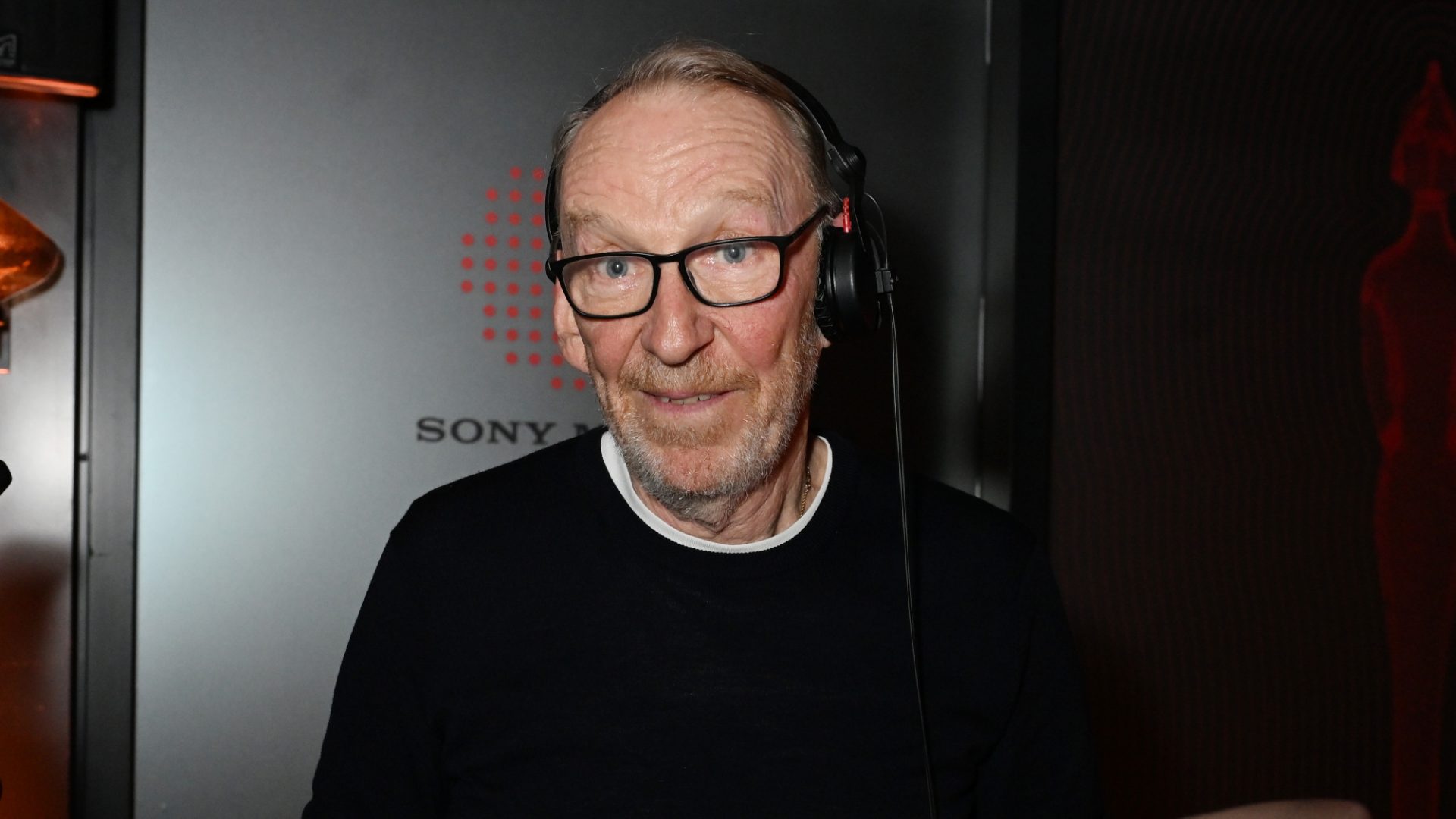
The Manchester music scene is riddled with self-mythologisers. Verbose visionaries like Factory boss Tony Wilson, renegades like the Fall’s Mark E Smith, provocateurs like the Gallagher brothers of Oasis. It’s a city built on legend, ego and mouthy, maverick energy.
Mike Pickering identified, inspired or actively initiated many of Manchester’s pivotal music scenes. If he’s not as heralded as those listed above it’s only because he’s someone who rarely looks back, dedicated to what happens next rather than any self-aggrandising laurel-resting. “I don’t like nostalgia and I don’t like retro,” Pickering tells me. “I’ve never really looked back that much. I wasn’t one of those people who could sit and talk about it for ages.”
Pickering is now ready to talk. He witnessed the Beatles, Bowie and pivotal punk moments in the city, started a club in Rotterdam that inspired the Haçienda, then brought house music to prominence in that iconic club, kickstarting the British rave scene. He introduced the Happy Mondays and James to Factory Records, sold millions of albums with his own band M People and launched the careers of Calvin Harris, Gossip and Kasabian.
His new memoir, Manchester Must Dance, featuring contributions from Harris, Noel Gallagher, Johnny Marr and Martin Fry, travels through his obsessions with DJing, fashion, football, politics and music, reflecting a time when the city felt like the centre of the cultural world.
“I remember going to Waterstones with Tony Wilson, to see Anthony Burgess,” Pickering explains. “Somebody in the audience asked, ‘What’s the difference between a Londoner and a Mancunian?’ And he said, ‘In the north, we look outwards, first to Europe and then the rest of the world. In London, they look inwards into their city.’ And he was right. I think that’s why we had that golden era of music.”
Pickering helped incubate that golden age. But the Manchester of that time hardly seemed a place open to cultural revolution.
“It was like New York when they called it ‘the rotten apple’,” he says of his home town in the 1970s and 80s. “There was no work, nothing in the city worked, none of the streetlights worked. It was dangerous. And it was just backward, really backward.” But Pickering was determined to make his mark on the city and try to change it for the better. Even if that could be a risky enterprise.
“I wore Romanian national costume one night in a really rough pub in north Manchester, which was fucking notorious. I’d been on holiday to Romania with some mates and thought, ‘That costume’s great. It’s really Bowie, really Hunky Dory.’ Needless to say, it only came out once.”
Pickering was always someone keen on broadening his horizons. After the explosion of punk in the city, which he fully embraced, and the rise of such innovative bands as the Buzzcocks, Joy Division and the Fall, he travelled throughout Europe, settling in Rotterdam and dousing himself in the different cultural flavours that his adopted city provided.
“Manchester wasn’t cosmopolitan enough,” he says. “I fell in love with Europe. I’m still in love with Europe. And I see myself as a Mancunian, and as a European.”
Pickering first met Rob Gretton, one of his closest friends and later manager of Joy Division and New Order, under a hedge while avoiding rampaging Nottingham Forest fans during a Manchester City away game (as the book indicates, football plays a huge role in Pickering’s life). In 1980, just after the death of Joy Division’s Ian Curtis, Pickering invited the rebuilt New Order to play their first European show at his “Rotterdam Must Dance” night.
Suggested Reading
The writer who met an angel disguised as an Albanian gangster
Gretton, impressed with what he saw, invited Pickering to head home and help set up a similar club in Manchester, while working behind the scenes at Factory Records. The result was the infamous Haçienda. Pickering booked the bands and eventually became one of the club’s DJs. Manchester started to dance.
“Rob, Bernard (Sumner, New Order vocalist) and everybody, like me, were into European electronic music. It’s weird Tony [Wilson] didn’t see it. He said to me, ‘DJs will never be stars, darling’. And I was like, ‘whoa, we’ve got 1,600 here on a Friday night’. There’s a thread through the book about Tony not wanting dance music which, in the end, kind of put paid to Factory.”
The Haçienda became the epicentre for the “Second Summer of Love” with Pickering unearthing and playing the dance tracks that initiated rave culture. But this euphoria was short-lived as police pressure, turf wars over drugs and general mismanagement led to the closure of Factory and the club.
Pickering took everything he had learned and applied it to a new venture, M People, a band that purposefully leaned into a commercial sound, sold millions of records and won the Mercury prize in 1994. Yet snobbery, especially from the music press of the era, ensured the band were never revered.
“It was almost like the times of ‘Disco Sucks’ and burning disco records,” Pickering tells me. “It made me really determined with M People. But I have to say, at the time, I was like, ‘I don’t give a fuck what you write about me’.”
Following the band’s demise, Pickering moved into A&R, launching the careers of a host of chart-topping acts. “I used to say to the bands I worked with: ‘I work for you, not really the record company. The record company only pay me, but I work for you’. It was quite easy for me because I was an artist.”
Pickering still occasionally DJs while enjoying the quiet life in Kent. He admits to being nervous, suddenly placing himself front and centre with a book detailing his life. But he’s still determined to try new things and take risks, including writing a memoir, thanks to one, underlying attitude.
“You know, I’m a punk now, still today. I question everything, that’s all.”
Manchester Must Dance is published by Manchester University Press.
Dale Shaw is a comedy writer and producer of the You’re Booked podcast