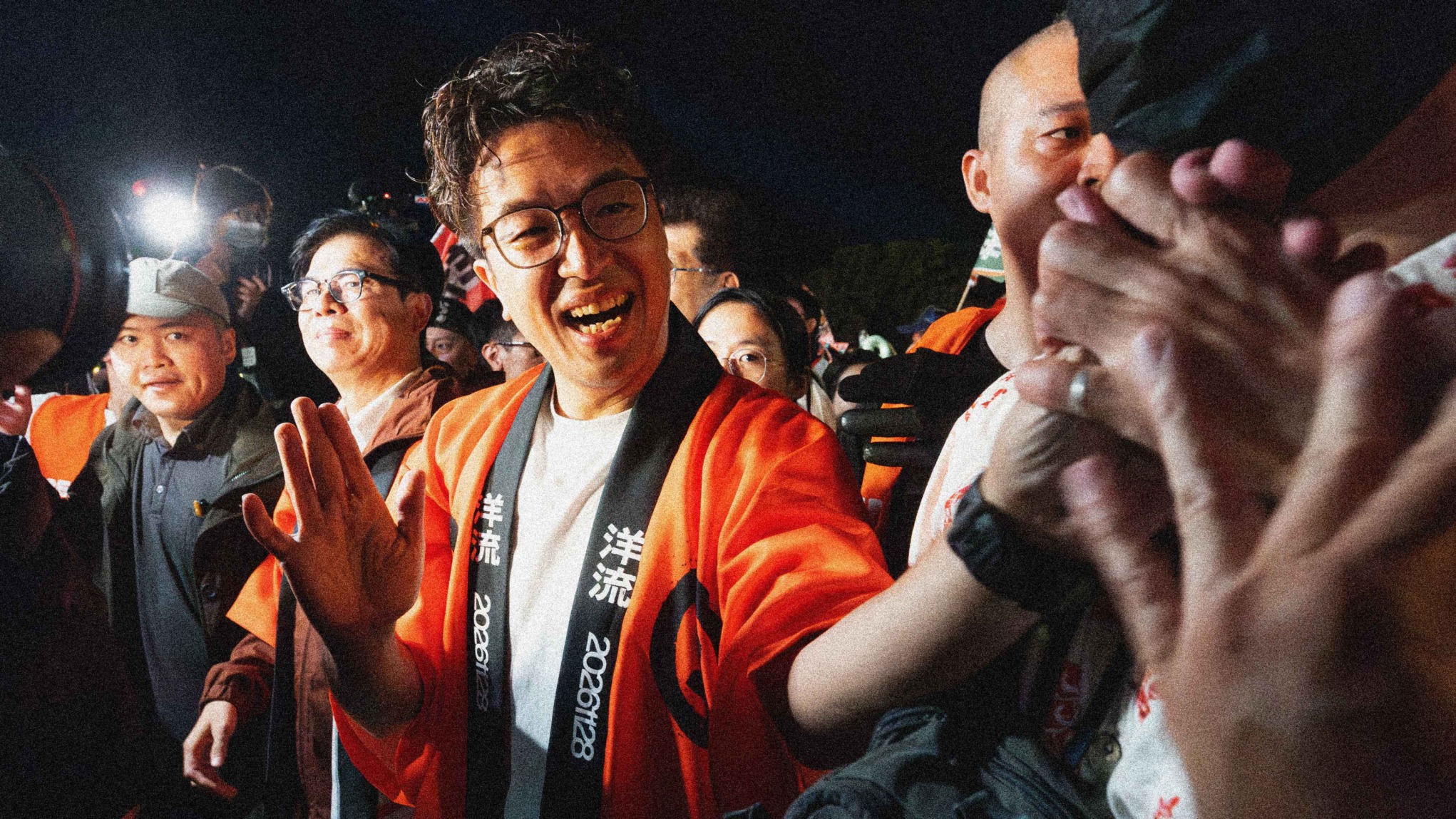
It seemed like a slow election – and then it wasn’t. The 2026 local elections in Taiwan, in which mayors and councillors at city and county level will be elected, have been electrified in the last two months by the rise of a progressive mayoral candidate named Puma Shen.
To the western observer, there may be something familiar about him. That’s because, according to news reports, the Democratic Progressive Party (DPP) had one person in mind when it picked Shen for Taipei mayoral candidate – Zohran Mamdani.
The tough-minded, liberal CV is impressive. Shen is originally a lawyer and academic, who specialised in Chinese disinformation. He also founded the Doublethink Lab, which researches influence operations, and the Kuma Academy, which is Taiwan’s best-known civil society defence organisation, which trains civilians for war. He was also previously the vice chair of the Taiwan Association for Human Rights.
There’s a lot of excitement around Shen. I run a cafe located next to a Progressive Party councillor’s office and when there is a Shen merch handout you’ll get young people queueing up for hours. The longest lines so far were for the rainbow-branded merch, to coincide with Pride back in late October.
Suggested Reading
Want American socialism to work? Make it look like Mamdani
Shen was an unknown. Like Mamdani, he rose to superstardom through his skills at public speaking, and his encyclopaedic knowledge of policy, which means he can field questions about almost anything. It’s become something of a party trick. A rally in Songshan-Xinyi, Taipei’s most affluent district and the one where Shen is trailing, ended with an unscripted audience Q&A. He aced it.
There has also been a makeover. Shen was previously prone to hoodies, a morose brooding air. Now he’s cleaned up his image and is all smiles. The new campaign videos are dynamic and well-shot.
Shen entered Taiwanese politics in the wake of the 2014 Sunflower Movement of political protests by students and other groups. Part of that movement’s approach was to emphasise real policy discussions over empty sloganeering. It was an honourable aim, but was often boring and uninspiring for the public, many of whom preferred the shouting.
But Shen makes the normally drab policy details engaging and roots them in people’s everyday concerns. This has been helped by his campaign’s use of analytics to identify the most resonant issues. Before Shen’s campaign, few people registered the public anger at the felling of trees across the city.
The current mayor of Taipei, Chiang Wan-an of the conservative Chinese Nationalist Party, has not fared so well. Chiang is young and good-looking, but is poor at speaking and often relies on aides for facts and numbers. He’s also the great-grandson of former dictator Chiang Kai-shek. In this sense, the wave of popular support for Shen is a reaction against nepotistic politics.
With two weeks before voting day, Shen held a music festival in the 228 Memorial Park in western Taipei. Indie bands and DJs played in a carnival atmosphere. Chiang held a march the same day; none of his rallies are as well-attended or exciting as Shen’s.
Which means the race is now Shen’s to lose, and Taipei has historically slanted towards the Chinese Nationalist Party. But Shen is the most promising DPP candidate in Taipei for three decades, and whatever happens, he has a big political future here.