You would imagine that the people who came to an event to launch a book about the war in Ukraine, at which I interviewed the author, would in the main be politically engaged and well-informed. They had paid to be there, and many queued to buy Luke Harding’s book, Betrayal.
However, when Luke and I began to discuss Russian dirty tricks employed against the UK, and the name Nathan Gill came up, I sensed that some in the audience were wondering who we were talking about.
A reminder: Nathan Gill was a Reform MEP, a close associate of Nigel Farage, the leader of the party in Wales. He is currently less than one year into a 10-and-a-half-year prison sentence for taking money from Russia to spout Kremlin propaganda in the European Parliament on their behalf. There are not many Brits who have been convicted for working for the Russians. So you would think this rare traitor would be a household name.
Far from it. We asked for a show of hands among the 400 people present. Around one-third raised their hands to say they knew who he was. Two-thirds said they did not. Luke and I were both gobsmacked. I asked if they had heard of John Profumo. Near universal recognition, from young and old alike.
So the central British political figure in a scandal dating back to the early 1960s, involving an affair with a young woman who was simultaneously seeing a Soviet naval attaché, is indeed a household name, despite having died two decades ago, having spent not a single day in jail. But, even among those who follow the news and politics closely, Gill is not.
Some might imagine that this reflects changes in mores, generation to generation; that what was deemed scandalous when I was a child is no longer seen as such, now I have joined the pensioner generation. More likely is that the change has less to do with new standards of morality, and more the new double standards of our media. Profumo was a Conservative minister. But had there been a Labour government at the time, and he a Labour minister, I think press and politics would have treated him the same, with the same result, an enforced resignation from government.
However, had Gill been a Labour MEP, a close associate of a Labour leader, the leader of the Labour Party in Wales, I guarantee he would be among the best-known politicians in the land, because the right wing media would make sure he was.
We are seeing the exact same double standards in the coverage, or perhaps lack of it is more accurate, of the remarkable undercover film on Reform’s efforts to circumvent the law on political donations. It was the kind of journalistic endeavour that would once have been universally admired by media across the political spectrum.
The instinct of editors and journalists on several of our biggest media outlets, however, led them to worry less about how they could catch up on the story, more about how to help cover it up and make it go away. And that they do largely by ignoring it or, in the case of much of the broadcast media, by focusing on the denials of wrongdoing while worrying less about whether actually to test via investigation the rights and wrongs of what is said and done.
It is quite remarkable that the news that Farage was to be interviewed by the police about all this somehow failed to make the front pages of several of our national newspapers.
As a result of these double standards, James Orr and Dan Jukes, along with Farage the central figures exposed in the film, can walk down pretty much any street in the land, unrecognised, untroubled, hopeful theirs will be a temporary suspension, quietly dropped once the “internal investigation” (sic) is completed.
Compare and contrast Orr, ludicrously an associate professor of ethics and divinity, with another Cambridge University academic, Jason Arday, whose actions were a lot less newsworthy, a lot less criminal, and yet whose name, face and pretty much everything else about him were splashed endlessly across the media, until he died, when they all declared it was time to move on.
This, I am afraid, is the real two-tier Britain of our time; a bent media allowing bent politicians to get away with more than they should, and for too long, solely because they are well to the right on the political spectrum.
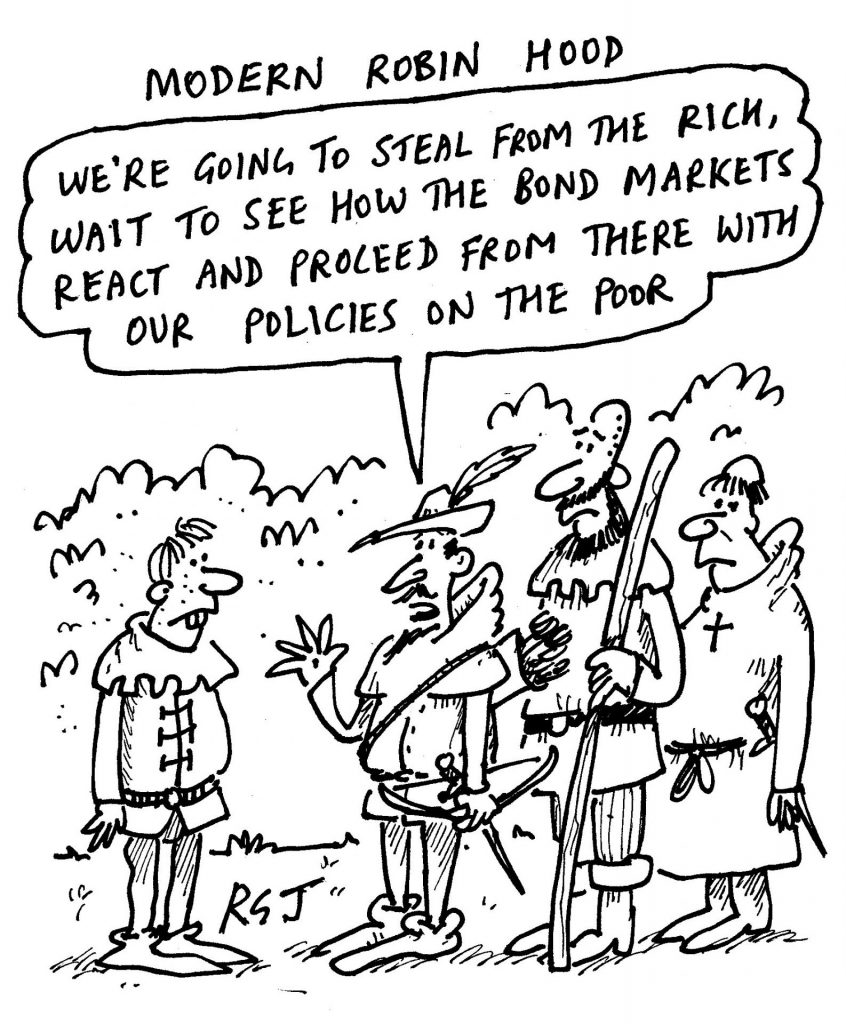
I cannot recommend strongly enough that you watch the whole Verbatim documentary on Reform because only then do you get a sense of the full horror of what these ghastly people do.
As you do so, I urge you to hold in mind a piece of legislation known as PPERA, the Political Parties Elections and Referendums Act 2000. A key point from Sections 50 and 54: only voters on the UK electoral register or entities domiciled in the UK can make donations to political parties and politicians. To secure the act’s objective of keeping foreign money out of politics, the concept of a donation is broad – it is not just straightforward gifts of money, but can include provision of property (a free office), or money’s worth (free services), sponsorship or loans. And crucially – this relates to the central allegation that Reform used money they knew to be impermissible to pay for polling they wanted done – it can include paying an expense incurred by the political party.
Suggested Reading

How the publishing industry failed Jason Arday
Section 61 may be equally relevant. It is a criminal offence to enter into, or further an arrangement which facilitates or is likely to facilitate donations by an impermissible donor.
Over to you, police. Good to hear you are taking this seriously.
As Prince George settles in at Eton, and our prisons continue on their seemingly intractable path to explosion, it is worth reflecting that the school’s fees, almost £66,000 per year, equate roughly to the cost of keeping someone in prison for a year, which is a few grand cheaper.
I picked up this intriguing fact at a fundraiser for Music in the Ville, an initiative that takes professional musicians – and from time to time me on the bagpipes – into Pentonville prison, and gets the inmates involved in music. I have seen for myself the remarkable impact these sessions can have on men often in their cells for more than 20 hours a day.
Suggested Reading
The media’s Harry and Meghan hate machine is weird and sad
Whether Eton’s fees deliver value for money, I have no idea. The more time I spend in prisons, however, the more convinced I am that we would get better value for money if we spent it trying to keep people out of prison, rather than keeping them in.
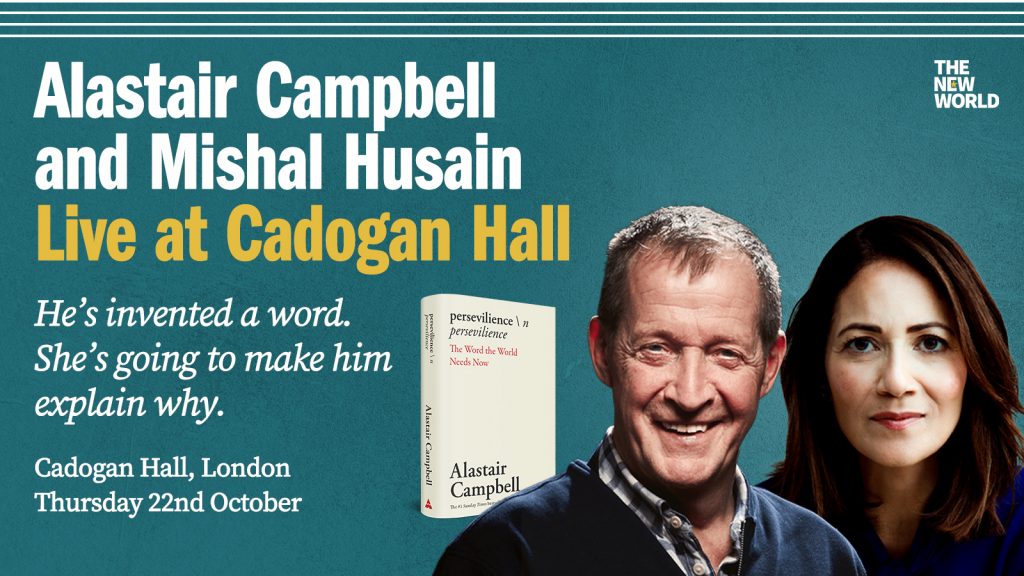
No fewer than 503 people out of more than 3,000 who took part correctly guessed the title of my new book, Persevilience, in a contest ahead of last week’s announcement by Atlantic Books that it would be published on October 22. This confirmed me in the view that I have chosen the sub-title well… the word the world needs now.
Of course The New World will be part of the launch plan, so on October 22, at Cadogan Hall in London, I will be talking about why I invented this new word, what it means, and the role it can play in helping us lead better lives and create a better world. I will be in conversation with Mishal Husain, or “the BBC’s loss is Bloomberg’s gain”, as we call her in our house.
Tickets are available from cadoganhall.com now