My mother died suddenly in her 80s, and though I am glad she went without pain or even a full day’s illness, I will always regret that her death came so quickly that I did not see her in time to say all the things I think it is important to say before someone you love leaves the world. I like to think I had said them all in different ways at different times, and I am sure she knew how loved she was by all of her four children, and many more people beyond.
Thankfully, I had spoken to her the day before, from a hotel room in Cairo, and though not a deathbed conversation, it was far more than a run-of-the-mill “How’s it all going? How’s the weather?” chat. But I still wish I had been there in those final hours.
On the day itself I had moved on to Amman, the capital of Jordan. I was in a meeting. I had my phone in my pocket on silent, and on checking it as the meeting ended, I noticed a stack of missed calls from Fiona, and from my sister Liz. Mum had collapsed, been taken by ambulance to hospital, and it was clearly very serious.
I arranged to fly home, and by the time I was about to board my flight, my sister was intimating that I might not make it back in time. As I landed at Heathrow, Fiona was there to tell me what in my heart I already knew. Indeed, I had spent much of the five-hour flight, tears falling, drafting the eulogy I feared I would be making all too soon.
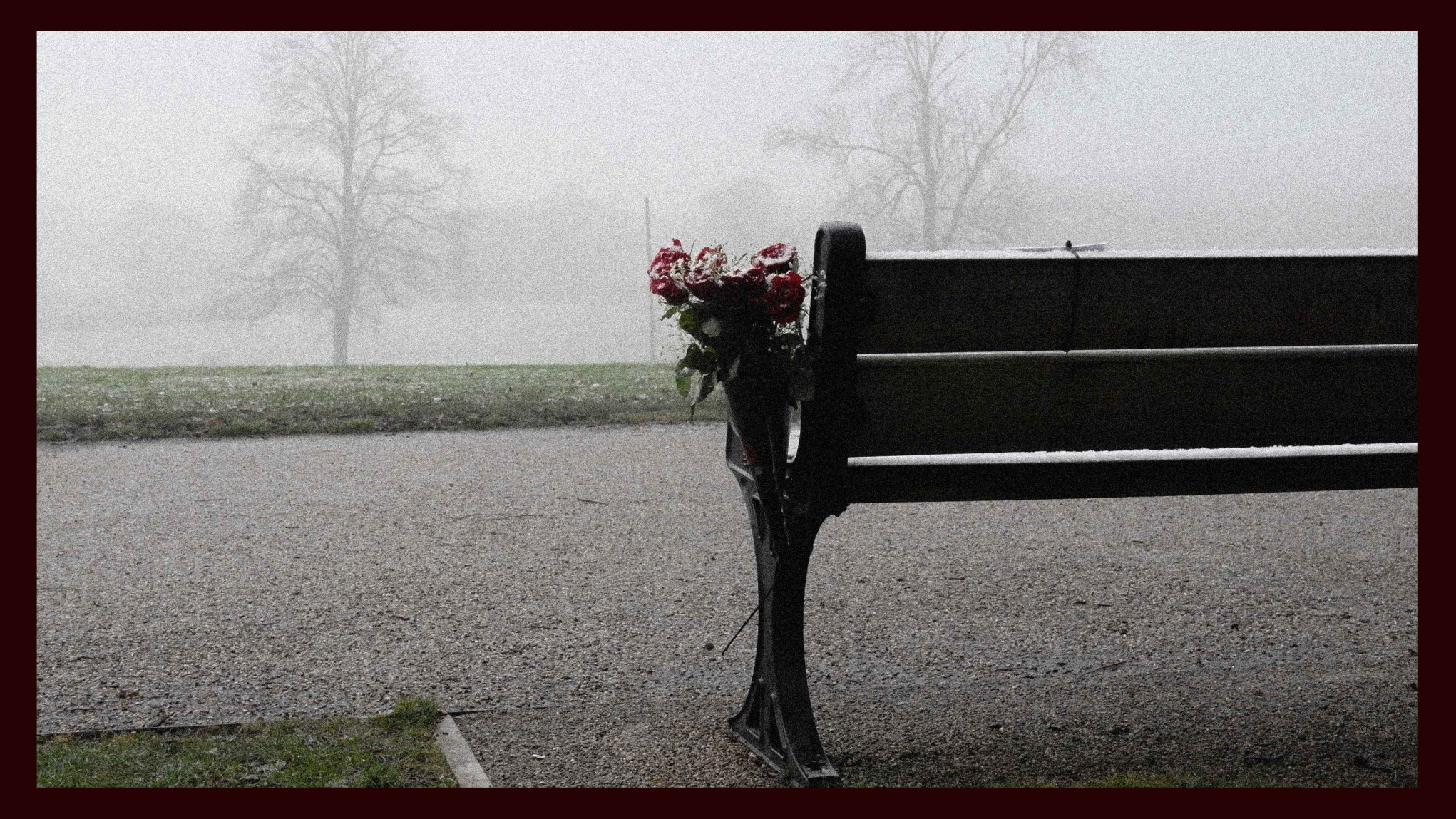
She lived in a village in Nottinghamshire, a few doors up from my sister, who, in going through Mum’s papers, had found a poem by Frances Day which she had left for us, with instructions for it to be put on the order of service and read at her funeral.
Farewell my family, my life is past
I loved you all to the very last
Weep not for me, but courage take
Love each other for my sake
For those you love don’t go away
They walk beside you every day
I have lost too many people, not just elderly parents, something we expect in the normal course of things, but also two brothers in their early 60s, a cousin through suicide, my best friend John and several other very close friends from various stages in my life, too young. The sentiment of Mum’s poem, however, is absolutely right. They’re still here when I need them.
Suggested Reading
EXCLUSIVE EXTRACT: The art of surviving a political crisis
Their memories. Their values. Their advice – or at least the advice I think they would give if they were here in body as well as spirit. If any of our children are going through a bad patch, I have imaginary chats with my parents and ask them what they would do. They usually say “just be there for them”.
There is a framed photo of my mum in the kitchen, a typical shot of her, with a kindly, gentle smile, eyes twinkling, and I imagine her saying, “It’ll be fine, you’ve been through worse.”
If it is a political problem, I will share it with Philip Gould, the Labour strategist who died in 2011 aged 61. Once he was diagnosed with oesophageal cancer he was so persevilient he not only survived longer than expected but became obsessed with what he called “a good death”, and wrote a book on dying, When I Die: Lessons from the Death Zone.
I sometimes “talk” to Tessa Jowell, Glenys Kinnock, John Prescott, Charles Kennedy. If I am struggling with my writing, I talk to John Merritt, or to Richard Stott and Bill Hagerty, two former bosses at the Mirror who would later edit eight volumes of my diaries, or to my former literary agent Ed Victor, the only man I knew who could always beat me at name-dropping.
“Alastair, can I ring you back?” he once said as I called for a chat. “I’m just getting on Cher’s plane with Bono.”
Perhaps most of all these days I talk to David Sturgeon, a psychiatrist who became much more than that to me, and whose death after helping me look after my mental health for years hit me really hard. I have not replaced him. I’ve tried a few replacements, but I just didn’t gel in the way I had done with David.
So now, when I feel the dark cloud of depression beginning to fall upon me, I sit down, pretend he is there, and I talk to him. These conversations – all taking place in my head, though if I am alone I might speak out loud – are based on memories of the many meetings we had over the years, and the pages and pages of writing he made me do as “homework” in advance of our sessions.
After he died, his wife Liz sent me his folder on me, his notes from our sessions, my notes in advance of them, his analysis of my hopes and fears, dreams and nightmares, and I find them useful today, as a way of reliving the past to focus on how to stay healthy into the future. They are often also very funny, which always helps.
Suggested Reading
The truth that Northern Ireland has never confronted
Back to name-dropping… “The first patient I’ve had who dreamt in the same night about Arsène Wenger, Nelson Mandela, Margaret Thatcher and Tony Blair,” he observed. Grief is an important contributor to the persevilience both of the dead and of the grieving.
For those who have left us, it is part of how they live on, contribute, make a difference even though they are either bones in the ground or ashes long scattered. In turn, they contribute to the persevilience of those they have left behind.
At least once every day, often more, one of the people I have lost will pop into my mind with a thought, a memory, which often becomes a suggestion for something I should do or say. That is how these “conversations” begin. They make the dead person feel alive to me again. They make me feel better. They help me in managing my relationships with the living. They keep my persevilience reserves topped up.
They really do walk beside me, as Mum said they would, in the words now on my office wall at home…