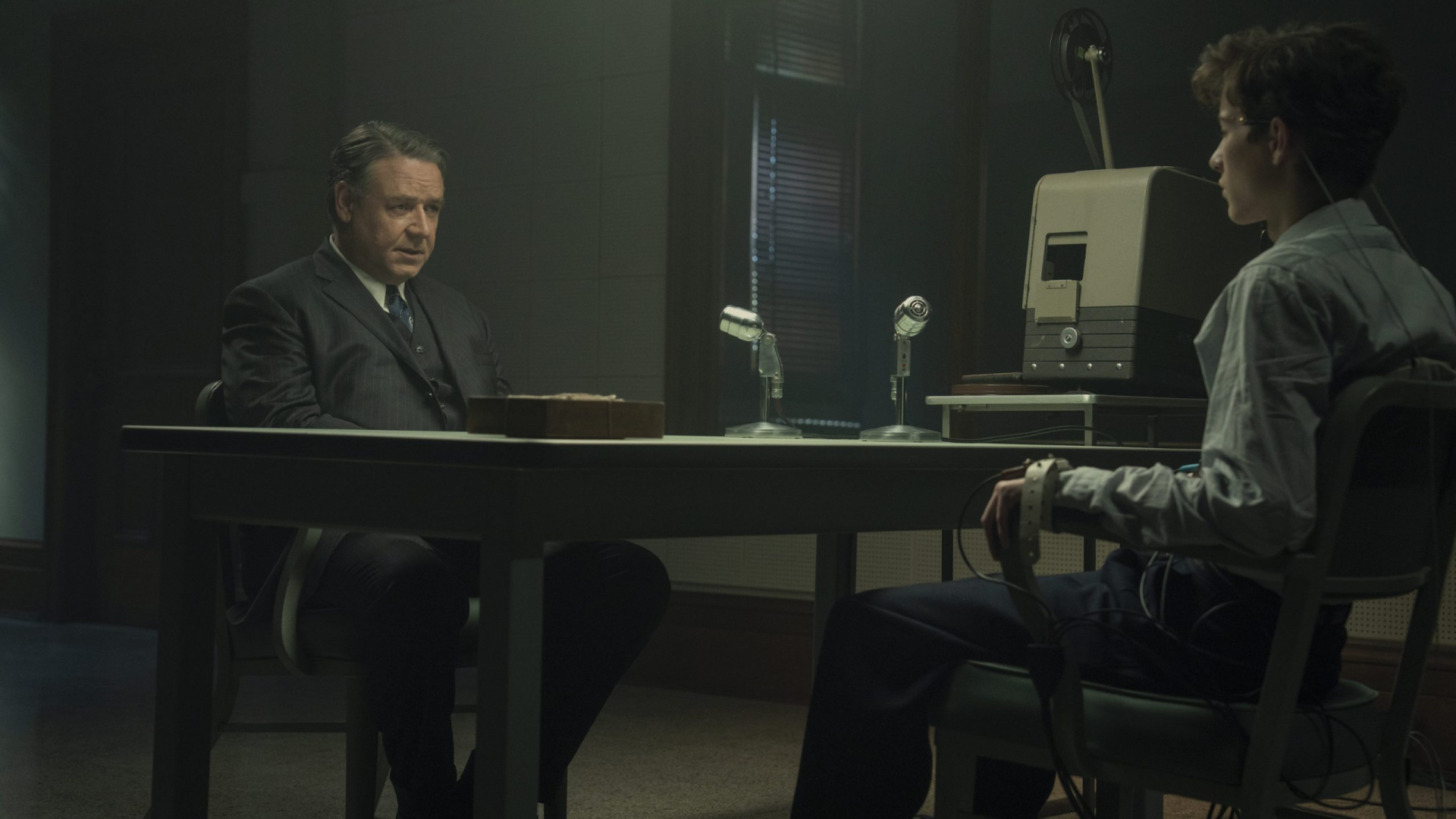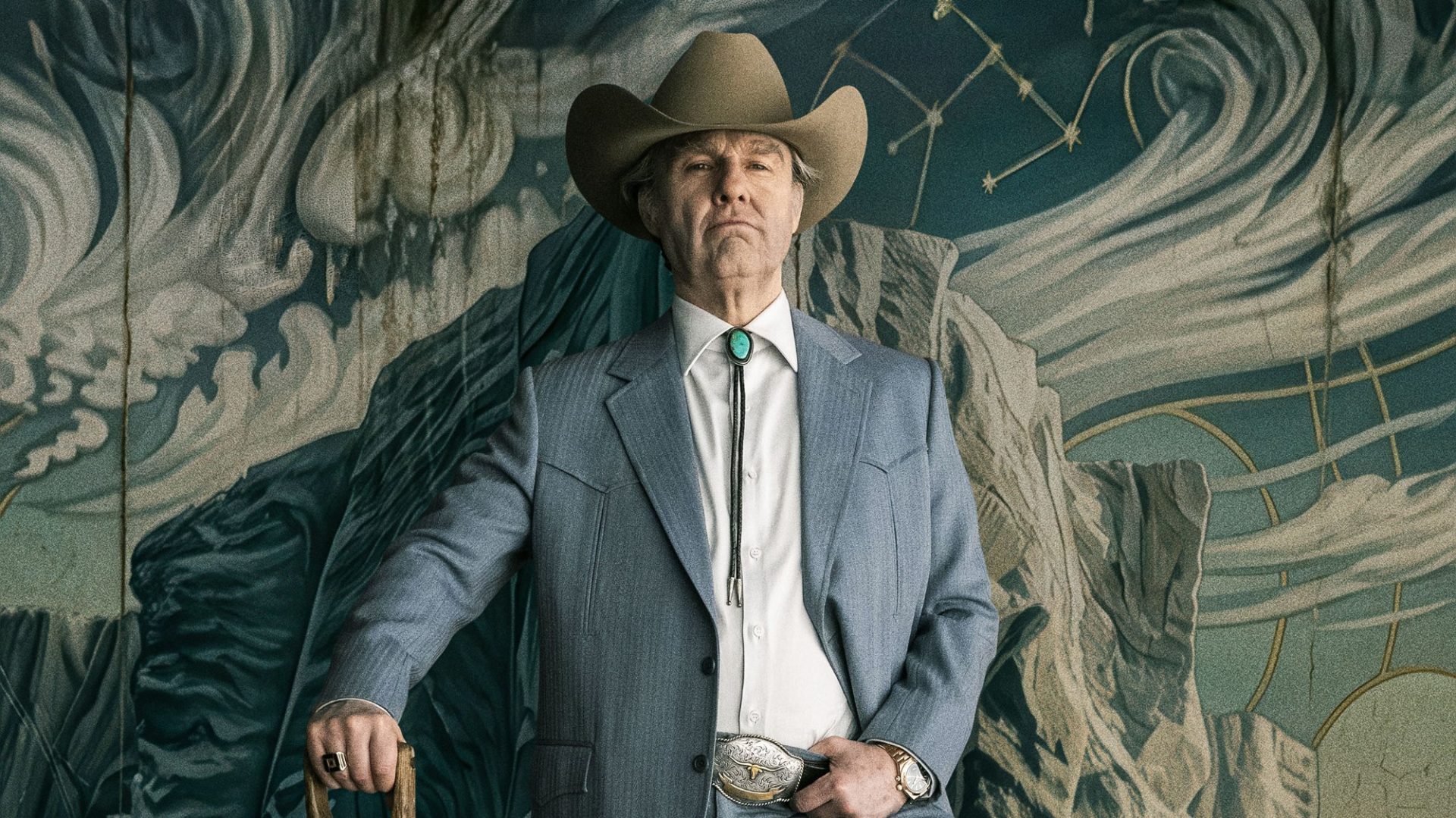
“Everything’s led to this,” said Tom Cruise, sitting down for a rare interview with GQ to publicise his new film, Digger – out on October 2, his first original, non-franchise role in years – an absurdist black comedy in which he plays the eccentric oil magnate Digger Rockwell. His director, Alejandro G Iñárritu, has called Cruise’s transformation into the elderly, pot-bellied tycoon “astonishing,” and the pundits have followed suit.
The Wrap calls him “unrecognisable”; Gold Derby says “the movie star disappears”; Euronews calls the performance “transformative” and asks, “Is this the movie that finally wins Tom Cruise his first competitive Oscar?”
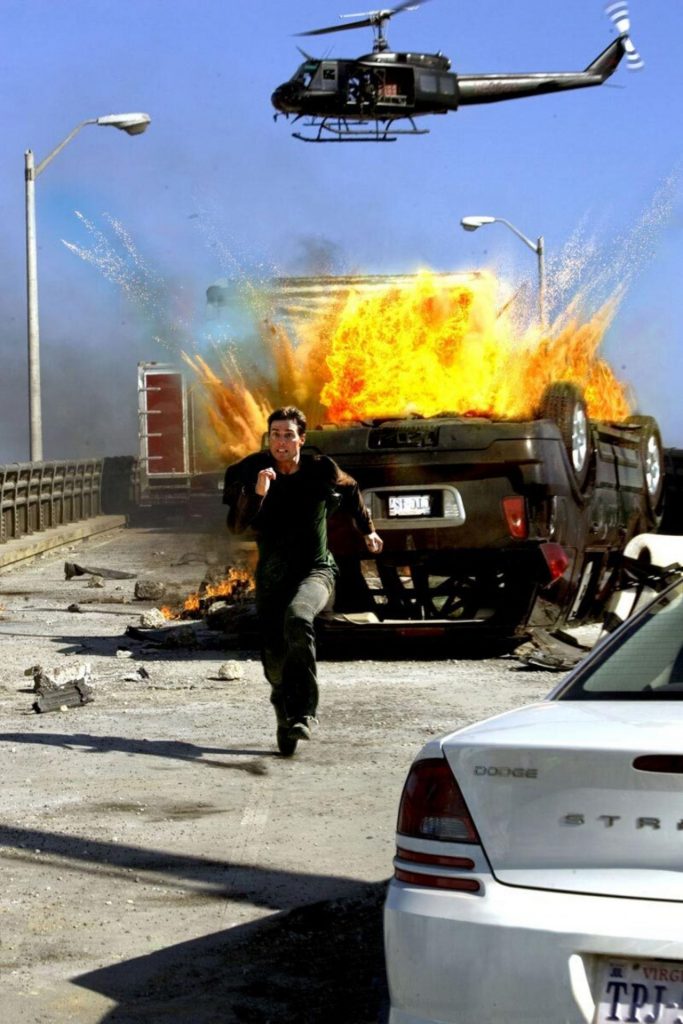
The language of Oscar buzz – “transformative,” “unrecognisable” – is easy to spot because it exactly inverts the normal operating procedure of stardom. For decades the studios have looked to Cruise as the man who will headline their biggest spectacles. Usefully for our era of non-stop action, Cruise may be one of the few stars as recognisable in long shot as in close-up. That’s him, not a stunt double, hanging off a fuselage, or legging it down the side of a building, torso rigid, hands flat, arms pistoning.
Ahead of the official trailer for Digger, Warner Bros released a reel that ran through his 46-year career – the grin, the thumbs-up, the runs, the stunts – and appended just a few seconds of the new film at the very end: Digger, with thinning hair and liver spots, rasping, “When all else fails, you hit ’em with the truth.”
The Associated Press got the message with typical succinctness (“Old Tom Cruise!”), but the proportions of the messaging – three minutes of actor to three seconds of character – perfectly caught the lopsided path of the modern star in search of Oscar glory. For if a star’s bankability rests on his or her recognisability, acting, at least as the Academy judges it, rewards the exact opposite.
A prosthetic nose turned Nicole Kidman into Virginia Woolf for The Hours. Charlize Theron gained 30lb and bleached her eyebrows to play serial killer Aileen Wuornos in Monster (2003). Gary Oldman endured hours of prosthetics and a fat suit to play Churchill in Darkest Hour (2017). Brendan Fraser acted from inside a 300lb suit in The Whale (2022). All four won Oscars. If the highest compliment we can pay an actor is that we can’t find them, then the star’s path to the statuette runs through erasure.
It also runs on a certain amount of obliging white lies from the press. Slight fibs in the case of actors like Fraser and Oldman – character men before they were stars – become outrageous whoppers in the case of megawatt names like Kidman and Cruise. Is there seriously anyone who wandered out of The Hours asking, “Who was that actress who played Virginia Woolf?”
“Unrecognisable” never means I didn’t recognise her. It means I recognised her the whole time, and I was impressed by how hard she made me work.
The modern star’s Oscar turn is a form of cinematic trompe l’œil. “To be successful, it must involve its own failure and sooner or later give the plot away,” writes the art critic Rikke Hansen.
A trompe l’œil that literally fooled the eye – that convinced viewers a real curtain had been drawn across the picture – wouldn’t delight but frustrate them. So a movie star who genuinely succeeded in self-effacement would leave no gap to measure, or reward. The disappearance cannot afford to stay disappeared.
The closest anyone has come is probably Colin Farrell, who, after being plied with prosthetics for his role as the Penguin in The Batman, reportedly went unrecognised in Starbucks. It took an HBO behind-the-scenes makeup featurette to highlight his transformation and feed the whole “you won’t believe that’s Colin Farrell” press cycle that led, eventually, to a Golden Globe.
Has any star ever dared to remain genuinely incognito? Early marketing made no mention of Cruise’s appearance as the foul-mouthed studio boss, Len Grossman, dancing to hip-hop, in Tropic Thunder (2008). The main one-sheet was the three leads – Ben Stiller, Robert Downey Jr, Jack Black – and when set photos of Cruise as Grossman leaked, his lawyers pounced.
Some early audiences genuinely didn’t clock that it was Cruise, but after the film came out, the tour de force was celebrated as such, Cruise reprised Grossman at awards shows and there was even talk of a spin-off.
Hence the necessity of that greatest hits reel of Cruise’s career to promote Digger, and of the messaging from Cruise himself. “It took 40 years for me to put on the boots of Digger Rockwell,” he told GQ about the role of an oil magnate racing to solve an eco-disaster he himself has set off.
It is as “meta” as any awards campaign could wish for: a colossus performing humility. And it comes from a director who has steered 10 actors to Oscar nominations across just seven films, a strike rate rivalled among living directors only by David O Russell, who conjured a dozen over a five-year sprint.
‘The Wrap calls him “unrecognisable”; Gold Derby says “the movie star disappears”; Euronews calls the performance “transformative” and asks, “Is this the movie that finally wins Tom Cruise his first competitive Oscar?”’
Like Russell’s, Iñárritu’s movies seem to come with an Oscar ballot attached – including a best actor win for Leonardo DiCaprio, a fact surely not lost on Cruise, whose unsuccessful previous nominations (Born on the Fourth of July, 1989; Jerry Maguire, 1996; Magnolia, 1999) resulted, last year, in a consolatory Honorary Oscar. “This may be his first Oscar, but from what I have seen and experienced, it will not be the last”, said Iñárritu, clearly grasping the nature of the assignment he’d been handed.
You’re not mistaken if you find something a little mechanical in all this. “If we can’t control the course of the narrative, we can at least control the narrative,” Cruise confides to his co-star Sandra Hüller in the Digger trailer. Control is the hallmark of the career he has fashioned for himself, and its Achilles heel.
When people call Cruise “the last movie star,” what they really mean is that he is managed – the way the studio heads once managed their stars: whom they dated, where they were seen, what they wore, the colour of their hair. Once fixed in the public mind they remained so, even on Oscar night.
When Clark Gable won the Oscar for It Happened One Night, it was for being quintessentially Gable, just as Jimmy Stewart did for The Philadelphia Story, Joan Crawford did for Mildred Pierce, and Gary Cooper did for High Noon. Actors like Paul Muni and José Ferrer also suffered nobly in prestige biopics to win Oscars, but the stars were celebrated for being gloriously themselves.
Today the studio system is dead, and method acting has left scuff marks on the whole idea of being a movie star – Brando called stardom “a whole lot of frozen monkey vomit.” Most today admit to some embarrassment around the term. There is no Zanuck standing at anyone’s shoulder, telling them whom to marry.
“The public, however, was not easily robbed of its fantasies,” writes Jeanine Basinger in her marvellous 2007 study The Star Machine. “They refused to abandon type.” So the most successful stars must now reproduce the old studio system within themselves, managing the dialectic between recognisability and transformation, star and character, as the studio heads once did.
Cruise is agent-repped for the paperwork, but otherwise manages himself – he is his own producer, marketer and career strategist. In his GQ interview, he essays the studied blandness of a CEO, waffling endlessly about how much he loves “the art form” and how excited he is “about where movies are” – like Tyrone Power and Darryl Zanuck rolled into one.
He has all the trademarks of a Golden Age star except the power of relaxation. Cruise has never made it look easy. As its title suggests, the Mission: Impossible franchise is premised on an insane level of difficulty, and seeing him spring free, but never with one bound: his cheeks flap with the g-force as he hauls himself along the fuselage of a plane. In his “dramatic” roles, like A Few Good Men, you could play bass with the tendons standing out on his neck.
For GQ, Iñárritu recounted the long months spent rehearsing a complicated scene with 300 extras, a lot of camera moves, a lot of dialogue. “Tom is driving the whole dance, and if Tom fails, everything collapses, right?” said Iñárritu. “One word, one hesitation, one stutter, it’s fucked.”
He gave the star seven notes. “He was just looking at me with the eyes like this. And then his eyes were, like, taking pictures, I think. Click-click-click.”
Then Cruise said, “Yes, I got it.” “Are you sure?” “I got it.” “Camera!”
As he watched the shot unfold, with Cruise hitting every note he had just been given, Iñárritu said to himself, “How the fucking hell is this guy able to understand the physicality, the spaces, the silence, the shout, the aggression, the vulnerability, the dance with the camera, and knowing every bit?”
Suggested Reading

Tom Cruise, the Nietzschean Superman
The actor has always known something more important than acting: he knows how to put on a show. Watch the shot in the Digger trailer where he lets off the imaginary six-shooter: side-on, flat to the lens, proscenium-style – and it rhymes, unmistakably, with a young Tom Cruise sliding across a living-room floor in his socks and shirt-tails to Bob Seger in Risky Business.
The camera can’t help it: it keeps presenting a star. Whether it will be enough for the Oscar voters is, in the end, the one thing beyond even Cruise’s control.
Digger is released in UK cinemas on October 2. Tom Shone is the author of Blockbuster: How Hollywood Learned to Stop Worrying and Love the Summer