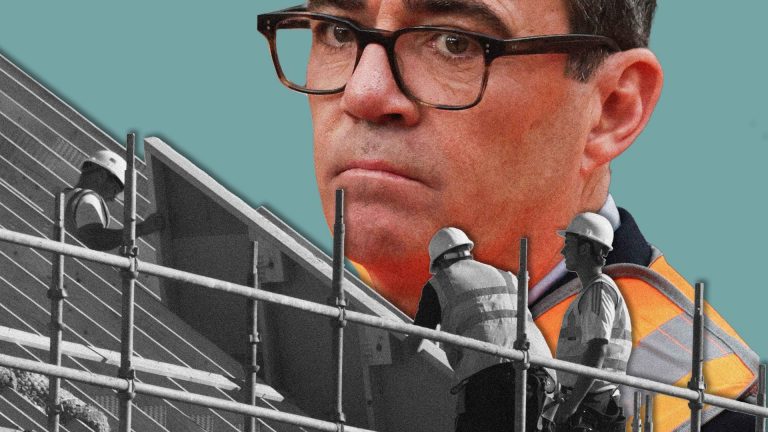
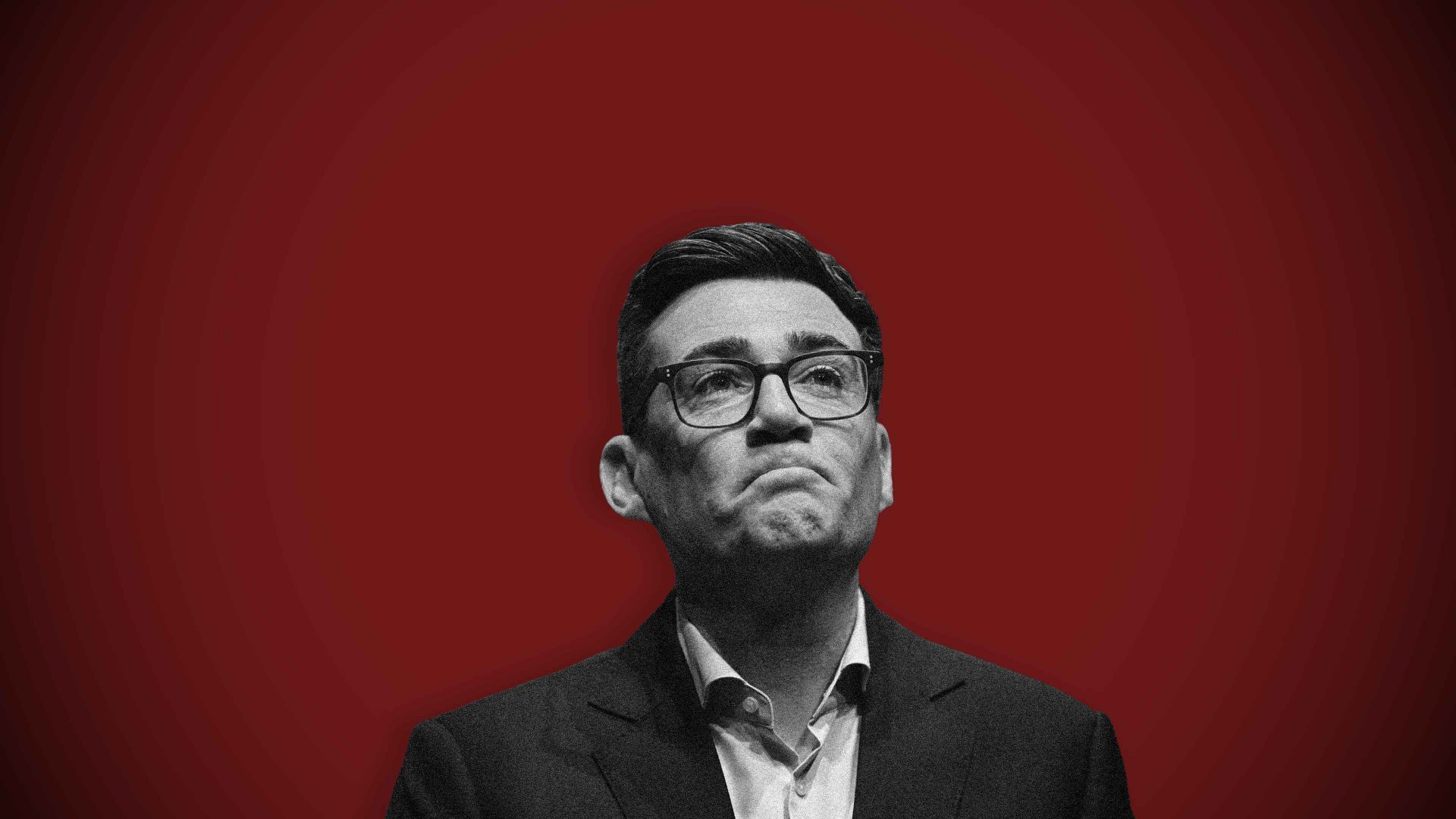
Over the past few months, this government has sometimes resembled one of those old disaster movies. And, even if you have never watched the likes of Flood! Towering Inferno, Earthquake, Fire! or any of the four Airport films made half a century ago, their plot was brilliantly parodied by the 1980 classic Airplane!
Soon after take-off, the captain and his crew get carried unconscious from the cockpit while passengers are distracted to look the other way. The inflatable autopilot (who really was a ringer for Wes Streeting) cannot land the plane as it hurtles through lightning storms towards imminent destruction. Everyone is panicking until handsome Ted Striker, overcoming the demons of a previous crash, takes over the controls to bring them safely home.
After a week when Labour shared tears of joy and hugs of relief over a hugely successful conference in Liverpool and a great speech from Labour’s new pilot, it might now be worth trying to work out exactly where he has landed.
Andy Burnham’s usual destination is just a few dozen miles away in the city where he was until recently mayor and around which political debate has been circling for most of the summer. His “Manchesterism” is no longer merely about cheaper bus fares, Number 10 North and devolution, but has evolved further into a project about getting greater public control over the essentials of life from housing to energy and water. Yet the question of whether that amounts to what he called a “theory of growth” is harder to answer because a lot of it was being done, without any noticeable uplift in Britain’s economy, when Keir Starmer and Rachel Reeves were still in charge.
Suggested Reading


Suddenly, young people are excited about Labour again – and this is why
Better rights for workers and renters had been passed into law, train services were being renationalised, new powers for mayors and more youth apprenticeships were under way, along with a push to build council houses. So too was a fair-pay agreement for those who look after vulnerable and elderly people, as well as a commission looking at the reforms needed to create a national care service. Indeed, all that – and more if you looked hard enough – had been promised in Labour’s much-maligned election manifesto two years ago.
If that content was not entirely fresh, Britain’s latest new PM made it seem exciting and uplifting with the kind of grand narrative arc that Starmer had always struggled to build. In Burnham’s telling, this is about righting the wrongs inflicted on working class communities in more than forty years of “neoliberalism” since Margaret Thatcher came to power and the country began to be “run for vested interests”.
The most moving passages of the speech were located in Burnham himself and, once again, this was very different to his predecessor. Whereas Starmer had bottled up personal grief over the death of his brother a few months after he entered Downing Street, Burnham almost broke down in tears as he began speaking about his recently deceased father. You could have been in the room where Roy Burnham spent his final days, as the new PM used this raw emotion to elevate the national care service policy into a personal mission and then declare that the Britain his father had believed in would “rise again”.
Much of this is a restorative offer designed to contest the electoral territory occupied so effectively over recent years by Brexit’s promise of “taking back control” and Reform’s geriatric vision of a largely mythical or non-existent England.
Kemi Badenoch has already accused the PM of wanting to return to the 1970s, while one or two New Labour types, who tend to think the party should look towards the challenges and opportunities of a global future, left Liverpool muttering quietly that it had all been a little too backward – and inward – looking.
Burnham’s speech had a short section on artificial intelligence, together with the less-than-entirely credible claim that Britain can lead the world in this new industrial revolution as factories in the north and midlands had during the first. He made single references to the climate crisis and the need to increase defence spending, with similar one word nods to Israel, Palestine, the war in Ukraine as well as the threat posed by Russia and Iran. But there was no mention at all for either of the world’s super-powers – China and the United States.
Suggested Reading


Is Andy Burnham just a lucky general?
In fairness, the promise to look at re-entry as one of the “different options” for a new long term relationship with the EU is the opposite of being insular. But it could have been linked, as Tony Blair had suggested the week before, to the need to build capacity and capability together in the face of vast global forces that otherwise seem so far from Britain’s control.
Instead, Burnham framed any deal with the EU merely as a means to control immigration or mitigate the economic damage done by a referendum a decade ago. Nor was it quite as bold as it might seem. Multiple sources confirm that Starmer had been planning to announce, perhaps as far back as the UK’s much-postponed EU summit in May, that he was ready to start negotiating beyond the restrictive “red lines” of the last manifesto in preparation for the next.
Similar constraints from promises made in the 2024 election campaign on tax and spending are the reason why Burnham’s proposed national care service, as well as his adjustment of the triple lock on pensions to pay for some of it, are also being postponed until after the next election. Add in a new manifesto commitment to electoral reform and some very big cans, filled with controversy, are being kicked down the road towards a date with voters that Burnham insists will not be for a while.
There is a danger of a gap opening up between re-packaging measures already announced in the past two years and Burnham being able to take off again in two years’ time.
The runway ahead seems strewn with hazards from a tax-raising budget next month to spending cuts in the spring, while the economic and security shocks of global politics mean that Burnham cannot maintain what he promised this summer would be a “relentless focus” on domestic issues. And, in any case, Manchester may lose its lustre as a destination for other parts of the country which do not want to navigate a route back to a pre-Thatcher past.
After all, the reason so many disaster movies were made in the 1970s was because political instability and economic crisis had left audiences with a deep distrust of authority and a general sense of impending doom. The context is a familiar one today, no matter who is flying the airplane.
 Most popular

Is this the real reason Trump keeps falling asleep in public?
I was at Eton with Charles Spencer – this is how it explains his battle with the royals
The New World at 500: Independence isn’t our marketing slogan. It’s our business model
Why is Farage so keen to protect Russia’s right to lie and cheat?