Outside America’s big cities, my encounters tend to begin with a cheerful misunderstanding. Quite literally.
“You’re German!”, locals exclaim with a warmth that my compatriots and I rarely meet elsewhere.
Then comes the rhapsodising – about the places in Deutschland they know, or know of. And I, as it happens, don’t.
At some point, as they share fond memories of their own, or their husband’s, or their cousin’s time in [can decipher the first syllable, remainder lost to the Atlantic], I begin to pretend. Nod. Smile. And absolutely do not admit I have no idea where they’re talking about – not when they’re this happy.
The trouble is twofold. First, the names are difficult to make out when rendered by non-native speakers: Grafenwöhr. Baumholder. Ansbach. Vilseck. Spangdahlem. Second, they are the sort of places you’d only know if you grew up there.
Or if you happen to be a member of the US military, in which case, by all accounts, you had the time of your life in the West Palatinate, Hesse or the Bavarian countryside. Which, as it turns out, rather a lot of Americans have.
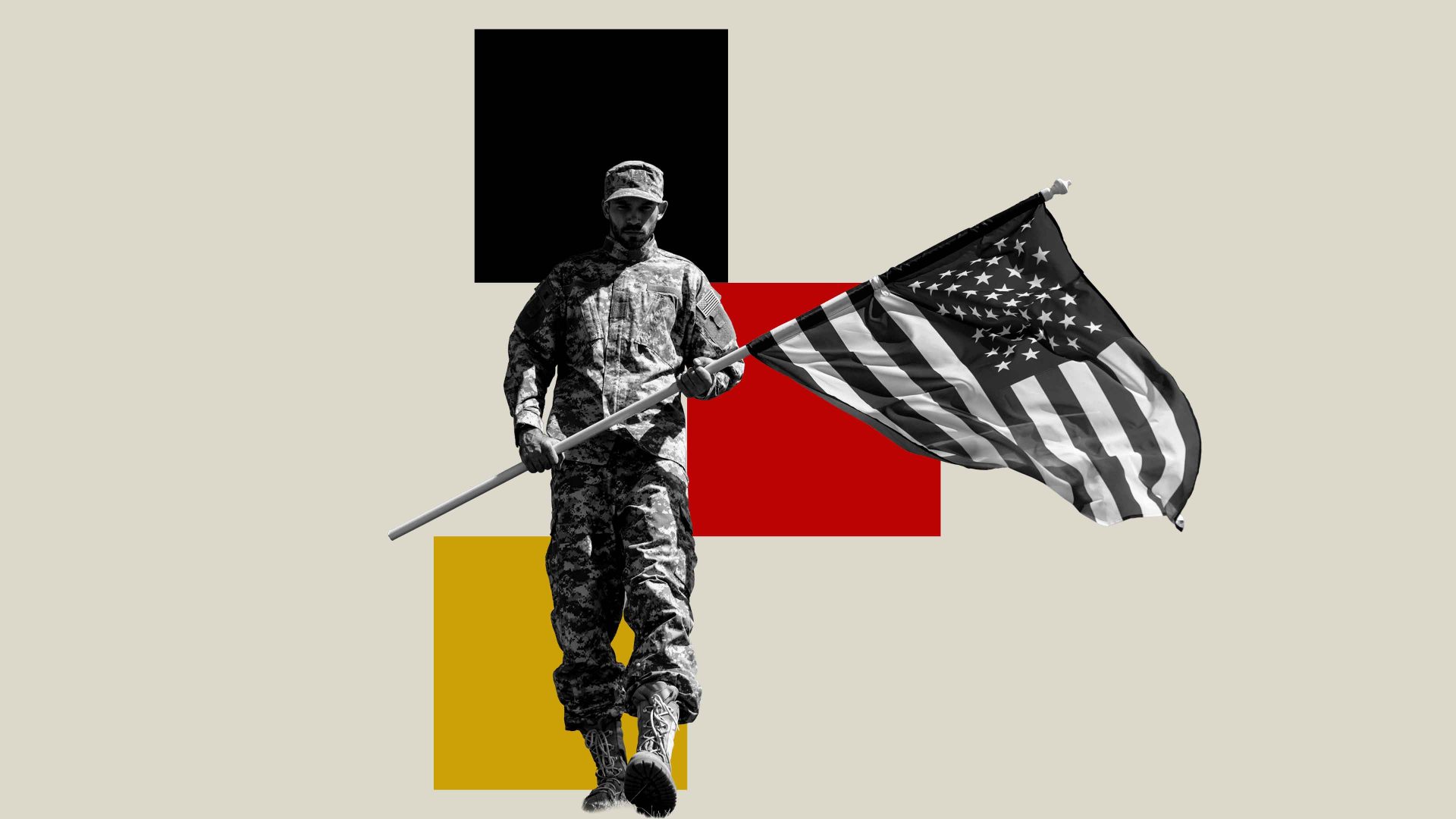
There are around 39,000 troops stationed in Germany – down from 220,000 in 1989, but still the second-largest American military presence outside the US, after Japan:
Ramstein hosts the largest airbase hub abroad, coordinating drone strikes, organising military aid for Ukraine, and serving as the transit point during the war with Iran; Landstuhl runs the largest military hospital overseas – the pilot and weapons systems officer of the F-15 fighter jet recently shot down in Iran are being treated there; Grafenwöhr is the biggest training area outside the US. And both Stuttgart and Wiesbaden house army HQs for Europe and Africa.
Suggested Reading

Just how hands-off will the Telegraph’s new German owners be?
In most of these places, the Americans arrived during the second world war. And never left.
The locals were delighted. Chocolate, gum, much better music than the Hitler Youth had been offering. The US army’s 3rd Armored Division even furnished West Germany with Elvis Presley, who lived off-base in Bad Nauheim, Hesse, from 1958 to 1960 – where he met his future wife, Priscilla Beaulieu.
Beyond the cultural benefits, they were Americans. Not Russians.
And perhaps most crucially: the US presence meant steady jobs for thousands of German civilians working on the bases. Friendships, marriages and deep community roots followed.
Ralf Hechler, the mayor of Ramstein-Miesenbach, recently noted that thanks to the US army, €2bn flow into the Kaiserslautern region every year. As most of the troops there live with their families, a withdrawal of 5,000 soldiers – the number Donald Trump announced – would mean that roughly 12,000 people would leave.
“That,” said Hechler, “is the equivalent to the economic output of a small town vanishing overnight. Look at Zweibrücken, Pirmasens, Bitburg – they still haven’t recovered from the American withdrawal (in the 1990s).”
Suggested Reading


Does Friedrich Merz have any idea what he’s doing?
In Frankfurter Allgemeine Zeitung, the CDU mayor conceded that the relationship with the US has become more fractious under Trump – but insisted that doesn’t translate into rejection of the soldiers themselves. “Many people have been working for the Americans for decades. We’re talking about 2,300 employees in this region alone.” The bond, he says, is part of everyday life, with close economic and personal ties.
Trump threatened something similar during his first term – framing a withdrawal of 12,000 troops as punishment for what he considered (and, frankly, was) inadequate German defence spending. Joe Biden shelved the plan.
This time, it appears to be a response to Friedrich Merz’s remarks about America’s Iran negotiating strategy – or lack thereof – and that their nation was being “humiliated” by Tehran.
Suggested Reading
The whale that stranded itself on purpose
Experts in the US, meanwhile, note the obvious: significantly reducing their forces in Germany would hurt America, too, as they serve its global strategic purposes.
What may be more consequential in the long run, however, is Trump’s decision to abandon the planned stationing of Tomahawks in Germany – cruise missiles capable of reaching Russia that were meant to bolster European deterrence until there’s a European equivalent.
Apparently, “the Americans don’t have enough themselves at the moment,” said Merz.
A telling detail about where things now stand.