While Hungary has just opted to turn away from right wing authoritarianism in favour of pro-European conservatism, don’t expect a similar epiphany in Germany any time soon. Polls ahead of a crucial state election on September 6 suggest the opposite entirely.
Saxony-Anhalt is a Bundesland steeped in German history and Unesco world heritage: Wittenberg, where Martin Luther allegedly pinned his 95 theses to the church door, the Naumburg cathedral, the medieval half-timbered Quedlinburg, the iconic Dessau Bauhaus and countless Burgen and Schlösser scattered across its landscape.
For decades, the state has been governed by the CDU. That could change this autumn.
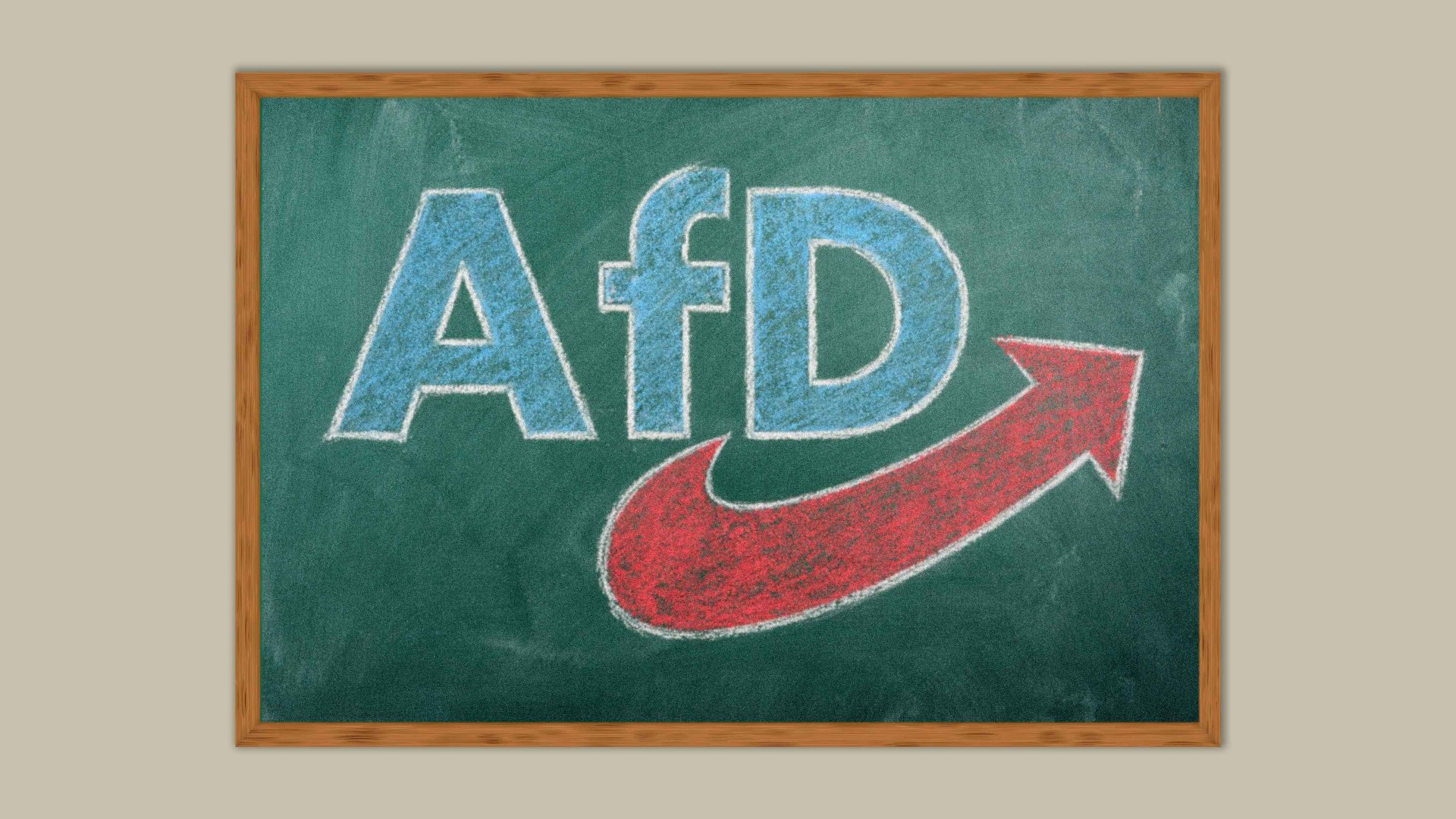
The AfD is polling consistently at around 40%, against 25% for the CDU and 13% for the far left Linke, while the SPD, Greens, FDP and BSW are all hovering nervously around the 5% threshold needed to enter parliament.
Should several of them fall short, the arithmetic turns alarming: even 42% or 43% could hand the AfD an absolute majority – and Germany its first AfD Ministerpräsident.
So their party manifesto, published last weekend, could become reality. Around half of its catalogue of demands – abolishing the fundamental right to asylum, for instance – falls outside the competence of the federal states. But the rest is another matter, because in education and cultural affairs, a state government has real power.
Here’s what AfD vows to do with it.
With Viktor Orbán cited as “a model and source of inspiration for us”, public arts funding will go primarily to work that “contributes to the development of a German identity”.
The state’s image campaign #moderndenken (“think modern”) will be scrapped in favour of deutsch denken! – think German! Because “the current government seeks to derive the identity of the state of Saxony-Anhalt from the Bauhaus”. Yet that internationally celebrated school of design is dismissed as “modernity gone astray” and having “always striven to avoid any hint of national roots”, as the AfD complains.
Suggested Reading

Face to face with Trump, what do you do?
Given the state’s “wealth of great German history”, from Heinrich I and Otto I through Luther, Bismarck and Nietzsche, to focus on a “controversial school of architecture” is, apparently, a “symptom of the very identity crisis” the AfD intends to cure. The aim, naturally, is to “foster a new sense of national self-confidence”. Bauhaus, pack up the primary colours.
Schools, needless to say, are in for a thorough redesign as well. The history curriculum suffers, according to the manifesto, from giving “insufficient attention” to the 19th century – “the most significant period in the formation of the German nation”.
The AfD, performing an impressive chronological pirouette that somehow jumps directly from 1871 to the Federal Republic without pausing at Weimar or the Third Reich, declares the empire the true forerunner of modern Germany. As the party’s cultural affairs spokesperson helpfully summarised: “More Bismarck, less Hitler.”
Accordingly, anti-racism training will be replaced by self-defence courses. The official use of rainbow flags in schools will be banned. “Schools must present the traditional family – consisting of a man and a woman from whom children are born – as a model for children.”
There are, to be fair, some sensible proposals in the manifesto. Fighting grade inflation and ensuring all children learn to swim, for instance. But the overall aim is clear: “If schools no longer teach children patriotism, our community is doomed.”
To prevent doomsday, AfD sees “proper education” not only in the acquisition of skills and knowledge, but “in the formation of a stable national identity”. Should you wonder: refugee children will be placed in separate schools without German classmates and preferably with foreign teachers. Because they’re not here to stay anyway.
In state schools, the flag will be flown every day. National anthem singing will be established “as an integral part of school-related celebrations”.
And should parents – despite all these improvements, including AfD’s promise to rid the schools of “indoctrination” (which type, one might ask) – continue to distrust the education system, they will be free to opt for home schooling. This happens to contradict every ruling Germany’s constitutional court has ever made on the subject.
But at least, if home-schooled, kids will avoid a pupil-exchange programme with Russia, which AfD pledges to immediately revive – war or not.