
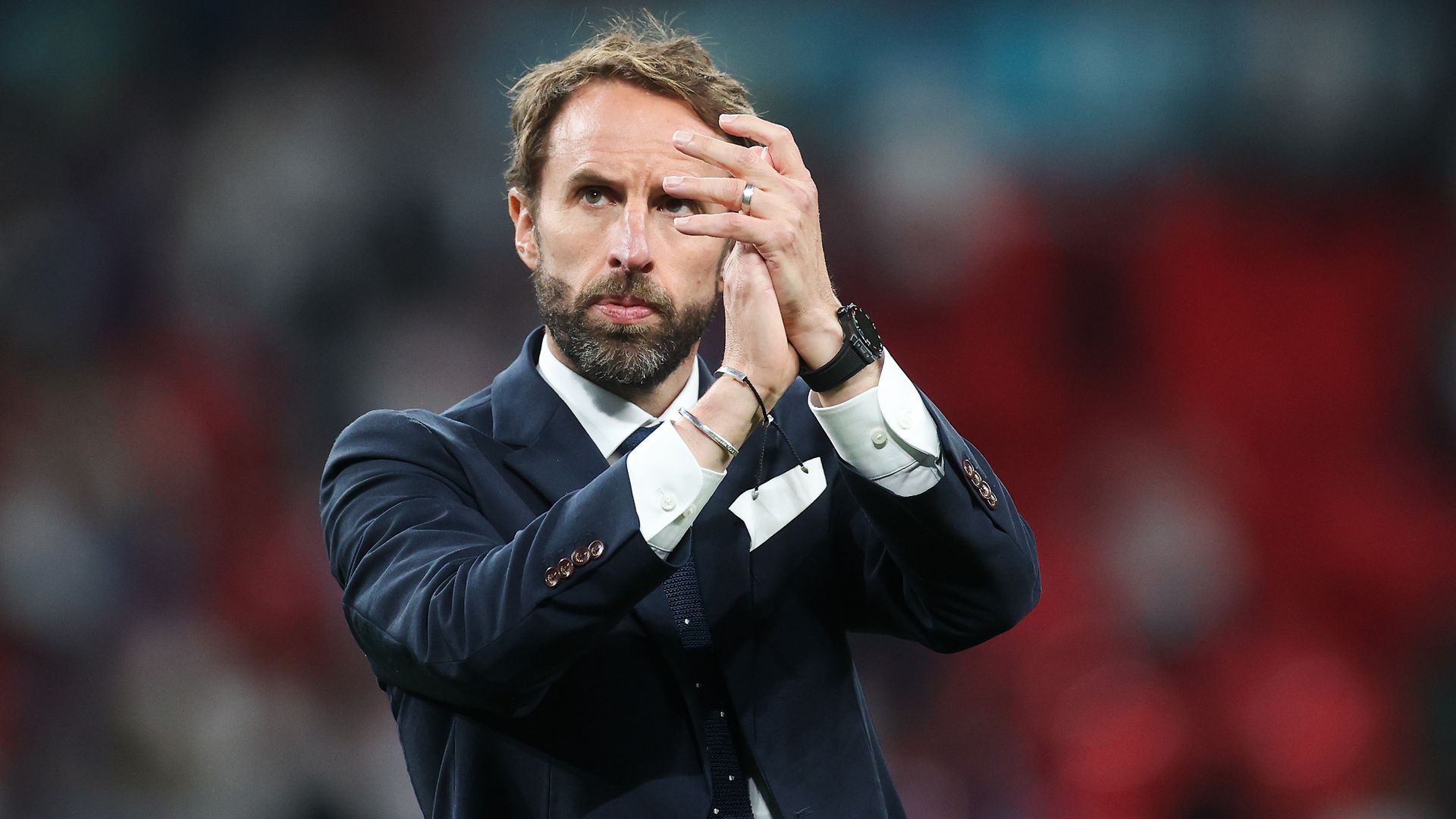
Gareth Southgate is on a mission, and this time, his opposition is the manosphere. As more young men are being sucked in by the online preachers of toxic masculinity, the BBC documentary: Gareth Southgate: Changing the Game for Young Men takes a look at how education, employment and family role models form part of the problem – and the solution.
When I heard about this documentary, my initial reaction was a deep sigh – not because I don’t like Southgate, but because I thought the last thing we needed was yet another programme stoking up the gender debate. Quite often, these kinds of shows don’t get anywhere near the question of what really motivates this toxic behaviour, and instead leave their male audiences with little more than a limp takeaway that they should “just be better”.
More recently, Louis Theroux’s Inside the Manosphere documentary had little focus on how online misogyny affects those who didn’t choose to be part of it, particularly the girlfriends and the mothers, with notably few women being interviewed. Although Theroux expertly probed his interviewees on their “red-pill” ideology, which made for a satisfying watch, it covered old ground and told us nothing really new. This is where Gareth Southgate’s documentary is different.
Decades spent working in the world of football has given Southgate a wealth of experience in dealing with young men, many of whom would have been highly competitive, alpha sportsmen, who saw themselves as being on their way to stardom. Others would have faced bitter career disappointments.
Suggested Reading


It’s football, but without the oligarchs
In the show, Southgate travels across the UK, talking to young men who feel lost about their future. From those in school to those struggling to find work or serving in prison, many of these men are being treated as a problem and feel as if they are in a pit they can’t get out of.
The documentary also sets out evidence showing that boys are increasingly underperforming in school compared with girls, meaning that routes to successful careers feel increasingly closed off. With lots of young men still buying into the social expectation that they should be the “breadwinner”, these pressures and barriers to success can lead to young men seeing themselves as failures.
One of the most intriguing moments comes when Southgate talks to the mental health expert Steve Peters, who explains that girls develop key systems in their brains earlier. This enables them to be more psychologically minded than boys and much better at reading body language.
Peters stresses that it’s important not to generalise, as every individual is unique, and biology is not destiny. But it seems clear that boys are more likely to struggle with recognising social cues, regulating emotions and expressing vulnerability.
The documentary places great emphasis on the importance of the educational environment, and on one point in particular – the struggle UK schools face to recruit male teachers. Only 35% of secondary school teachers are male, and according to one BBC report, one in three primary schools has no male teachers at all.


The teachers that Southgate speaks to make a further stark point: there are more young boys now who have a smartphone than a father figure. It is clear that a positive male presence is the first line of defence against toxic masculinity.
That point landed heavily with me. My younger sibling grew up with an absent father, and was caught up in a safeguarding incident on social media when she was only eleven. The void that an absent parent leaves doesn’t discriminate by gender; it just gets filled by whatever the internet offers first.
As the documentary shows, the charity Lads for Dads is one of several groups now trying to fill this vacuum, providing schools with mentoring schemes and male role models that some boys simply aren’t getting at home.
Southgate makes the case that the antidote to toxic masculinity isn’t a counter-movement or a viral campaign. It’s mentorship, community programmes and a focus on an education curriculum that will help young men to thrive.
In the closing scenes, Southgate attends a game where he speaks to other men about someone who made a difference in their lives. Would they also consider mentoring young boys? The answer was yes. “An hour off the smartphone, doom scrolling, is nothing really,” said one man, “if it means giving time to someone who needs it.”
“We’ve lost our sense of community,” Southgate says, “There’s no magic formula. But there are signs of hope”.
After watching, I’d have to agree.
Gareth Southgate: Changing the Game for Young Men is now out on BBC.
 Most popular


My truly deranged encounter with Trump apologist Kellyanne Conway


The moral depravity of Robert Jenrick


Is this the real reason Trump keeps falling asleep in public?

Suella Braverman’s book has sold only 106 copies. This is why