
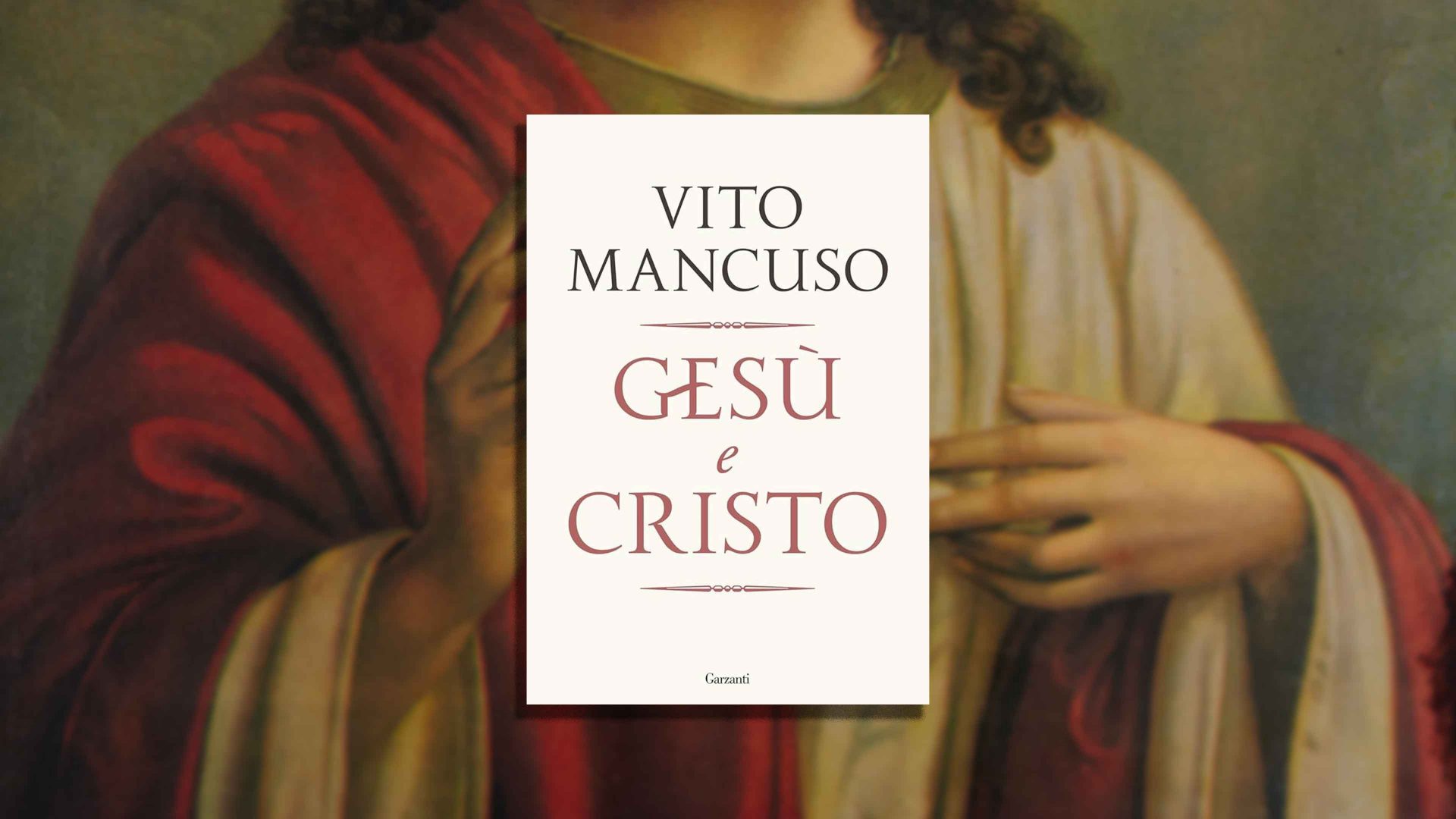
I have just finished reading a controversial religious book that has become a bestseller in Italy since its recent publication. Written by a lay theologist called Vito Mancuso, its title is the eye-catching Jesus and Christ.
Had it been titled simply “Jesus Christ” nobody would have paid it that much attention. But the oddity of the title has lured a huge number of readers, and not necessarily the most erudite ones. Swathes of people across Italy have been buying this book, mostly for the sake of having a copy and being able to say “I read it”.
Suggested Reading

The crisis in Italy’s schools
But this is an 800-page work of dense theology. It is very complex, full of quotations, a myriad of sources and references to holy texts both in Christianity and Judaism. It is the end-product of in-depth research of the kind only theologists could do. My guess is that most people won’t even get half-way through it.
The central argument of the book is that Christ and Jesus were two separate entities, the latter a real, historical person while the former is more the imaginary product of man’s faith in God. That may sound a bit humdrum, but here in Catholic Italy, where a large section of the population is still devout, the response has been frenzy, and the book is nowhere to be found. I had to order it twice, unsuccessfully. I eventually found a copy in a tiny bookstore along the ancient Roman Ponte Milvio bridge.
Suggested Reading
The art treasures Italy won’t let you see
To be honest, as a Catholic and a believer, it is a little bit disquieting even to consider the idea that Jesus and Christ are not the same person, as it goes against the most fundamental Catholic doctrine.
My friend Anna said she got half-way through and then threw the book back on the shelf. “This is blasphemy,” she said. “I’m not reading it any further. The Vatican should ban it. Too bad the days of the Holy Inquisition are long gone.”
She was shocked to read an account of Jesus as if he were little more than a historical figure.
A colleague, Paola, who is not very religious, says there is some truth to what Mancuso says and the book does make sense, but I failed to grasp it.
I understand there can be various opinions among scholars and even theologists, but I do not agree with what Mancuso says, mainly because I’m a Catholic and a believer.
“That’s restrictive and obtuse,” Paola told me. “Although the majority of Italians may think like you do, most go to Mass on Sundays but then don’t behave in a Catholic way.”
My granny thinks the book is having such success due to what she calls its “heretic theory”, which appeals to devout readers. Had it been published in the UK, Greece or Sweden, it wouldn’t have caused such havoc.
I had a very hard time reading it myself, not just for the subversive ideas but also the sheer length of it, which reminded me of when I was studying for university exams and reading academic texts that sent me to sleep.
I did finish it, eventually. I’d have to concede that the degree of research behind the book is incredible and the in-depth explanations given by the author are impressive. Even so, I did not enjoy it.
Silvia Marchetti is a freelance journalist living in Rome