

“Quit ChatGPT: right now!” ran an urgent headline in the Guardian this week. “Your subscription is bankrolling authoritarianism.”
It sat atop a comment piece by historian Rutger Bregman, who explained that, having studied the major consumer boycotts of history, “we can take down ChatGPT and send a powerful signal to Silicon Valley”.
Bregman explained: “Employees of ICE – the agency that was involved in the killing of two people in Minneapolis in January – have used a screening tool powered by ChatGPT. The same company behind your friendly chatbot is helping the government decide who to hire for deportation raids.
“And it’s not stopping there. OpenAI helped launch a $125m lobbying initiative, a Super Pac, to make sure no state can regulate AI. It’s attacking any politician who tries to pass safety laws. It wants Trump, and only Trump, to write the rules for the most powerful technology on earth.”
Worrying stuff. But what to do? “The most effective consumer boycotts in history share two qualities: they are narrow and they are easy. QuitGPT fits this pattern perfectly,” the historian explains.
“Go to quitgpt.org. Cancel your subscription. Using the free version? Delete the app, because your conversations still feed the machine.”
Suggested Reading
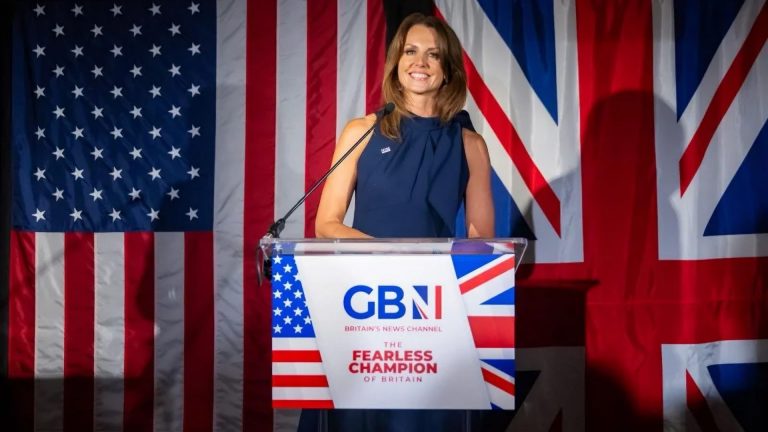

Struggling GB News takes its awards snub well
Which is all well and good – but is the Guardian really the place to launch a boycott of the all-powerful AI giant? Because, as former Observer journalist Carole Cadwalladr pointed out, the Guardian launched a, er, “strategic partnership” with the firm just last year.
“Guardian Media Group today announced a strategic partnership with Open AI, a leader in artificial intelligence and deployment, that will bring the Guardian’s high quality journalism to ChatGPT’s global users,” the paper cheered in February 2025.
Keith Underwood, Guardian Media Group’s chief financial and operating officer, said at the time: “This new partnership with OpenAI reflects the intellectual property rights and value associated with our award-winning journalism, expanding our reach and impact to new audiences and innovative platform services.”
How much more it will be able to expand its reach if everyone follows Bregman’s advice and “try an alternative, and tell at least one person why” remains to be seen! As Cadwalladr says: “If you believe in the importance of the Guardian as a liberal UK media institution (as I do), this rank hypocrisy stinks.”
Meanwhile, it will be worth keeping an eye on Politico’s coverage of one of the hot topics at Westminster at the moment – whether social media for teenagers should be regulated, or indeed banned outright. The firm’s London Playbook – an insidery email newsletter for SW1 types who want to know what parties they missed the previous night – is now “presented by Instagram”.
“Instagram Teen Accounts automatically limit who can contact teenagers on Instagram to help prevent unwanted contact,” it says today, in between two paragraphs about Donald Trump’s assault on Iran. Might it be tricky to report impartially on this particular hot potato now that Mark Zuckerberg’s funding the operation?
 Most popular

‘Operation Epic Fury – as it happened’

Is Star Wars dead?

Morrissey returns.. and heaven knows he’s mythical now


Iran War: Trump has now sealed his own fate