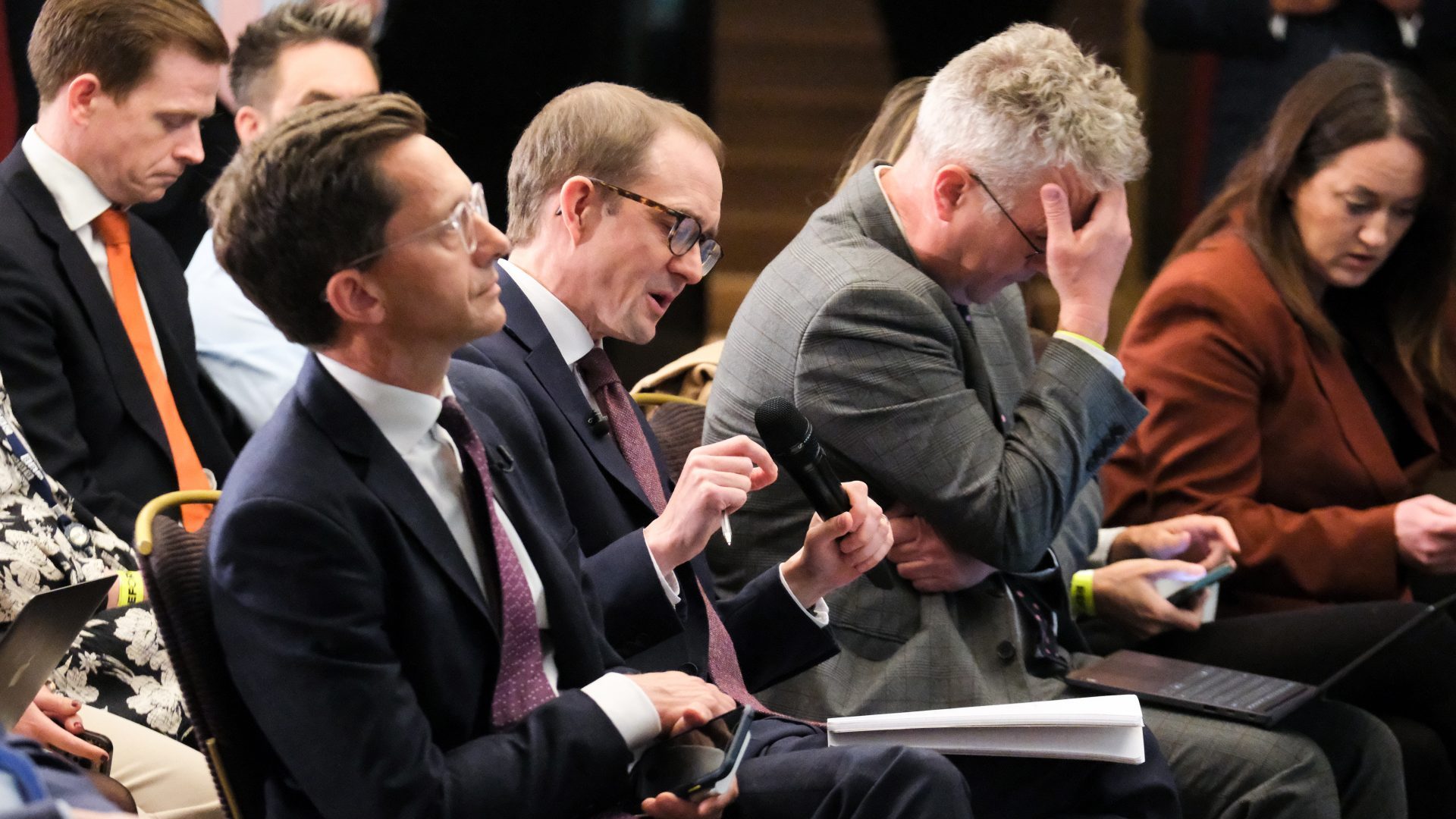
Shortly after a trio of former Conservative MPs, including braying halfwit Jonathan Gullis, joined Nigel Farage’s party on Monday, December 1, the jokes started on social media. “The latest Tory to defect to Reform is Chris Mason” said one, complete with a photo of the BBC’s political editor, whose stinging criticism of Rachel Reeves was at the time being broadcast across radio, TV and the BBC News website.
Jibes about Mason’s post-Budget coverage has been growing ever since in left wing circles, to the extent that a supporter, columnist Dan Hodges of the Mail On Sunday, felt it necessary to defend him. “Chris Mason is widely viewed across the political divide as one of the most objective journalists in Westminster,” he wrote on X.
Hodges, the man who was convinced that Keir Starmer would be finished by Beergate, even seemed to suggest that the government was behind a push against Mason, writing: “Labour’s co-ordinated attacks on him for accurately reporting how Reeves misled the public over certain aspects of her Budget shows how utterly desperate they are.”
The row stemmed from Mason’s appearances on BBC TV and radio news and on the BBC News website on Monday morning, when he announced he had reached a verdict on charges that the chancellor had made deceptive comments at a pre-Budget briefing on the UK’s economic situation. This was a talking point that originated with the Conservatives and was then eagerly taken up by right wing newspapers over the next few days and into the weekend.
Now, in the manner of a judge reaching for the black cap, Mason solemnly intoned, “It is my job, after a careful examination of the facts, to call it, on your behalf, in careful, precise language. In my judgement, on one specific element of what the chancellor and the Treasury told us before the Budget, we were misled.”
Leaving aside the pomposity of the delivery, is that really the job of a BBC political editor – to “call it, on your behalf”, telling people what they should think? The political journalist Ian Dunt did not seem to agree.
“Just a completely unserious broadcast,” he wrote of one BBC News broadcast of the day. “Chris Mason, acting like a children’s entertainer, giving a prolonged impenetrable editorial. Not a whiff of informative content about the Budget or what it means for the country. Just playschool blah blah bollocks.”
The “one specific element” that had scandalised Mason, Kemi Badenoch, shadow chancellor Mel Stride, the Mail, the Telegraph, the Sun, the Express, GB News and others was the chancellor’s warning about weak productivity numbers, which Mason decided Reeves had emphasised despite knowing that tax receipts were up. He said that by concentrating on the weak productivity figures and ignoring the better tax revenues, she was downplaying the true state of the economy, making the situation look worse than it really was.
Suggested Reading

Chris Mason’s defence of the BBC over Farage coverage goes badly wrong
Yet on December 2, David Miles, a senior official at the Office for Budget Responsibility, appeared in front of a Commons committee and said that in his view, Reeves’s remarks were “not inconsistent” with the economic situation. In other words, his verdict was very different to Mason’s – the chancellor didn’t mislead the country at all.
And on December 4, the Financial Conduct Authority, responding to a request from Stride, said it would not immediately investigate Reeves and the Treasury. “If only they had listened to financial regulation expert Chris Mason,” jeered The New World’s Paul Mason (no relation) on social media.
Certainly the run-up to the budget was a textbook example of political mismanagement by Starmer and Reeves, and the briefing, leaks and catastrophic release of the OBR’s entire budget book just before the chancellor delivered her speech all made for a hurricane-force shitshow.
But Mason is now seen by many as having gone too far by using his extremely prominent position to deliver what seemed to be portrayed as a definitive verdict that subsequent events have not vindicated. After days of frenzied coverage by the right wing press, followed up by Mason, the controversy has for now faded away.
Some are wondering why Mason has not spent more time scrutinising Reform over Nigel Farage’s racist past – and are harking back to his remarkably tin-eared coverage of the far right party’s conference in September.
In his coverage, Mason ignored altogether a vile and subsequently disowned speech by vaccine sceptic Dr Assem Malhotra in which he claimed that Covid jabs had given members of the royal family cancer, as well as a bizarre appearance by Andrea Jenkyns, in which the Greater Lincolnshire mayor decided to sing a self–penned song about insomnia and God.
Instead, he gushed that the event had been “the most fascinating party conference I have ever been to”, adding that it “illustrates the pace of growth of Reform UK”.
Mason has some backers on the left – Lee Harpin, once of the Daily Mirror and now of Jewish News, wrote that “My view of Reeves’s budget wouldn’t be identical to his, but he has every right to make (it), in what was a clearly identified analysis piece.”
But it does seem unfortunate that the man defending Mason most strongly of late has been BBC board member Robbie Gibb, the former Conservative No 10 chief of staff blamed by many on the left for his involvement in the fiasco of the Trump Panorama affair and accused of forcing right wing views into BBC news coverage.
In a subsequent appearance before the Commons, Media, Culture and Sport Committee, Gibb called Mason “the unsung hero of covering politics” and said he was “absolutely first rate”. That’s exactly the kind of careful, precise language that Chris Mason doesn’t need right now.
 Most popular
‘Operation Epic Fury – as it happened’
Is Star Wars dead?
Morrissey returns.. and heaven knows he’s mythical now

Iran War: Trump has now sealed his own fate