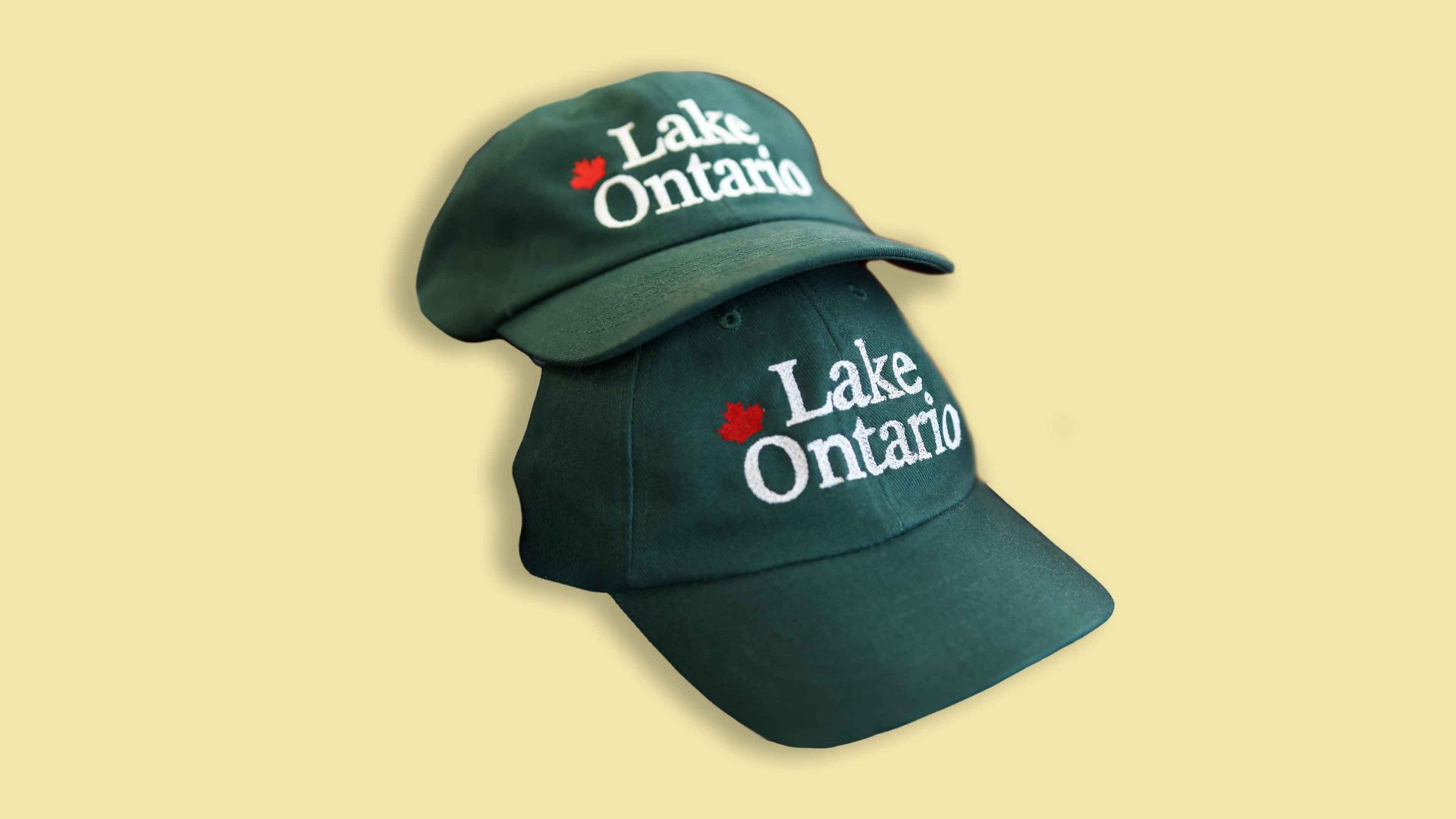
Lake Ontario is so wide that you can only see from one side to the other with difficulty. On stormy days, waves over 20 feet high may pound the shores. About 53% of the lake, which has a surface area of around 20,000 square kilometres, lies in Canada, and 47% in the USA.
Donald Trump apparently believes that he has succeeded in changing the name of this, the 14th largest lake in the world, to “Lake America”. And he seems to believe that, because he is a Very Important President, the rest of us will just go along with this change: he reckons that he simply has to say that something is so for it to be so. Well, this language-focused column will not be joining him in this renaming, nor will any Canadians.
The etymology of the name Ontario is entirely embedded in the North American continent. The word comes from the indigenous Iroquoian language Wendat (formerly called Huron), which, before the mid-1600s, was spoken over what is now the Canadian province of Ontario.
Because of disastrous wars waged against the Five Nations Iroquois peoples (the Seneca, Cayuga, Onondaga, Oneida, and Mohawk), its speakers were decimated, with survivors fleeing east to Quebec and west to the Detroit area.
Ontario was settled by the French and English in the 1600s and was ceded to Britain in 1763, becoming one of the original four provinces of the Dominion of Canada in 1867. The name, which originally applied only to the lake, is a French spelling of Mohawk õtarí·yo, from õtar “lake, river, waterway” plus iyo “beautiful.” The name started appearing in written English from around 1700.
The would-be Trumpian name of the body of water, “Lake America”, is, paradoxically, very much less American in origin. America is, of course, the name of the very large land mass in the Western Hemisphere which consists of the two continents of North and South America conjoined at the Isthmus of Panama. But it was derived from the given name of Amerigo Vespucci (1451-1512), the Italian explorer who supposedly first navigated the coast of South America in 1501.
The Italian name Amerigo itself ultimately came from the medieval German name Amalric, meaning “ruler”. This is etymologically related to other Germanic names such as Amaury, Emery, Emmerich, and Henry.
So, while Ontario is originally a truly American name in the sense that it is derived from an indigenous American language, the name America itself is originally not American at all but German.
The family name Trump is also German in origin, of course, so we should not expect the current occupant of the White House to be unduly troubled in any way by these philological facts.

Isthmus
An isthmus is “a narrow portion of land, enclosed on each side by water, and connecting two larger bodies of land”. This came from Latin isthmus, but was originally from Ancient Greek ισθµός (‘isthmos’), originally applied to the isthmus of Corinth, the neck of land which in 1893 was cut through to create the Corinth Canal.