
I discovered recently that I have a medical condition called pseudophakia. I had never been informed of this fact, but discovered it by chance when consulting my NHS app about something completely different.
Naturally, I immediately looked up the meaning of this scary-sounding term, and found that it simply refers to the fact that, some years ago, I had a cataract on my left eye which was then surgically removed.
Getting on for half a million cataract operations are performed by the National Health Service every year. What happens during the procedure is that the original but now clouded lens is removed by an ophthalmic surgeon and replaced with a new, clear artificial lens.
Pseudophakia is the medical term for the happy condition which is the result of successful cataract surgery. Like millions of other older people, I now have an artificial or “pseudo” lens; clear vision has been restored to that eye, and everything looks sharper, brighter and more colourful to me. The phakia element of pseudophakia comes from Greek phakós meaning “lens”.
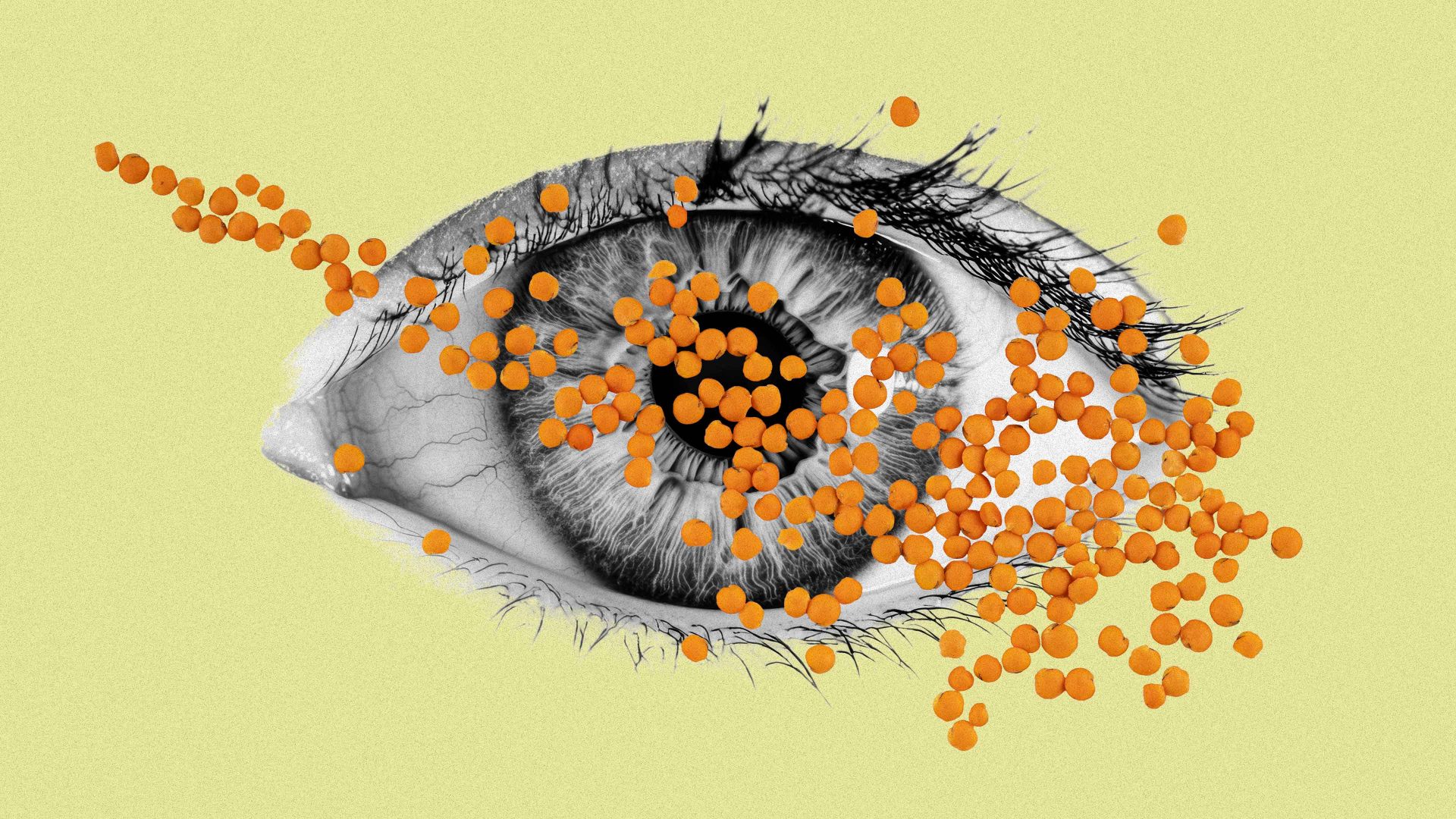
Our English word lens is directly derived from the Latin word lens, which meant “lentil”. Early lens makers in the 17th century used this term because the lenses used for magnification resembled the shape of a lentil seed, with a thick centre and tapered edges.
Similarly, the Ancient Greek word phakós also meant “lentil”. In Modern Greek, phakós (φακός) usually means “lens”. It can also mean a torch (or, as Americans often call it, a flashlight).
Lentils today are usually referred to by Greek speakers in the plural form, phakés, though sometimes the singular feminine form phαkí is also used with reference to, for instance, lentil soup. Delicious dishes made with phakés can be ordered in many a taverna in Greece.
The word phakós is also historically related to Latin faba “bean”. The modern horticultural Latin name vicia faba is the technical term for a broad bean. Vicia can be translated as “vetch”, which is a member of the same botanical family as beans and peas. (The ultimate origin of the word vicia is not known.)
Cataract itself is yet another modern English word which has an Ancient Greek origin. It first appeared in English in the early 1400s with the meaning of “waterfall, floodgate”. This came from the Latin noun cataracta “waterfall”, which had been borrowed by the Romans from Ancient Greek, where the verb καταράσσειν (katarássein) meant “to rush downwards”.
There was also an alternative meaning of the Latin word cataracta – “portcullis”. A medieval portcullis was a barrier which took the form of a latticed grille made of wood or iron, sometimes with metal spikes at the bottom, which was hung using chains or ropes above the gateway to a castle or other fortified building in order to close off the entrance immediately during an attack, by being released to slide down grooves along the sides of the gateway.
This has given us our current optical meaning of the word, presumably through the notion of an impediment to eyesight being likened to the obstruction of a gateway.
Suggested Reading


How names go extinct, then come back to life
Portcullis
Portcullis came originally from the Old French phrase porte coleice, later porte à coulisse, which meant “sliding gate or door”. It came into Medieval English at the beginning of the 14th century in the form of porte-colice. The first element porte derives from Latin porta “gate”, while coleis “sliding” comes from Latin colare “to filter, or strain”; this is also the source of our contemporary word colander, the perforated kitchen utensil which we commonly use to strain foods like cooked pasta and to rinse salad items.