
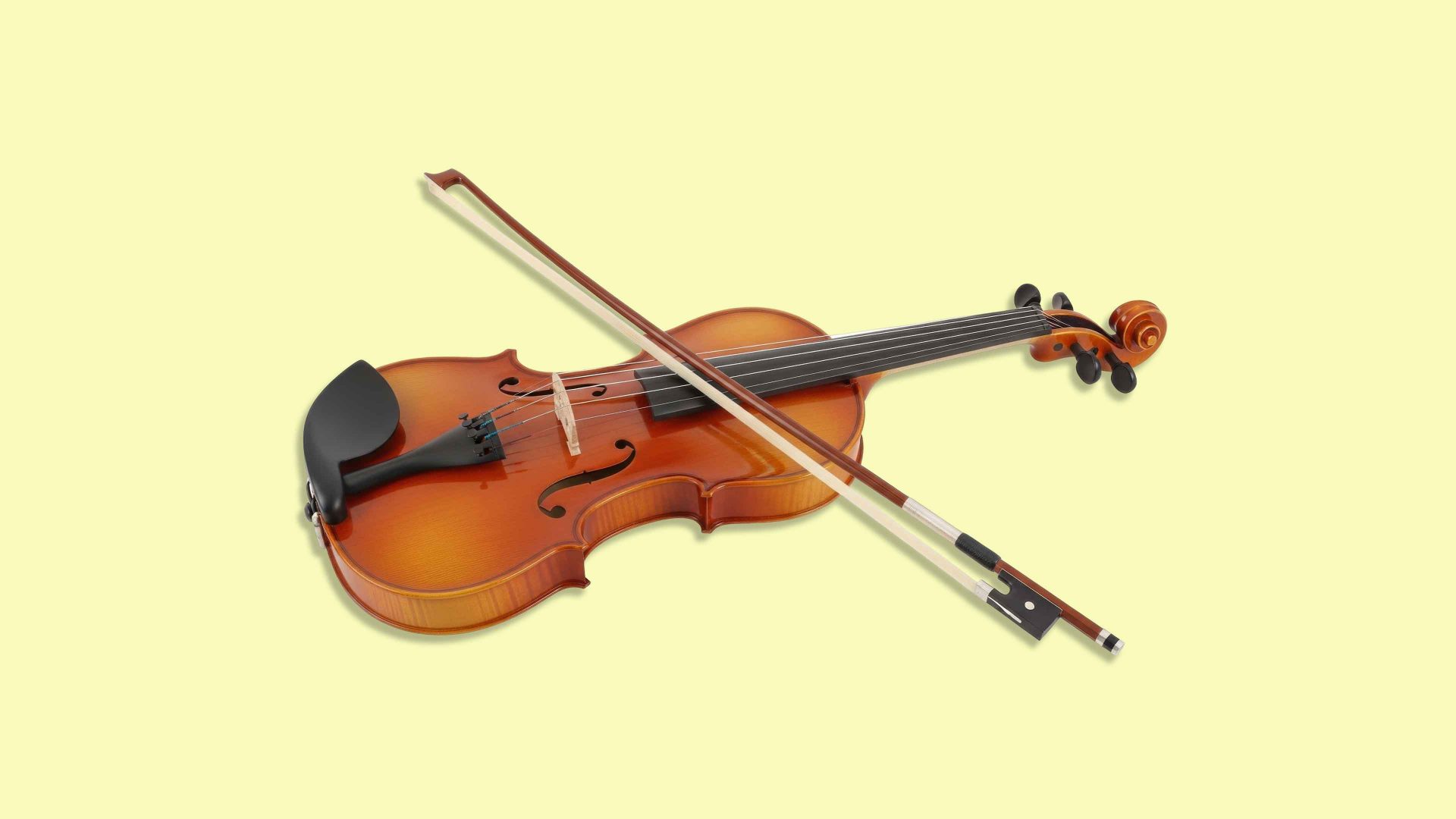
When I was a young amateur orchestral musician and had to carry my cello around with me on the bus, I eventually got used to the standard bus conductor joke “You on the big fiddle, then?” (Younger readers unfamiliar with the concept of “bus conductor” are recommended to consult an elderly person.)
Any bowed stringed instrument such as a violin, viola or cello can informally be referred to in the English-speaking world as a fiddle – even top professional orchestral musicians use the term from time to time, although mainly with reference to violins. This has apparently been so ever since the 13th century, when the word first occurred in print, although nobody is entirely sure where it came from: the etymology of fiddle in the sense of “a stringed musical instrument played with a bow” is rather uncertain.
A good case can be made, though, that fiddle seems to have been of Germanic origin, because it corresponds to similar forms in all the Germanic languages: Old High German fidula, Middle Dutch vedele, Old Danish fiddel, and Faroese and Icelandic fiðla. But all of these Germanic-language words are technically of “uncertain origin”, because we cannot locate any single ancient common Germanic ancestor for all of them.
One intriguing thought, as pointed out in the highly authoritative Oxford English Dictionary, is that this Germanic word “bears a singular resemblance in sound to its medieval Latin synonym vitula, or vidula”. So was it originally a Germanic word which was borrowed into Latin and then into the Romance languages, or did the borrowing happen the other way round?
One of the suggestions proposed by some professional etymologists is that fiddle came into one or more of the Germanic languages directly as a loan from the Medieval Latin form vitula “stringed instrument”, which was also the source of Old French viole, Italian viola, violino, and other similar forms. This was probably related to Latin vitularia “joyful celebration”, which seems to have come from the name of the Roman goddess of joy and victory, Vitula.
The connection was presumably that the music of violins and similar instruments came to be associated with parties, festivals and celebrations, perhaps especially those involving dancing.
There are also related words for the instrument in the British Isles Celtic languages, including Scottish Gaelic fidheall and Welsh ffidil. But evidence shows that these were straightforward borrowings into Gaelic and Welsh of our colloquial English word fiddle, arriving in the 1400s and 1500s respectively.
Words for this instrument in non-Germanic European languages are totally unrelated to all the forms above, e.g. Polish skrzypce, Lithuanian smuikas, Bosnian/Serbian gusle, and Hungarian hegedű.
Suggested Reading


British censorship isn’t dead.. it just got rebranded
Amateur
The French word amateur, which English borrowed directly, originated in the Latin noun amator “lover” from the verb amare “to love”. It literally means “one who does something for the love of it”. But over time, this evolved into denoting a non-professional and therefore, in some contexts, someone relatively lacking in skill, hence the derogatory adjective amateurish.