
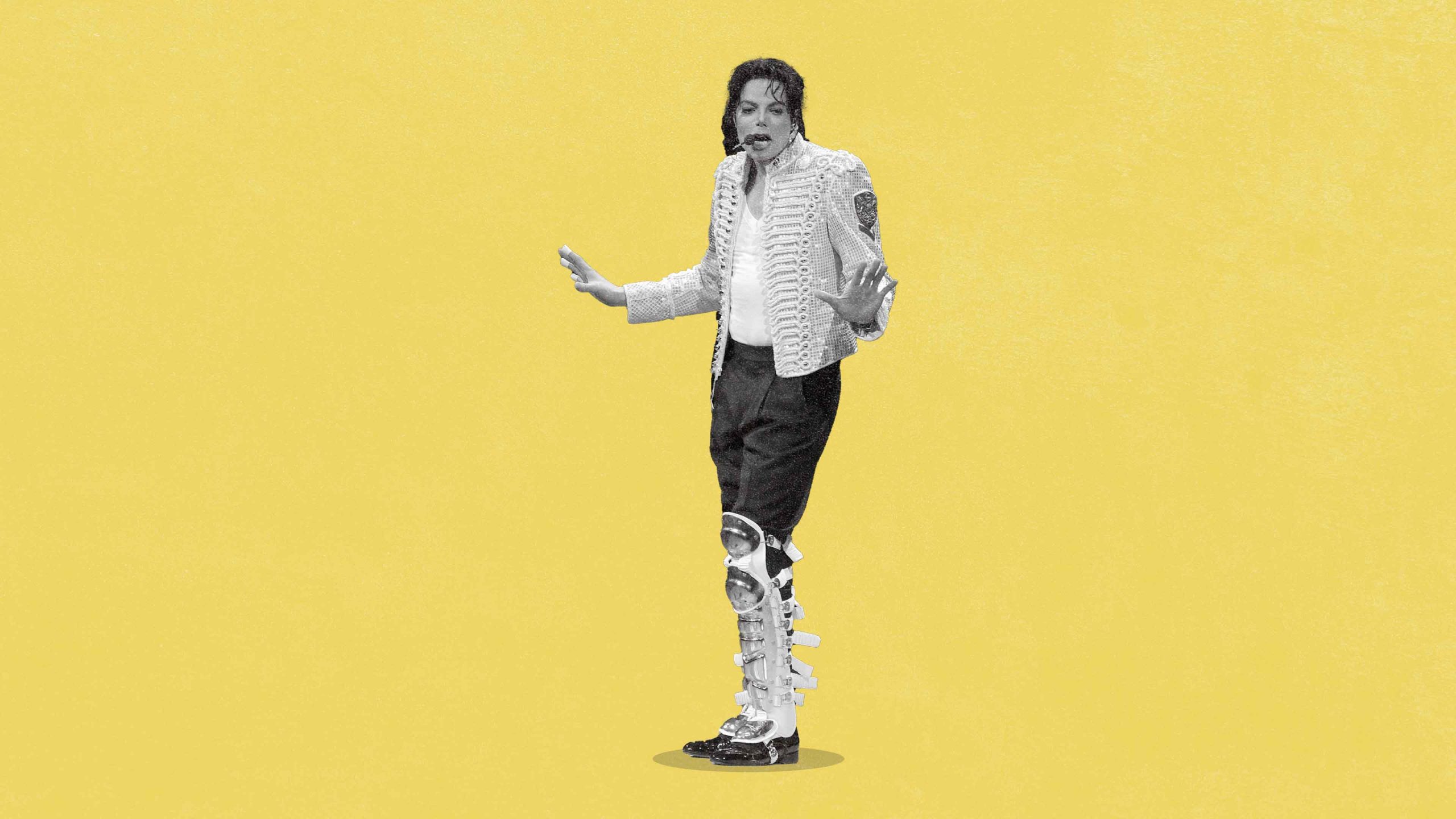
One of the songs on Michael Jackson’s 1979 album Off the Wall is called Don’t stop ’til you get enough. The usage of an apostrophe in the spelling of the word ’til here is puzzling – surely the normal way of spelling this word is till?
And it is not just Americans who do this. It is rather easy to find businesses in this country who advertise the fact that they are, for example, “open ’til 7pm”.
The usual reason for using this kind of apostrophe in English is to indicate to readers that something which used to be there has been removed. This is clearly the case with the n’t in don’t and isn’t, where the o has gone missing from the original not. It is a little bit more complicated in the case of the contracted words won’t and shan’t, where the first element does not come directly from wo+not and sha+not.
The n’t part of these words is an unstressed weak form of not which is not able to occur on its own: it is not possible to say “I don’t know whether to go or n’t.” The ’s in it’s not and the ’re in we’re are similarly abbreviated forms which cannot occur on their own.
But ’til is not like these examples. It can actually occur on its own, as it does on the Jackson album, and nothing has been left out. ’Til is not a reduced form of another word – it is, in fact, just a misspelling of till.
Interestingly, this misspelling is based on the total misapprehension that till is a shortened form of until, which in modern English is spelt with one l for no particularly good reason (except perhaps to distinguish it from the very rare English verb to untill meaning, in the context of ploughing, to flatten out land that has been tilled by, perhaps, walking all over it.
Till is not and never was a shortened form of until. The opposite is true – until is a lengthened form of till!
Suggested Reading

Why are snowy bumps and VIPs both called moguls?
Till was originally the Old Norse word corresponding to Old English to. In the modern Scandinavian languages, it is still the ordinary word for to: in modern Norwegian, Faroese, Icelandic and Danish it is spelt til, while the Swedes spell it till.
In those parts of the north of Britain which were very heavily Scandinavianised as a result of Viking settlement, till is still used in local speech to mean “to” in many of its senses, as in a quarter till eight – some North Americans also use such formulations. In most other forms of English, till just means “as far as” or “up to” in a spatial or temporal sense.
So where did the un– bit in until come from? The answer is that it was also an Old Norse form which has now disappeared. Un– originally meant “as far as”. So un-till was simply a more emphatic way of saying till – it would have been the equivalent of modern English “right up to”.
In certain dialects, till can also mean “in order that”. Scots might say “come here till I kiss you”, meaning “so that I can kiss you”.
Misapprehension
In contemporary English, apprehend is used metaphorically as often as it is used literally. Coming from Latin adprehendere via French, the original literal meaning was “to seize”, as it still can be when police apprehend a criminal. But apprehend very soon also gained a metaphorical sense, “to seize mentally”, so “to understand”. So ap-prehend came to include the meaning com-prehend as well.