The word folklore is a relatively recent arrival in the English language, having first occurred in print in 1846. Its earliest citations appear as “folk-lore” or “folk lore”.
According to the Oxford English Dictionary, folklore means “the traditional legends, beliefs, culture, etc, shared by a group of people, especially a rural or pre-industrial society; the study of these”. This can include stories, myths and proverbs which are passed down orally, as well as other traditions such as material culture, customs, rituals, songs and dances. The term is often modified by a word indicating the relevant group.
The etymological origin of the word lore lies in Old English lar “learning, what is taught, knowledge, science, doctrine; art or act of teaching”, which is related to Modern German Lehre “teaching”.
The newer word fakelore, which is clearly intended as a humorous derivation from folklore, dates from 1946 when it appeared in the Journal of American Folklore. Its basic meaning is pseudo-folklore – phoney, specious folkloristic stories and songs containing stereotypically folkloric elements which are presented as being part of a genuine folk tradition but which are not.
An often cited North American example of fakelore concerns tall stories involving Paul Bunyan, a mythical giant lumberjack (accompanied by a blue ox) who is a well-known although fictitious American and Canadian folk hero.
One of our interests in fakelore in this language column concerns the extent to which such stories and songs can introduce spurious, invented dialect words into more widespread circulation.
A classic example from my own experience can be found in the name of the supposedly traditional East Anglian sport or pub game called “dwile flonking”. I first read about this activity in the 1960s in the Eastern Evening News, a newspaper published in Norwich, but in spite of having grown up in the region, I had never heard of dwile flonking, nor had anyone else I asked.
I did know the word dwile “floor cloth, dish cloth” very well, as both my grandmothers had one. Dwile is a genuine East Anglian dialect word – the English Dialect Dictionary shows it as being confined to the dialects of Norfolk and Suffolk, apart from a solitary example from neighbouring Cambridgeshire.
The word dwile is not recorded in English until the late 1700s. The OED suggests a derivation from Dutch dweil “mop, floorcloth”, which makes extremely good sense to me: in the early years of the 17th century, approximately 20% of the population of Norwich were Dutch speakers, comprising Protestant refugees who fled Catholic persecution in the Low Countries and found refuge in Norwich in the early 1600s. It seems perfectly possible that the word arrived in East Anglia with these Dutch-speaking immigrants.
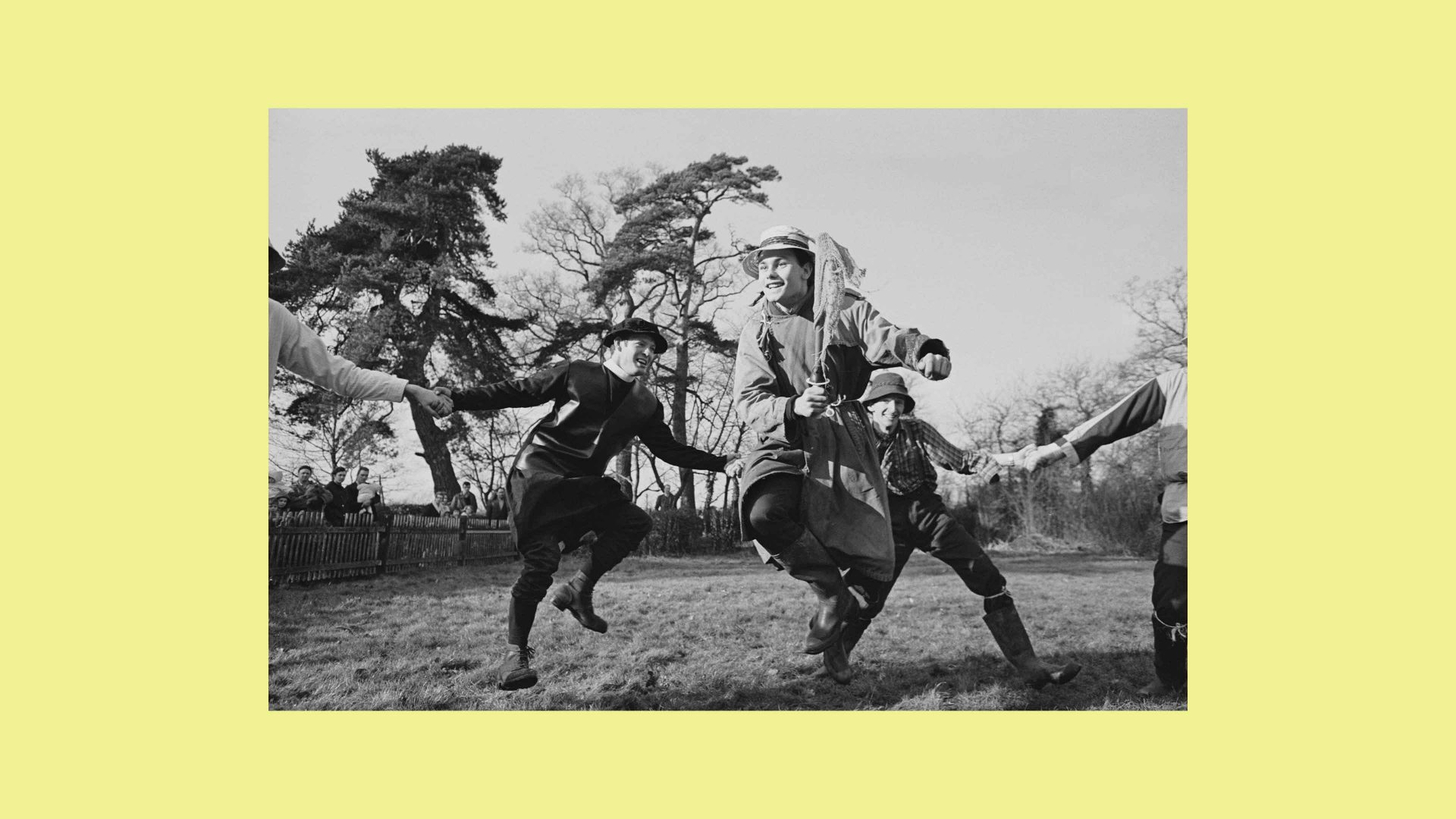
This supposedly traditional game of dwile flonking involves one person (the flonker) flinging a wet (often beer-soaked) dwile from the end of a pole at other participants. But although dwile is a genuine dialect word, flonk is a totally spurious pseudo-dialect word – just as “dwile flonking” itself is totally spurious as a traditional pastime. The whole thing is complete nonsense or, if you wish to be more charitable, a rather recently invented excuse for having a bit of harmless fun and getting some publicity for your local pub.
Suggested Reading


What do the French call a ‘French exit’?
Specious
Specious is a word with an interesting and chastening history. It comes from Latin speciosus “good-looking”, and in 14th-century English it meant “beautiful, fair, desirable”. By the 17th century, however, the predominant meaning had deteriorated to “seemingly desirable, reasonable or probable, but not really so”. Semanticists call this process pejoration. And by the 20th century its common meaning had come to be “fallacious, baseless; false, sham, spurious”.