The first time I went to Morocco, I went on the train. It did help that I was living in the south of England at the time, so a friend and I were readily able to take the train via Dover, Calais, Paris, Lisbon, and Seville to Algeciras, the port city on the Strait of Gibraltar.
Like many Spanish and Portuguese place-names, Algeciras comes from Arabic, in this case al-Jazīrah al-Khaḍrāʾ (“The Green Island”), where the reference is to Isla Verde, a Spanish island lying in the Mediterranean just offshore from the port. Jazira (“island, peninsula”) is the same Arabic word that appears in the name of the Qatari media network Al Jazeera, the reference in that case being to the Arabian peninsula.
From Algeciras, we enjoyed the 90-minute ferry ride across to Tangiers (more often these days called Tangier in English), so in addition to being passengers on several trains, two ferries were also involved in our journey, crossing first the English Channel and then the Strait of Gibraltar.
(This was in 1974, in the days before the Channel Tunnel. It is easy for me to remember the year because we spent our first evening on what was to us a new continent, Africa, in a bar in the Moroccan port where, ironically, the TV was showing the Eurovision song contest, the one which was won by ABBA with their performance of Waterloo.)
Tangiers was called Tinge by the Romans, a Latin name which probably came from the Semitic root tigisis “harbour” – the Carthaginian colonisers of the Maghreb (north-western Africa) had originally been Phoenicians who spoke Punic, the Semitic language which was closely related to Ancient Hebrew. The place-name is Ṭanjah in contemporary Arabic.
From Tangiers (as I continue to call it), we carried on our journey eastwards across Morocco by train to Fez. The town is called Fas in the original indigenous pre-Arabic Amazigh (Berber) language of northern Morocco known as Tarifit.
I had been aware at the time that the citrus fruit tangerine took its name from Tangiers, with tangerine originally simply being an adjective meaning “from or of Tangier” – so a person from Tangiers could legitimately be called a Tangerine.
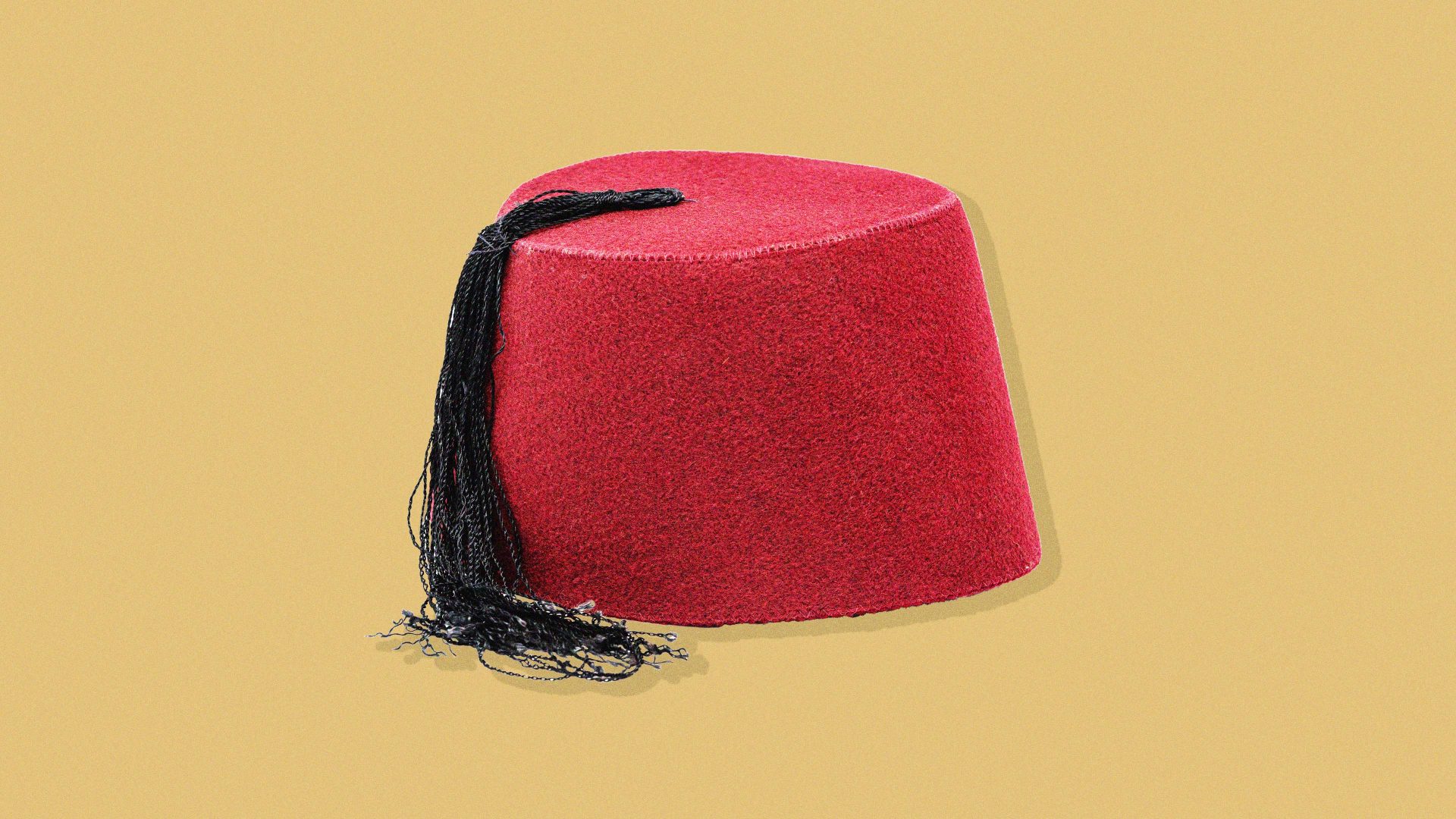
But, as we were arriving in the ancient North African town of Fez, it never occurred to me that there might be a connection between the name of this town and the word fez as used to refer to the type of hat favoured by the late comedian Tommy Cooper.
However, there is a connection. The Oxford English Dictionary describes a fez as a “skull-cap formerly of wool, now of felt, of a dull crimson colour, in the form of a truncated cone, ornamented with a long black tassel; formerly the national head-dress of the Turks”, and “it is alleged that the fez is so called from the town, where it was formerly chiefly manufactured”.
So the fez as formerly worn by Turks does indeed take its name from the Moroccan city of Fez, supposedly because the area was the source of a particular type of crimson berry which was once employed to dye the felt used to make these hats.
Suggested Reading


The strange history of the Herzogs, a dynasty without a crown
Casablanca
Much more recently, I travelled to Morocco again, to the University in Rabat. I flew into Casablanca, whose name, in a reversal of the direction of linguistic loans between the continents, is Spanish for “white house”, though it originates in the Portuguese name Casa Branca, which was given to a trading post built in 1515 on the site of an old Berber town; the name was later adopted by Spanish traders. Its Moroccan Arabic name, ad-Dār l-Biḍā, is a direct translation.