
Democracies go to war at their peril. Think of Afghanistan, or Iraq, or Vietnam, or Suez. All too often, early signs of success eventually curdle into failure, embarrassment and domestic discontent.
Iran is different. There has been no honeymoon phase with the American public. Far from Trump being able to proclaim early success, he has had to be content with the closing of the Strait of Hormuz and the inflation and damage to prosperity it brings.
Four weeks into the war, five lessons stand out.
Most Americans oppose the war
The latest Ipsos/Reuters poll asked: “Overall, do you approve or disapprove of US military strikes against Iran?” Americans disapprove by almost two-to-one: 61-35%.
At the same stage in the Iraq war, Pew Research found that 74% backed the US-led invasion. Buyers’ remorse came later. Vietnam was different. The US’s overt involvement in that war grew gradually, from 1964 onwards. Until 1967, support generally remained above 50%, and only then declined. With Afghanistan, another drawn-out conflict, Americans divided evenly at first but hostility to the war grew steadily from 2009. Americans were also divided last June over Trump’s short-lived bombing campaign against Iran’s military installations.
In short, Iran is the first war in recent times that most American voters have opposed from the outset.
Suggested Reading


To Trump, Iran isn’t war – it’s showbiz
The party split in views is bad news for the Republicans
These are the results of that Ipsos poll divided by party loyalty. Republicans mostly back Trump, but as many as a quarter of them oppose the war. In contrast, Democrats are virtually unanimous in their condemnation.
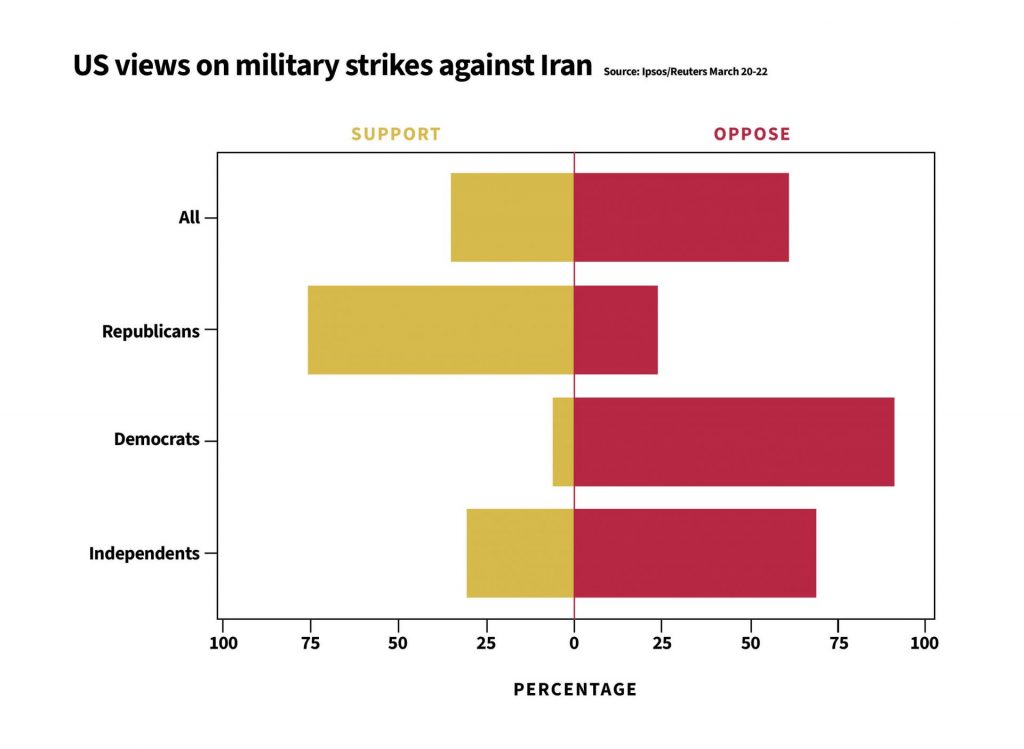
That’s not all. Around one in three Americans are Republicans. To win elections they, including Trump, need to attract millions of independent voters – but these independents break heavily against the war. Swing voters have contributed to Democratic victories in a series of special elections (the US term for by-elections).
Only this week, they gained a district in Florida’s state assembly – as it happens, the district that includes Mar-a-Lago. Trump is now represented in Florida’s house of representatives by Emily Gregory, the candidate he used his postal vote to try to defeat.
All this is bad news for the Republicans ahead of this November’s mid-term elections. Currently they are heading for defeat in Congress, while control of the Senate is too close to call.
Trump’s approval ratings are his lowest yet
This week’s Ipsos survey showed Trump’s net rating has slumped to minus 26 (approve 36%, disapprove 62%), the lowest of his second term.
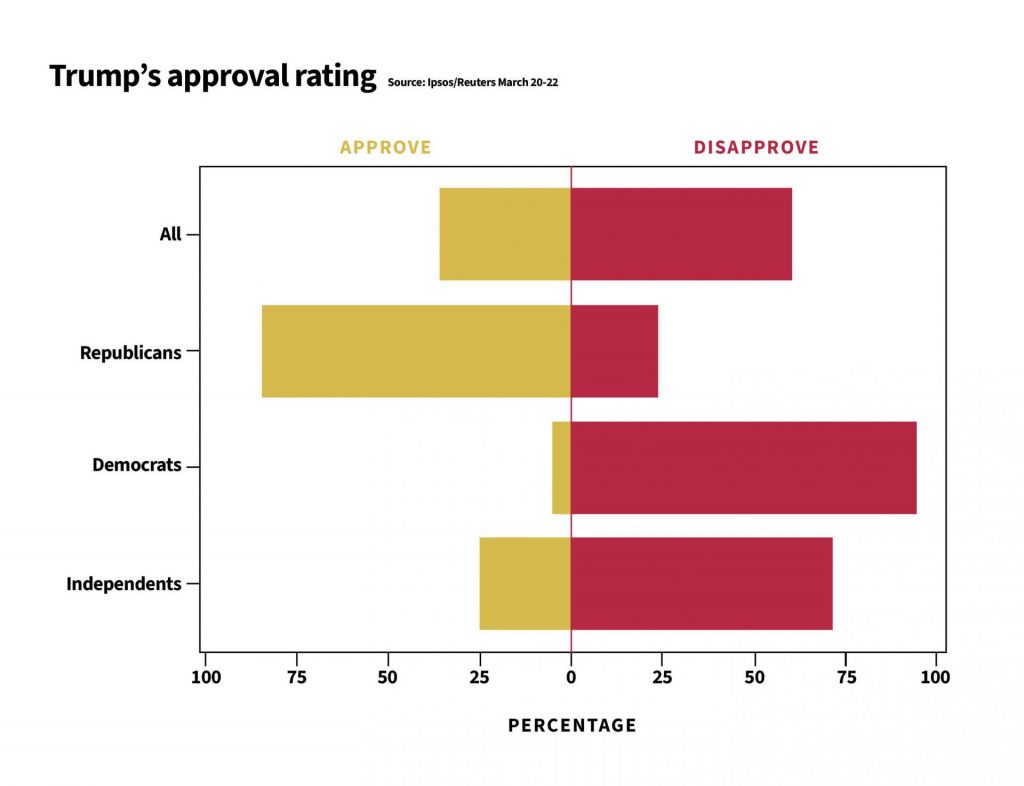
Once again, note the views of those election-critical independents: another warning sign for Trump ahead of the mid-terms. But the fraying of Republican loyalty towards Trump also matters. Even more than presidential elections, the outcome of mid-term contests depends on voters being motivated to turn out.
It’s not just that 18% of Republicans disapprove of Trump, only 44% strongly approve of him. Contrast that with the 85% of Democrats who strongly disapprove of Trump. These figures underpin Democratic hopes of winning the turnout battle in November. If the Iran war drags on, it could depress Republican enthusiasm for Trump even further, and enhance the determination of Democrats to defeat him.
It’s still the economy, stupid
Trump boasts about how well the economy has done since he returned to the White House. Few Americans believe him. Even before the war, less than one in four Americans told YouGov the economy was improving. The number has slipped further, while the number saying it is getting worse has climbed from 50% to 58%.
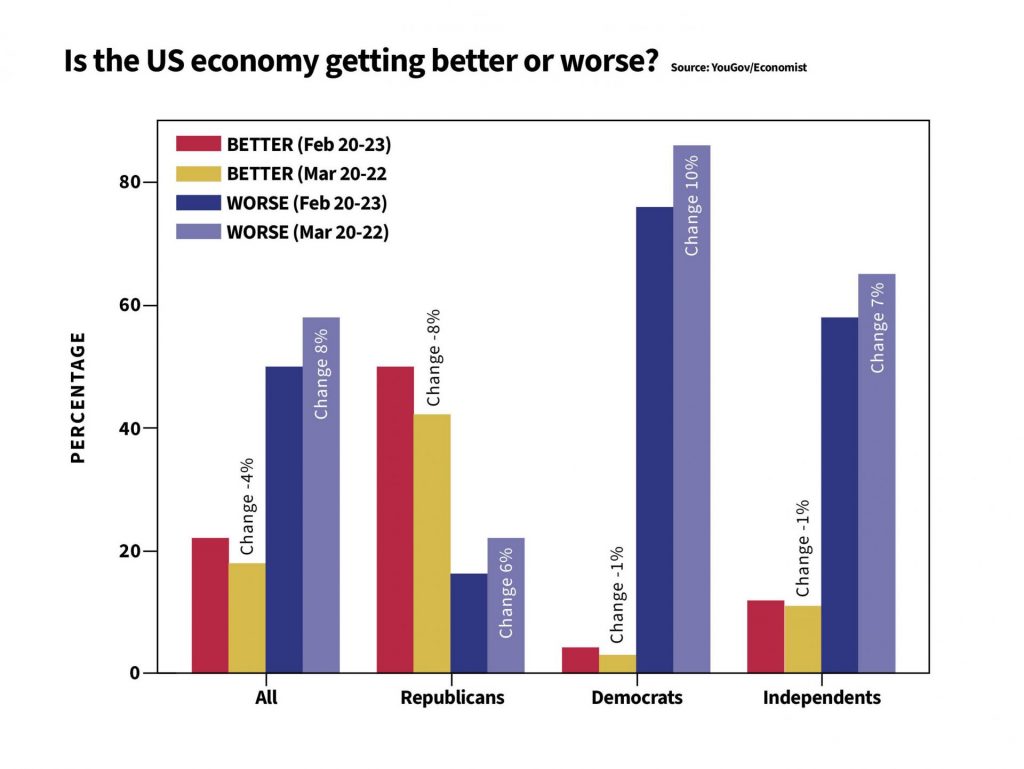
Optimism has declined most among Republicans – but that’s because there were so few Democratic and Independent optimists in the first place. Trump gets particularly bad marks for inflation – according to YouGov just 30% of Americans approve of the way he is handling the issue, while 64% disapprove. Which brings to one of the most intriguing poll results of the past few days.
Suggested Reading
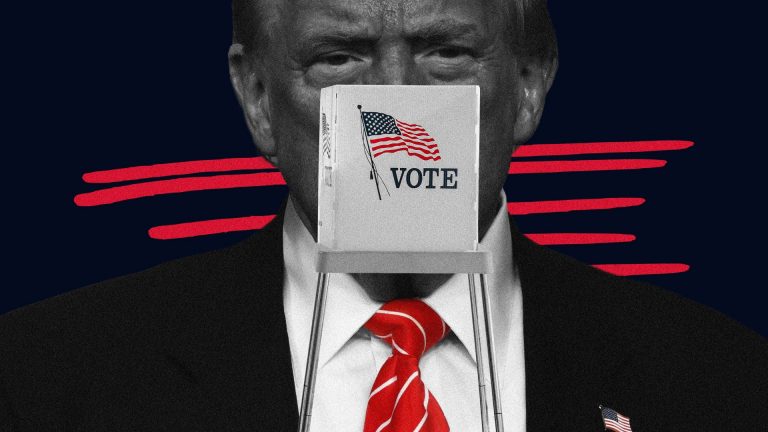

Trump is set to lose the mid-terms – but what if he cheats?
Trump needs to get the price of petrol back down fast
Last October, a NORC poll for the Associated Press asked Americans how concerned they were “about affording gas [petrol] in the next few months”. Thirty per cent said they were “extremely” or “very” concerned. There was little difference between voters from different parties: Democrats 26%, Independents 34%, Republicans 33%. (Democrats have above average support among well-off Americans. This probably explains their lower figure.)
NORC repeated this question last week, as petrol prices soared. This is what they found: concerned Democrats – more than doubled to 57%; concerned independents – up 15 points to 49%; and concerned Republicans – no change at all; still 33%.
Something odd is happening here. Differences in the incomes or demographics of the different party memberships could not account for such differing attitudes to rising petrol prices. It’s purely a political difference. Most Republicans seem to have faith that Trump will protect their interests and all will be well.
Most Democrats think no such thing. If the war does end soon and petrol prices come back down, the faith of Republican voters will be rewarded. But if prices stay high for long, that faith is likely to fade. This would damage Trump’s hopes of retaining both Houses on Capitol Hill.
 Most popular

Screen scandal: How Ofcom lets GB News get away with it

James O’Brien says the press have gone mad – and it’s worse than you think
The evidence is growing: Trump’s team are using his chaos to get richer on the stock market


Now it’s official: Brexit was a disaster. Next, we must join a new EU