
For much of last year, polls and elections showed Reform on course to win the next general election. That has changed. Over the winter, the party has lost support. Nigel Farage’s ratings have slipped and voters are more willing to vote tactically to defeat Reform candidates.
It’s worth recalling that different polls use different methods, so, for example, YouGov’s figures for Reform are lower than others. But by averaging the figures from the same companies, with combined samples of more than 12,000, we can minimise these fluctuations. So we can be confident that the changes shown in the table below are accurate and that Reform’s level of support is around five points lower than it was five months ago.
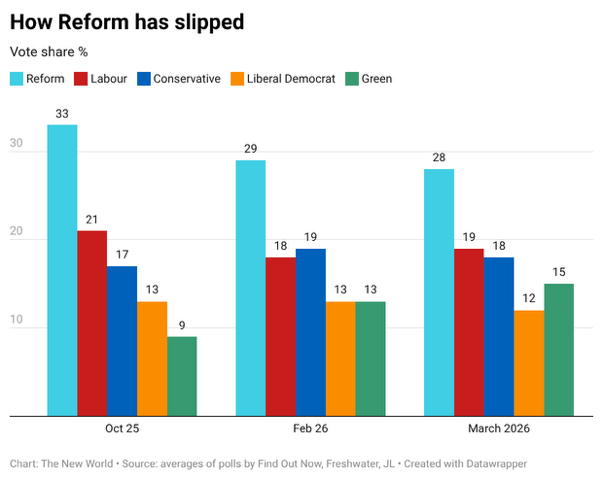
By the time the Greens won Gorton and Denton, most of Reform’s decline had already happened. This matters. Sudden changes are often temporary. Steady drifts are more likely to persist.
By last month, Reform was down four points and the Greens were up by the same amount following Zack Polanski becoming party leader. It looks like a straight swing; in fact, these are the net changes of movements to and from each party.
However, it’s perfectly possible that there was some switching directly from Farage to Polanski. These are people whose living standards have stalled and who have lost faith in the traditional parties, but are not yet sure which insurgent best reflects their demands for change.
Since Gorton, the Greens have gained further ground, although there are signs that their bounce has started to fade. But Reform has failed to reverse its slide. Why has Reform slipped? Farage’s personal ratings are also down. But his fortunes simply track his party’s: they do not help us determine cause and effect.
History gives us a clue to what is happening. In 1981, the newly formed Social Democratic Party, formed by breakaway Labour MPs, surged ahead in the polls. But the same polls also showed that many of its supporters neither knew what the SDP stood for or supported its signature policies. Over time, its aims became better known, and voters drifted away.
Suggested Reading


Trump is set to lose the mid-terms – but what if he cheats?
Something similar may be happening to Reform. At its peak, its support came from two groups – devotees who supported Farage’s distinctive nationalism, not just on immigration but on issues such as climate change. They were the great majority of the 15% who voted Reform at the last general election and have stayed loyal.
The second group, who lifted the party’s total above 30% last year, look like a cross-section of the electorate, united by their feelings of insecurity and their hostility to both Labour and the Conservatives, but not by shared opinions, other than on immigration.
As Reform’s agenda has become better known, and more voters become aware of its weak record in running county councils, it has lost a chunk of last year’s converts.
Another factor that separates Reform from the SDP is that few voters actively disliked the SDP, whereas Reform has generated increasing hostility. Last November, and again this February, More in Common asked respondents not just which party they would support, but which they would vote against.
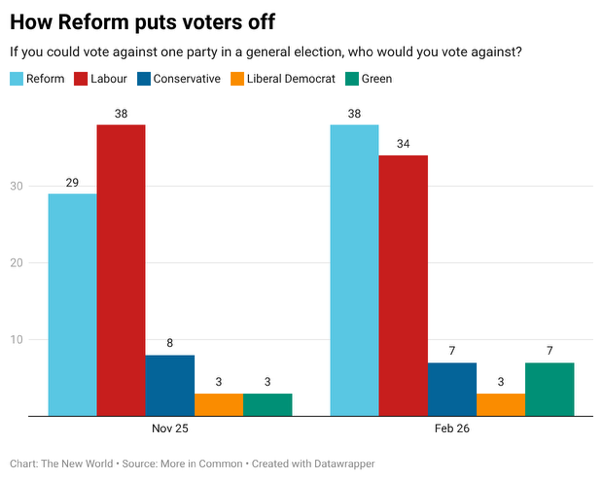
In November, Labour topped the unpopularity chart; now it is Reform that voters dislike most. This explains why Reform is struggling against a double squeeze: fewer supporters, and also the willingness of people, especially progressives, to vote tactically. A recent survey by BMG for the i newspaper found that most Labour, Green and Lib Dem supporters were prepared to vote tactically. Fewer Tories, and far fewer Reform supporters, were willing to do the same.
Two recent by-elections reflect this willingness to vote tactically: the Plaid Cymru victory in Caerphilly’s contest for the Welsh Senedd, and the Green victory in Gorton and Denton. Voters decided that they had the best chance of defeating Reform.
Tactical voting could cost the party dear at the next election, especially if its support drops below 30%. However, this depends on voters knowing which party is best placed to defeat Reform locally. Two years ago, the Lib Dems benefitted from being the most likely to oust the Tories in their target seats. The problem at the next election may be that things are less clear-cut in seats where Reform is ahead, especially where Labour and the Greens are in a tight contest for the anti-Reform vote.
There will of course be various tactical voting websites. It would help if they gave the same advice in every, or almost, every seat. But those sites will depend on seat-by-seat projections which may disagree with each other, leading to conflicting advice: good news for Farage, bad for Labour and the Greens.
The more immediate question is whether Reform can arrest its slide in support. May’s elections in Scotland, Wales, London and many councils in the rest of England will be the next big test. Last year, Reform’s vote share – when results from different councils were converted into projections of national support – was 30-32%. The question now is whether its national projected share remains at 30%.
 Most popular


Brits living in Dubai – sorry, but you’re awful


Trump: Dead soldiers are walking around without legs


How Brexit could come back to bite Sunderland


The quislings of the right have abandoned patriotism