Yesterday, a man with a knife rampaged through Golders Green looking for Jews. By the time he’d been disarmed by members of the Jewish community security organisation Shomrim, he’d stabbed and seriously injured two men. They were treated by Hatzola, the charity whose ambulances were set on fire in a targeted attack just a few weeks ago.
When the BBC tweeted the news, many were quick to express their genuine horror and sympathy. Immediately, there were people who leaped to their own conclusions about the knifeman’s motives, and who clearly felt his victims were fair game.
One voice on social media named “Wayward Partisan” had no doubt the attack was a “false flag”, “to justify how many hundreds of thousands of innocent people being killed in Palestine”. “OxKnight” was more succinct: “you reap, you sow”. “Rogan the truth seeker” simply wrote: “Free Palestine”.
Suggested Reading


This attack on Jewish ambulances is a new kind of warfare
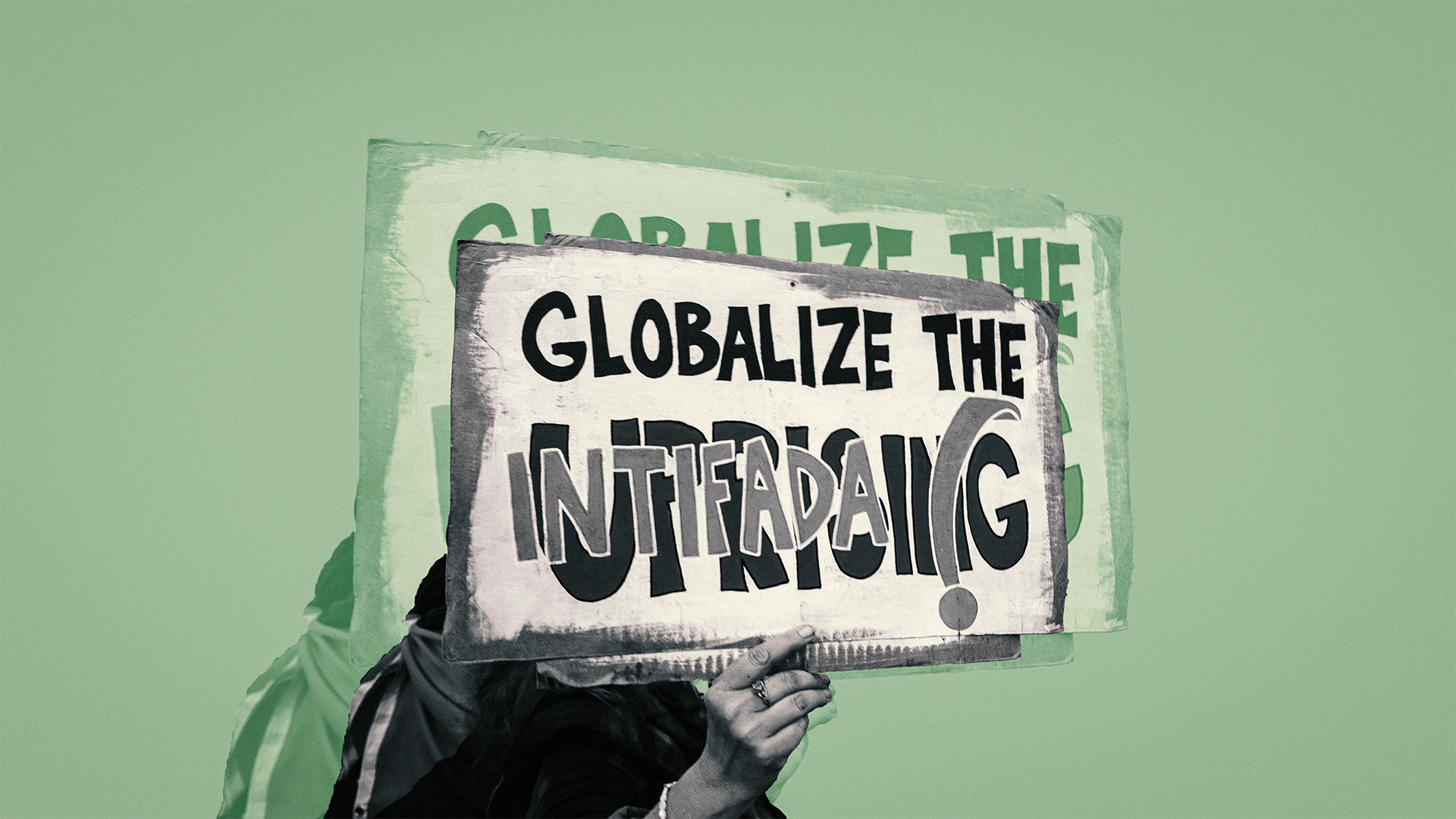
This then is the globalised intifada which brings first the slogans and chants and then the violence of the middle east to the streets of London. In this view, ordinary British people going about their everyday lives are seen as combatants in the struggle between Israel and the Palestinians and legitimate targets for guns, knives and bombs. This view does not distinguish between soldiers and civilians, or between Israelis, Zionists and Jews.
This is the human rights movement that marches under the banner “from the river to the sea”, implicitly calling for the destruction of Israel and, presumably, its people, while abominating those who disagree as supporters of genocide.
Well, I do support Israel’s right to exist and I suppose that makes me a Zionist. But even if I make plain my detestation of the current Israeli government, my conviction that the Palestinians also have a right to a homeland, and my hope that one day those two states can peacefully coexist, for many I have placed myself beyond the pale and forfeited my right to be heard.
What do the supporters of this intifada know of Zionism, or for that matter, the causes of Zionism? What do they care to know?
Zionism was never conceived as an instrument of colonialism or oppression: quite the opposite. 2,500 years ago, by the waters of Babylon, it expressed the longing of enslaved Jews for the land from which they had been exiled.
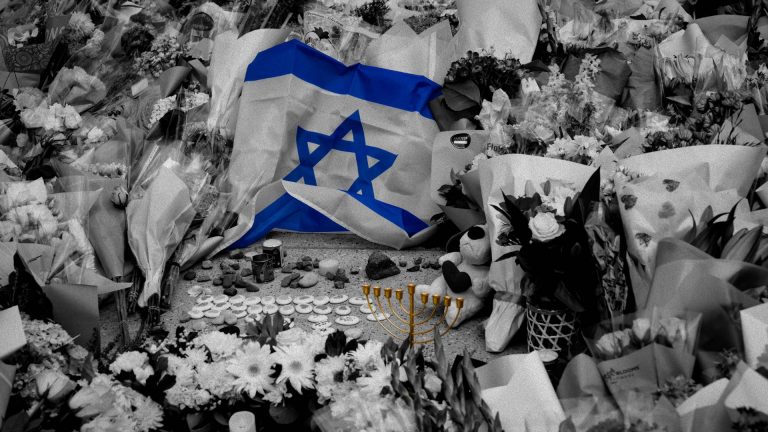
At the end of the nineteenth century, with pogroms raging in the east of Europe and the Dreyfus affair unleashing a new wave of anti-Semitism in the west, Theodore Herzl advocated not for Jewish privilege, much less supremacy, but simply for relief from prejudice and persecution. Zionism’s “propelling force”, he argued in The Jewish State, was “the misery of the Jews”:
“We have honestly endeavoured everywhere to merge ourselves in the social life of surrounding communities and to preserve the faith of our fathers. We are not permitted to do so…In countries where we have lived for centuries we are still cried down as strangers…If we could only be left in peace … But I think that we shall not be left in peace.”
If Herzl’s despair was justified then, how much more so just a generation later. And now?
In fact, Herzl didn’t insist that the Jewish state be founded in the Holy Land. He seriously considered Argentina. The British promoted Uganda, the Nazis considered Madagascar and the Arctic before they settled on the Final Solution.
In truth, wherever Jews had gone, there would have been displacement and grievance. Nowhere would they have found acceptance and lasting peace. In the event, when their need was greatest, there was nowhere to go. And the rest is history.
Of course, opposition to the Israeli government is legitimate. Of course, there’s a case for anti-Zionism. My father, a refugee from Nazi Germany whose parents did not escape, resented the insistence of the post-war Zionists that Jews could only ever be safe in their own land. Despite his experiences, he was a committed assimilationist. But though he was not a Zionist, he supported the right of Jews to live in Israel. Would he have been an enemy too, and a target?
If some can’t distinguish between Jews and Zionists, it’s not surprising that others can’t tell anti-Zionists from anti-Semites. For there is a point at which anti-Zionism and anti-Semitism merge, on the left as well as the right. Where that point lies is not always clear and both sides shift the goal posts.
But, as George Orwell wrote, “what vitiates nearly all that is written about antisemitism is the assumption in the writer’s mind that he himself is immune to it… He thus fails to start his investigation in the one place where he could get hold of some reliable evidence – that is, in his own mind.”
So I would simply ask, if I as a Zionist can also be pro-Palestinian, why must their most committed supporters be so uncompromisingly anti-Zionist? Why is it necessary for them to associate Zionism with all the dogmas they, and I, most vigorously oppose and from which Jews have suffered more than most – imperialism, colonialism, racism, fascism, apartheid, genocide?
Suggested Reading


The Jewish suitcase is back in the hall
Why are all Jews everywhere held accountable for the actions of the Israeli government? Are British Christians responsible for Trump’s crusade against Iran? Are all Muslims to blame for the Taliban? And if those on the anti-racist left really believe that the “Zionist lobby” dictates the policies of Israel’s allies, do they not feel just a little uncomfortable that they share this conspiracy theory with avowed anti-Semites and neo-Nazis?
In short, how is it intellectually or morally possible to believe that Palestinians deserve a homeland but Jews do not?
I’m not trying to convert anyone to Zionism. I’m simply arguing for the leavening of certainty with a little doubt, a little humility. I’m arguing against the comfort of simplistic chants and slogans and for a willingness to do the research, to see the problem in the round, to reason, to engage, and where possible, to find the common ground. Without respect and tolerance, without open-minded debate, democracy is an echoing, empty vessel, and, for some, an increasingly dangerous place to navigate.
Peter Bradley is a former Labour MP and author of The Last Train – A Family History of the Final Solution.
 Most popular


Emily Maitlis’s diary: As I was saying to George Clooney just the other day…


Why Slavoj Žižek probably hates you

There’s only one reason Trump went to Ireland – it wasn’t to meet the Taoiseach

A new film about Elon Musk reveals him as so awful it’s almost tragic. Almost