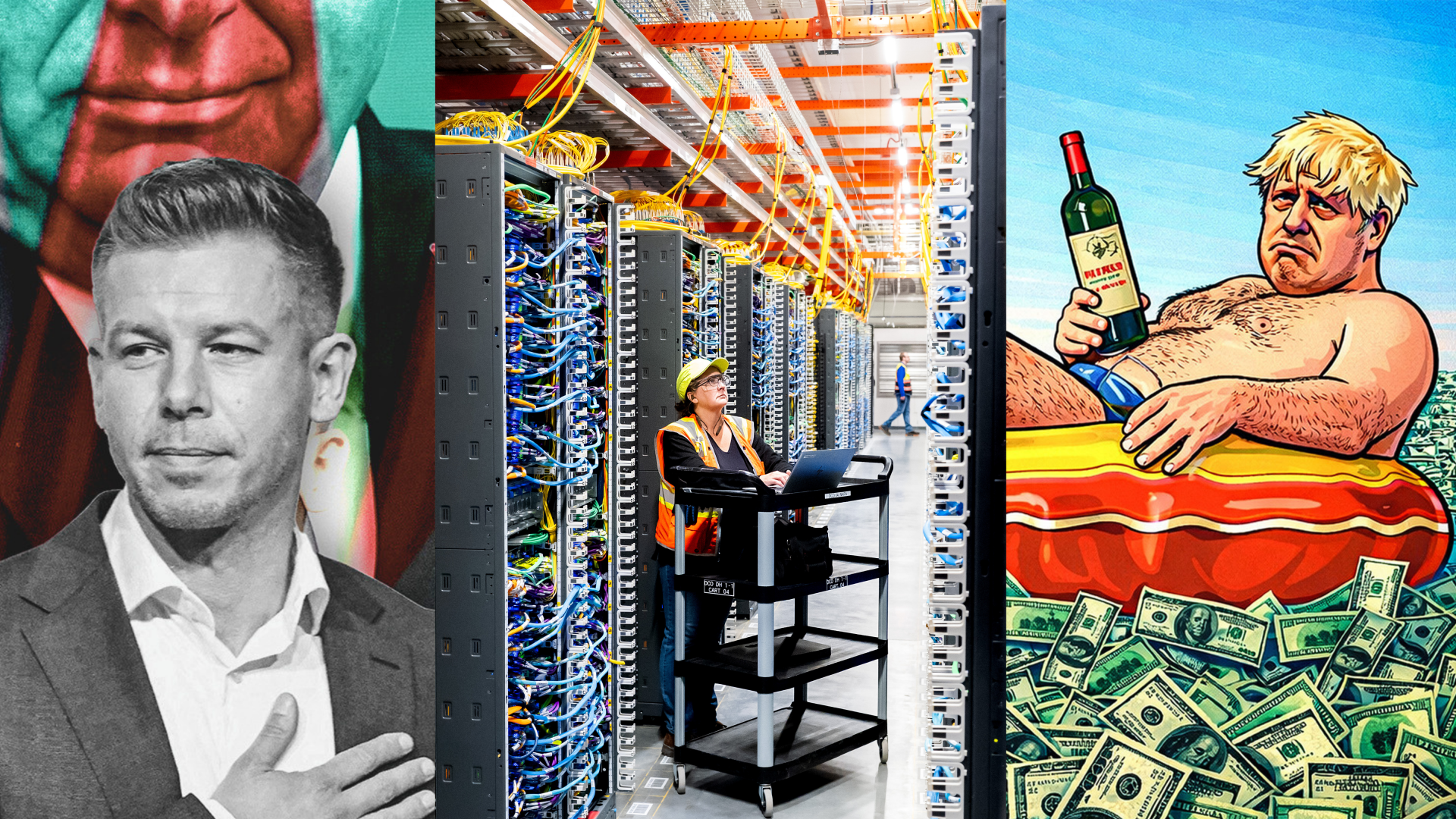
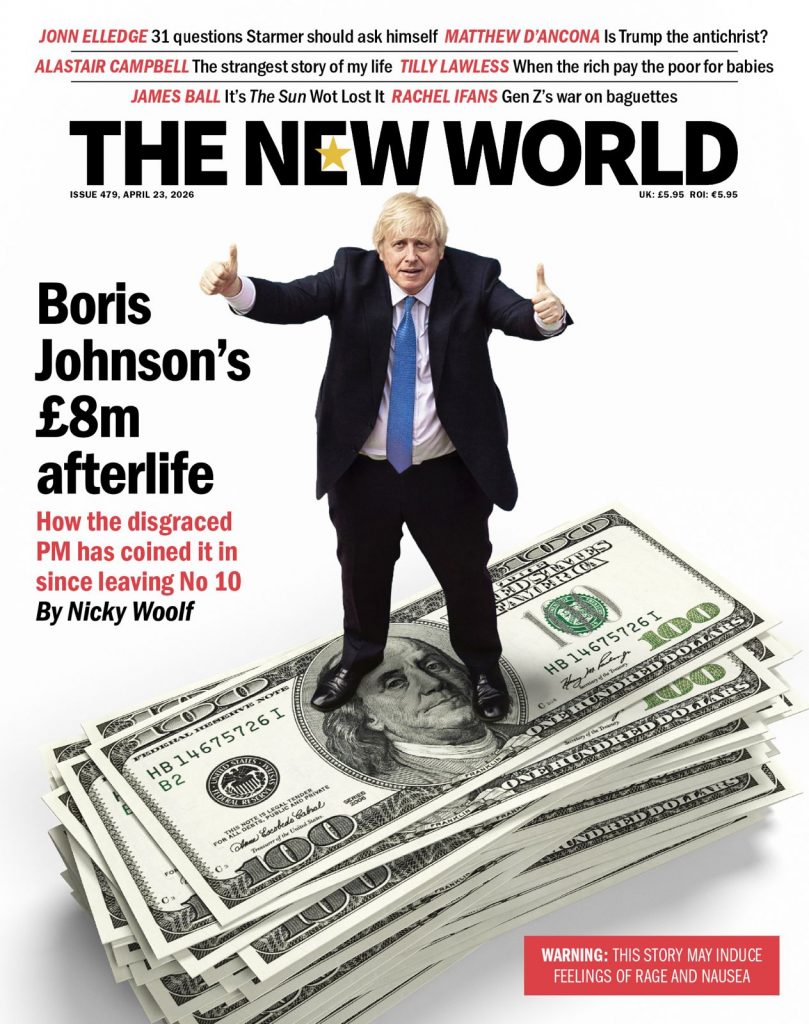
This week’s issue carried a warning on the cover: that reading it may invoke feelings of rage and nausea. Certainly, never has disgrace been so well rewarded. Since being bundled out of Downing Street in 2022, Boris Johnson has been busy amassing a fortune … somewhere to the tune of £8m. Almost certainly substantially more, but that’s what we can at least be sure of. His latest payday comes in the form of a lecturing gig at a Miami university. Now, I — like you — had laboured under the delusion university lecturers were a fairly hard-pressed bunch. Not in the case of Johnson.
As Nicky Woolf discovers, the man who brought economic ruin to this nation has proven to be considerably better at finances when it comes to lining his own pockets. Yes, he has mouths to feed (nine kids, that we know of), but really … is there no shame? (Don’t bother answering that one. I know the answer all too well.)
Elsewhere in this week’s issue:
Matthew d’Ancona asks whether or not Donald Trump is the actual anti-Christ. Trump’s AI-generated image of himself as Jesus healing the sick has done what 91 indictments and two impeachments could not: genuinely rattled his evangelical base.
Alastair Campbell shares the strangest coincidence of his professional life, bumping into his Developed Vetting interviewer at a corner shop minutes after the session ended. It turned out to be his shop. It’s a very amusing diary entry.
Jonn Elledge delivers 31 questions Prime Minister Keir Starmer should also be asking himself after another week of calamity in Downing Street.
Tilly Lawless examines commercial surrogacy. It is illegal in Australia, yet Australians currently make up half the clients in Georgia’s surrogacy industry, where Thai women are trafficked. Banning the practice at home has simply exported the exploitation to women with less power to resist it.
James Ball marks the lingering death of The Sun newspaper. The tabloid posted losses of £53m; cumulative losses of £1.3bn since the phone-hacking scandal broke. Circulation is estimated below 500,000, a tenth of its peak. James asks: how much longer can it last, and does it even matter?
Mariana Lastovyria was in Budapest on election night. Her verdict on Péter Magyar: not a magic pill, but a genuine litmus test for whether Hungary has truly changed.
In South Africa, the Iran war’s fuel shock is biting hard. Paraffin prices have doubled; hundreds of pumps have run dry. Elna Schütz reports from the queue.
Our Germansplaining columnist Tanit Koch relays the story of Timmy the humpback whale, stranded in the Baltic, and wonders what an obsession with his fate says about empathy, the ocean, and human priorities.
Paul Mason takes an optimistic view of AI and what it can do for society. It’s a fascinating counterpoint to the increasingly apocalyptic coverage of this complex and transformative technology.
I return to Cairo after a 30-year hiatus and visit the sparky new Grand Egyptian Museum. It’s a marvel in its own right, but is this £1 billion edifice the best museum in the world? No. It’s not even the best museum in Cairo.
And Patience Wheatcroft takes a leaf from the Egyptians’ book and makes the case for turning Parliament into a museum.
In Arts & Culture:
John Bleasdale finds the new Jackson biopic sanitised, clichéd, and unable to confront the most important question; Florence Hallett delves into the oeuvre of Konrad Mägi — the Estonian painter who thought the work of turn-of-the-century modernists in Paris “sloppy rubbish”; Dale Shaw enjoys a mesmerising exhibition of Basquiat’s drawings; Jamie Klingler relishes the new Tayari Jones novel Kin; and Matthew Worley tells of the interview, 50 years ago, that basically invented punk.