
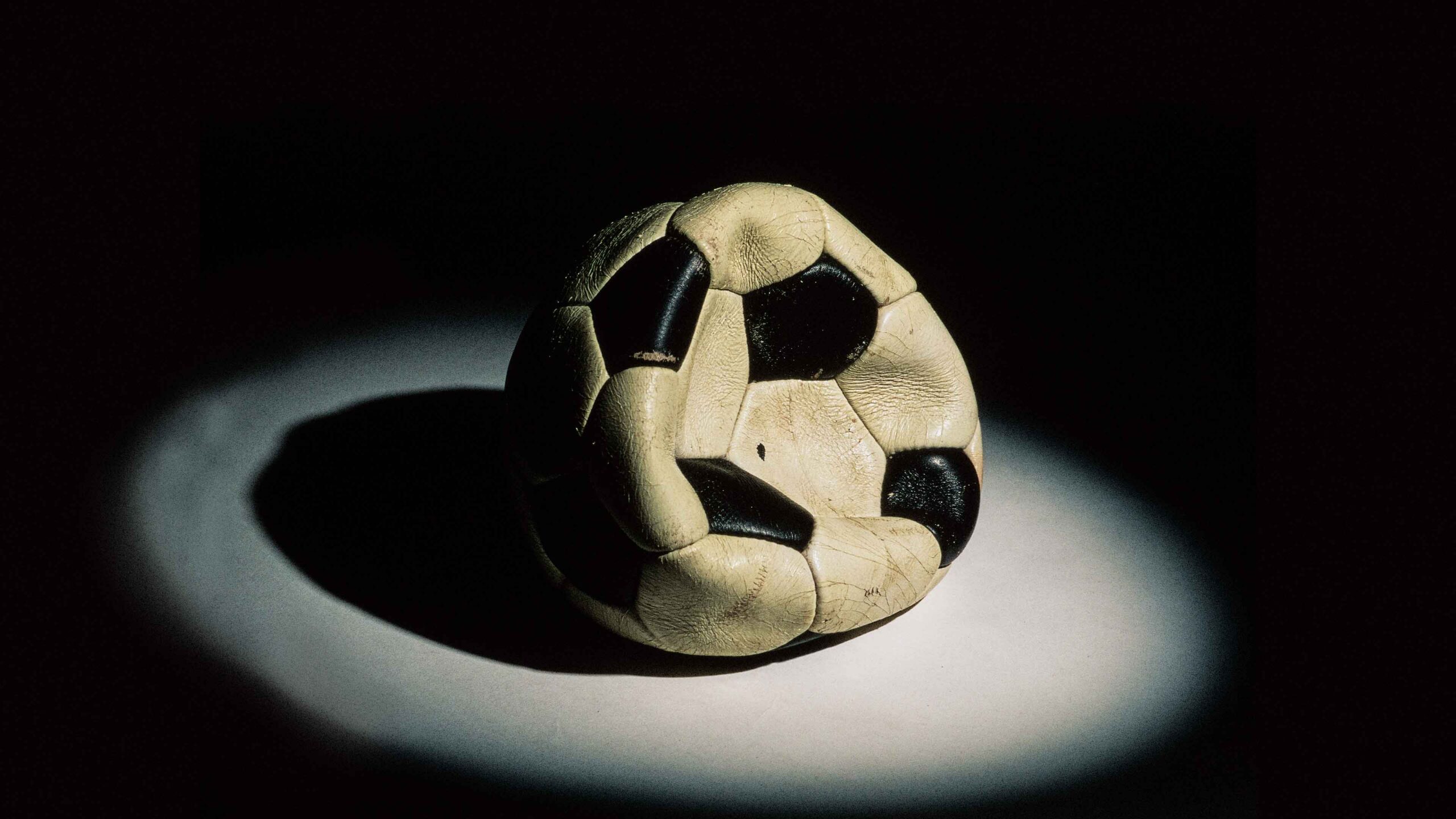
Tenerife’s striker Jesús de Miguel died on November 3 following a brutal mid-air collision with the Andorra goalkeeper Jesús Owono in a game the day before. In extra time with the match drawn 2-2, Owono sprinted to the halfway line and leapt with a raised knee to challenge de Miguel for the ball, knocking him to the ground. This was shockingly reckless play. No one objected to Owono’s red card. Far worse was to follow.
As a young man, the philosopher-novelist Albert Camus played in goal for an Algerian team. He later claimed that what he knew most surely about morality and obligations he owed to football. Most commentators take this to mean that he learnt about solidarity, the role of an individual within a team, fair play, and courage. But football is not always played with a Corinthian spirit.
Owono’s may have been a professional foul, a deliberate flouting of the rules, not a clumsy action. Or he could have just been going for the ball with the foreseeable consequence that he’d collide with the other player in the process – a kind of double effect.
Anyone who knows football is familiar with the idea of “taking one for the team”, a well-recognised form of individual sacrifice. This means using illegal means to neutralise a player who might otherwise score. Players deliberately act in a way that can be construed as uncoordinated: a scything tackle or lunge rather than a punch to the head. They expect to be sent off.
In the play Professional Foul, by Tom Stoppard, a character describes this as “the teleological suspension of the ethical”, a decision to break moral prohibitions for the sake of a supposedly more important end. The player puts the interest of the team in winning before his or her own moral integrity.
Suggested Reading

Dinosaurs are the new bragging rights for the super-rich
Occasionally footballers are prosecuted for professional fouls: for breaking an opponent’s cheekbone with an elbow or ending their career with a studs-up, leg-shattering challenge. But for the most part, robust physical contact is deemed part of the sport, and punishment for overstepping the mark, even when done cynically, is left to the referee and football authorities.
There’s a principle in Roman law, volenti non fit injuria, that supports this approach: the idea that those who consent to an inherently dangerous activity can’t be harmed in a legal sense. The boxer who enters the ring can’t bring a court case against an opponent when knocked out, as long as the punch was within bounds set by the rulebook. If the victor has gloves filled with lead or punches after the referee stops the contest it’s a different story.
Two footballers clash heads jumping for a ball. That can cause brain injury, but it shouldn’t automatically lead to prosecution even if one was somewhat at fault. When a player recklessly raises their boot as another leans forward, however, there is a point at which that action can be so risky as to constitute an assault.
Drawing the line is difficult, but pleading that you were going for the ball is no excuse if you kick an opponent’s head with full force. That’s because participants in contact sports implicitly undertake not to put opponents at severe risk except within the game’s rules. Sometimes you must hold back. That’s a responsibility players implicitly accept.
Suggested Reading

Everyday philosophy: A 75,000-year-old lesson for humanity
Those who argue that Owono should be charged with manslaughter believe he acted far beyond the bounds of the game and so legal punishment is justified. That doesn’t seem to match the facts. Meanwhile racists eager to scapegoat a black player are sending him hate mail.
On the other side, many of us are appalled by this death but also feel some compassion for the goalkeeper who certainly acted badly but couldn’t have foreseen the fatal consequence that will haunt him to the grave – punishment enough, perhaps.
Ultimately this was a tragic, meaningless, avoidable accident, a chance coincidence of events that led to tragedy – absurd in a philosophical sense.
Camus would have understood.