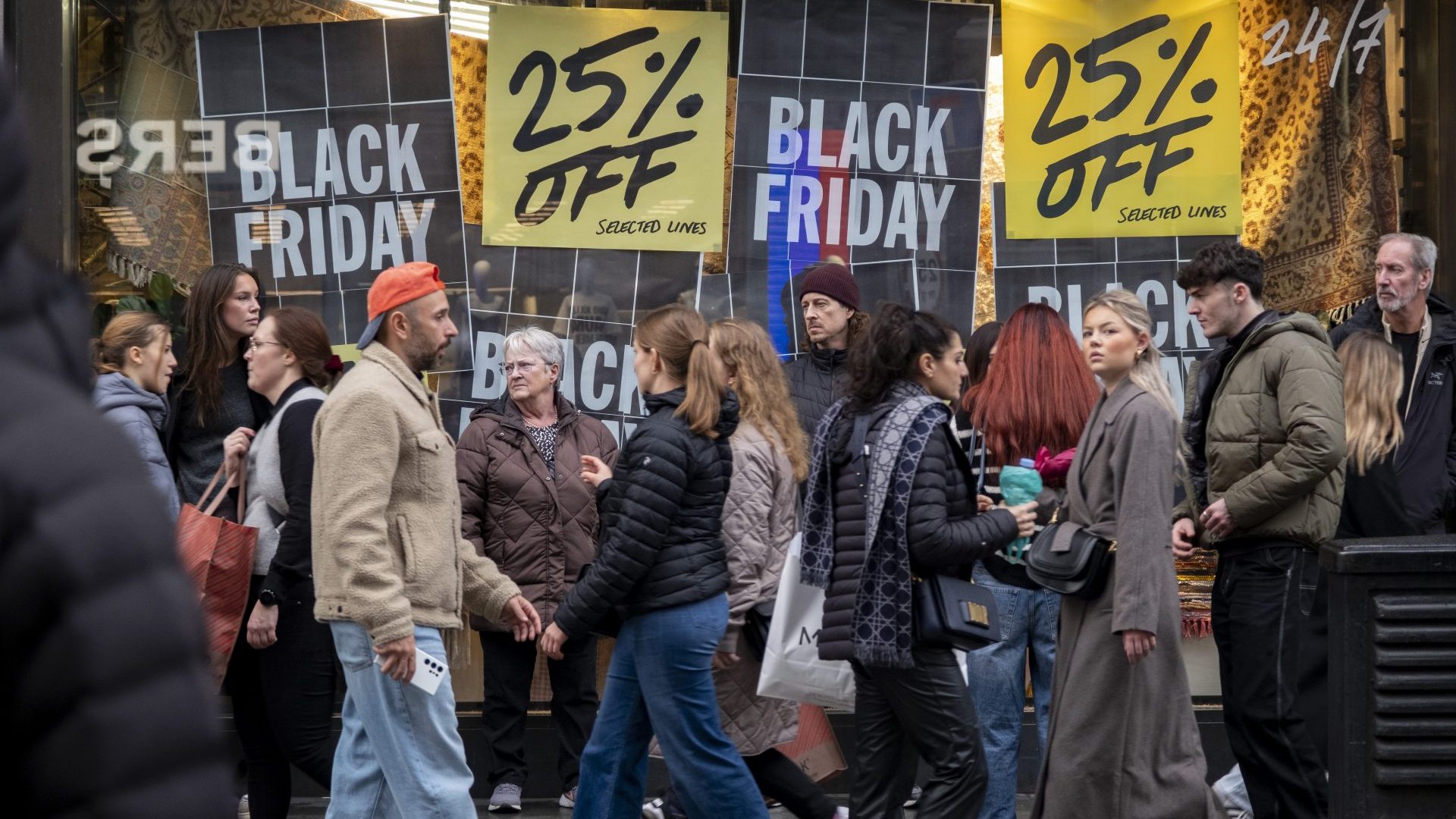
1. Black Friday – as any European reader with an internet connection, an email address or sensory organs with which to perceive the world can hardly have failed to learn – is a US festival of commerce that takes place the day after Thanksgiving.
2. Thanksgiving, of course, is a sentimental holiday in which Americans spend time with their families, eat copious amounts of turkey and pumpkin pie, and give thanks in commemoration of the help the first settlers in New England received from the native Americans whose land they would go on to steal.
3. Black Friday is a rather less sentimental affair in which shoppers trample one another in the hope of a slightly cheaper LCD TV.
4. Theories as to why a festival of cheap goodies ended up called “Black Friday” are as common as deals on that auspicious day, and often about as fallacious (we’ll be getting to that). One theory propagated by viral social media posts is that this was once the day on which slave traders would sell human beings off cheap. This theory has been widely debunked – photos used as evidence often show Aboriginal Australians, several decades after the Emancipation Proclamation – but that’s not stopped such luminaries as Toni Braxton, who you may remember for her 1996 hit Un-Break My Heart, from sharing it.
5. America’s first Black Friday came in 1869, when a pair of investors calling themselves “the Gold Ring” attempted to corner the market in shiny yellow metal to force the price up, only to be foiled by the actions of President Ulysses S. Grant and cause a ruinous stock market crash. This story is at least true – but has little to do with either shopping or turkey.
6. In 1951, a trade journal by the name of Factory Management & Maintenance coined the term “black friday” when noting suspiciously high sickness rates among workers on the day after Thanksgiving, not working on which would give them a four-day weekend. That didn’t catch on either, but we’re getting closer.
7. The actual explanation dates from Philadelphia in the 1960s when – noting the sheer number of suburban shoppers who’d descend on the city for a football game the Saturday after Thanksgiving – stores started offering deals to tempt them in on the Friday. Such was the resulting chaos – crowded sidewalks, endless traffic jams, normally decent people trampling strangers because they spotted a “10% off” sign, you know the sort of thing – that the local police took to calling it “Black Friday”.
Suggested Reading

Nerd’s Eye View: 14 things you need to know about AI and the environment
8. However negotiable human nature in the presence of cheaper toasters turned out to be, a trick to pull people into shops at the start of the Christmas shopping season proved useful, and so the post-Thanksgiving sales spread across the US. To build anticipation and encourage people to arrive early to nab the best deals, opening times moved earlier and earlier, eventually reaching midnight, or even the evening of Thanksgiving itself, when people were supposed to still be at those sentimental family dinners.
9. Just because retailers liked the shopping, though, that doesn’t mean they liked the name. Attempts to rebrand it as “Big Friday” didn’t catch on – so another incorrect explanation, that Black Friday is the day retailers’ balance sheets finally move into the black, got around. Actually, big deal though it is, it’s not the biggest shopping day – that’s generally the Saturday before Christmas – and most shops have been in the black for some time.
10. Since covid, especially, much of the spending has moved online, where you’re less likely to get smacked round the head in a tussle for the last iPad. That has led to a bunch of other annoyingly named days in late November: Cyber Monday, Small Business Saturday, Giving Tuesday, etc.
11. It’s also increased the power of Amazon. Not content with starting the trend for yet another Black Friday in July – “Prime Day” – the online shopping giant also started running Black Friday sales in countries that don’t even have Thanksgiving. Which is why you’ve heard of it and I’m writing about it.
12. Whether this works for anyone except Jeff Bezos is surprisingly unclear. Some economists argue that Black Friday mainly serves to prevent retailers from charging full price at their most profitable time of the year, cannibalising sales that would have happened anyway, and that longer store opening hours serve mainly to increase costs.
13. That assumes, of course, that the price cuts are actually real. Investigations by Which? have found that a sizable number of “deals” are actually nothing of the sort, and that many products are actually sold more cheaply at other times of the year.
14. Something that definitely will be available for reduced rates on Black Friday is the author’s own A History of the World in 47 Borders. Always be closing.
$10.8bn: US online sales on Black Friday 2024, up 10.2% on 2023
$11m million: Amount spent every minute online in peak hours (according to Adobe Analytics)
12 million: Number of UK Black Friday transactions predicted in 2025
£123: Average spend per consumer, with most popular items likely to include vinyl record players, air fryers and Funko Pops (according to Nationwide)
83%: Chance that all the numbers in this week’s column have been an accidental exercise in retail sector propaganda (according to me)
 Most popular
‘Operation Epic Fury – as it happened’
Is Star Wars dead?
Morrissey returns.. and heaven knows he’s mythical now

Iran War: Trump has now sealed his own fate