I’m standing on a stage in an echoey community centre in North Tyneside, looking at 30 sceptical faces. We’re here to talk about immigration. The most politically fraught subject in British culture today.
These people have been carefully selected to reflect the local population, not only by demographics but also by politics and views on immigration: one stood to be a Reform councillor; another is an immigrant on benefits.
George is in his early 60s and was cynical about politics before it became fashionable. He’s proud to have never been a member of a political party – until last year when, moved by the “common sense” sound of Nigel Farage, he joined Reform UK. But he’s just left after hearing about Farage’s controversial £5m donation. “They are all the same,” he says.
He’s giving his verdict on the first day of a weekend-long deliberative workshop we’re running with the Home Affairs Select Committee on work-related immigration. Over the course of a weekend, these 30 people will work together to develop principles to present to the committee to guide its scrutiny of government policy on workforce migration.
I’ve spent years running deliberative work – across the country, with government, civil society and now with the think tank Demos. But this is the hardest subject at the most volatile moment I’ve ever attempted.
“This is all very good,” George starts. “But who is going to really listen to us? This is just a tick-box exercise.” There’s a stony silence in the room. We’ve got our work cut out.
Deliberation democracy in action
Deliberative and participatory democracy – ranging from citizens’ assemblies to more recent civic tech platforms – have been around for over 20 years in the UK. If I’m really honest, they’ve failed to deliver on their promise to improve policy-making, rebuild trust and strengthen citizenry. Not because they don’t work, but because they haven’t been adopted in the right way across our political systems.
Over the same period, dwindling democratic and civic participation has slid into a deeper democratic emergency, where trust in politics, politicians and political institutions have fallen off a cliff. This has sparked the rise of populism and authoritarianism around the world. And made it ever more impossible to govern with legitimacy.
Politicians feel this lack of trust acutely and are left paralysed by this climate of illegitimacy. This results in a democratic doom loop: people feel unheard and they disengage from politics.
Faced with an alienated and distrusting public, politicians then retreat into tried-and-tested paternalistic top-down delivery or swerve making difficult decisions, which weakens delivery. Poor delivery further degrades trust.
The government, the leadership rivals, and all political parties are searching for more radical solutions to the current crisis, and the cabinet secretary is setting out a bold new reform agenda. It’s clear that reaching for the ordinary responses – to the technocratic rule book of policymaking or the simple political deliverables – aren’t enough any more. Any government needs to change in fundamental ways that people can viscerally feel. The status quo isn’t an option.
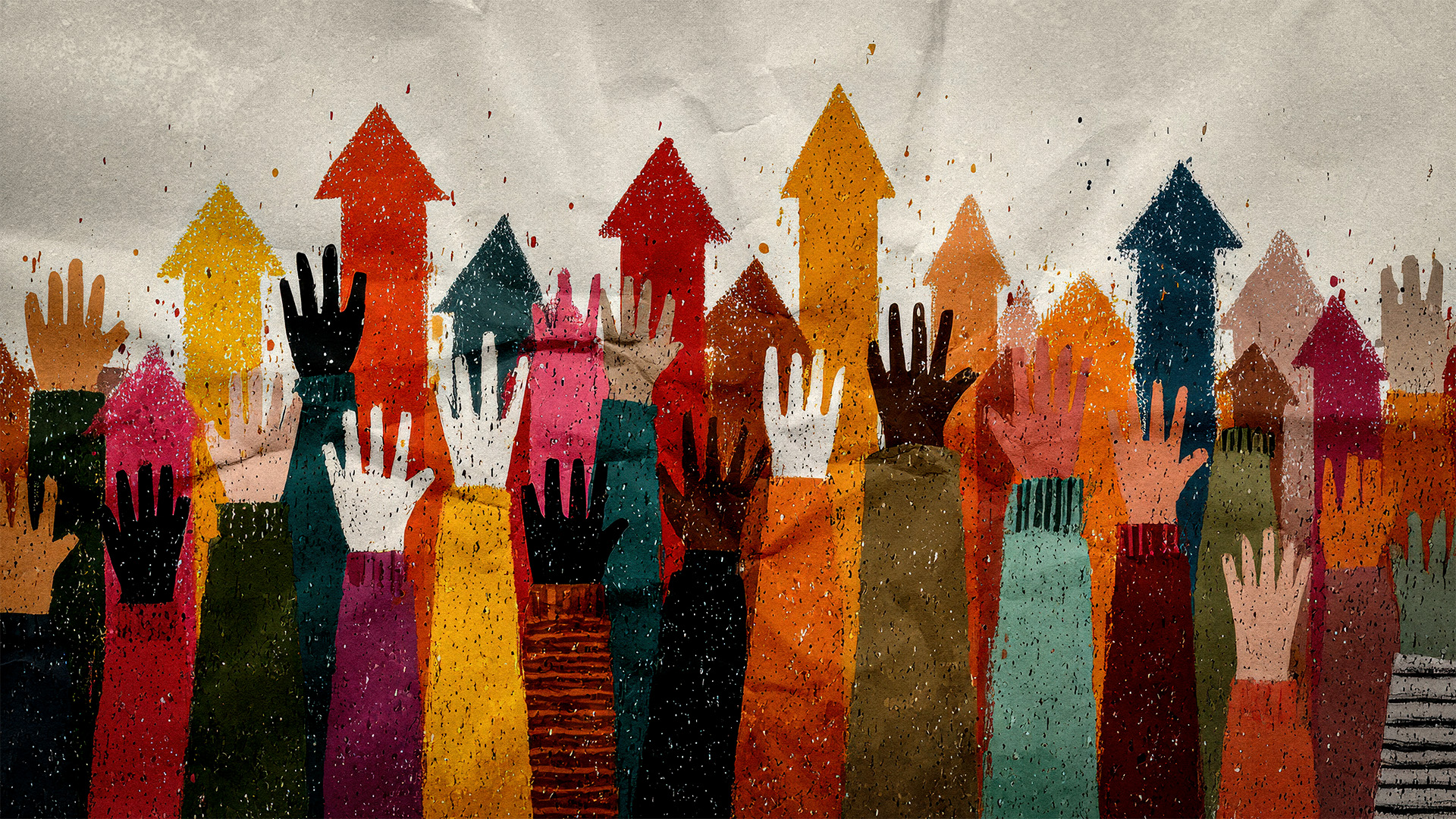
That’s why now is the time for what we at Demos call Everyday Democracy. At Demos, we are designing ways to upgrade democracy with a new operating model for the relationship between state and citizen.
This operating model makes citizen participation, deliberation, public governance and deep partnership between communities and public services not just bolt-ons to government but strategically woven into the tissue of how important decisions are made, at every level. The idea is to change how people experience democracy, to rebuild trust and the possibility of finding consensus, and to improve resulting policy so that governments can deliver better. This is the hope loop.
Ask George. At the end of the weekend, after going deep into deliberation on immigration policy, with 29 of his peers, supported by experts’ evidence, he’s convinced.
“I was concerned yesterday that any feedback we gave would just be a tick-in-the-box exercise, knowing what politicians can be,” he says. “You want to be heard, and you want to be taken notice of, and I think that’s happened over the course of this [weekend]. Where you have something that’s essential to the country such as immigration, education, welfare, health, whatever, I think this process should be embedded into our democratic process.
“[Politicians] should come out and listen to the people, not with a political tin ear, but listen to what the people say… It’s feedback to the politicians so they can say ‘well we’re not on the right track’ or ‘the country is not on the right track’, and let’s get things sorted out.”
What Everyday Democracy is…
A new democratic operating model means opening up spaces for citizens to share power throughout our public life. It means the government making the thorniest ethical questions, like on assisted dying or the future of social care funding, with citizens. It means bringing the people affected by policy into policy decisions early to stress-test and build support.
It means the institutions that scrutinise, regulate and oversee on our behalf, from the Electoral Commission to the Charity Commission, building in public governance mechanisms to strengthen accountability and legitimacy. It means new models of neighbourhood governance where decision-making powers are devolved from the local authority to the hyper-local. It means new engagement methods between MPs and their constituents, based on deep two-way communication across the whole community with more local accountability and participation.
Suggested Reading

How the world recoiled in horror from Brexit
Everyday Democracy means changing the way democracy is practiced and felt by people. It’s about giving people a voice in the conversation, a stake in the game and building the civic ties that bond. It is about those in power demonstrating respect for, and trust in, the people who put them there. It’s about investing in the relationships that fuel democracy.
People need to feel that they are actively participating in democracy in the days, months and years between elections. Like jury service, Everyday Democracy needs to become normal enough that everyone knows someone who has taken part. Then the question stops being “what is citizens’ deliberation?” and becomes “when do I get my turn?”
… and what Everyday Democracy isn’t
Everyday democracy is not about involving citizens in every decision – that isn’t necessary or required. Everyday Democracy demands curation – knowing when and how to open up, choosing the right processes for the right decisions, and designing them well.
Everyday Democracy is not more performative consultation. The current consultation system has created the mirage of engagement and openness, but it is often hijacked by special interest groups, and excludes the majority. The government has promised to “rip it up”. Everyday Democracy offers an alternative to the current system that doesn’t result in a neutering of public involvement.
Everyday Democracy is not about undermining representative democracy or the sovereignty of parliament. These processes can be decision-making, but they can more often be used to inform decision-making by representative MPs, ministers and parliament. Sharing power will enable them to enact it more effectively.
Everyday Democracy is not about tinkering at the edges. It needs to be embedded into systems. That’s why achieving the scale of change – the new operating model – is so critical to meeting the current moment of deep frustration with democracy. This needs to feel different.
Why citizens need Everyday Democracy
The core citizen experience of Everyday Democracy is power. The sense that your voice has weight. That decisions are not simply being delivered to you from above, but that you have had agency in shaping them.
There is not a lack of demand from citizens for this; there is a lack of opportunity. The UK government’s Community Life Survey shows that only 25% of people feel they can influence decisions affecting their local area. But 50% think that it’s important to be able to do so.
Taking part has a profound effect on people. Participants in deliberative processes report feeling more politically efficacious, more trusting of institutions, and more confident that their voice carries weight. The experience of being treated as a competent partner – given real information, real trade-offs, and real influence, and importantly the chance to talk with people with different views and experiences to their own – is both rarer and more powerful than governments tend to assume.
Why leaders need Everyday Democracy
If the core experience for citizens is sharing power, it requires political leaders to do something that goes against almost every instinct their careers have trained into them: to share their power, and to trust what happens when they do.
The fear is understandable. Open up a deliberative process and who knows what people will say? The opposition can accuse you of having no ideas of your own. Also, you share the power but not the responsibility and accountability your elected status demands. In short-term political cycles, the safest thing is to keep control of the message, manage the narrative, and present decisions as fully formed rather than opening them up to genuine influence.
But what is this caution costing? Policies launched without genuine public buy-in that get blocked, reversed, or abandoned as they fail at first contact with reality – all of which bears a trust and financial cost. An electorate that grows more hostile, more alienated, more susceptible to the shallow offer of the populist with every cycle of being talked at rather than listened to. Maintaining the status quo is not a serious option in a democratic emergency. There is more risk in not doing this than in doing it.
Suggested Reading

Trump is all your fault
Politicians who genuinely share power do not lose it – it is not a zero-sum game. They get a deeper legitimacy by working with citizens on understanding how problems are really experienced and what potential solutions might be. In Taiwan, a renewed participatory and deliberative democracy was instituted and saw trust in government rising from 9% in 2014 to 91% 10 years later – a figure we can only dream of here.
As Audrey Tang, former first minister for digital affairs in Taiwan, says: “to give no trust is to get no trust”.
Politics needs Everyday Democracy. Our current politics is primed for conflict and polarisation. Social media drives to extremes. Polls assess what people disagree on, more often than what they agree on. Politics increasingly seeks dividing lines rather than uniting ones.
As Greg Maniatis has argued in The New World, we need to build a practice for the centre in a time of polarisation — the practice of building things together with people you disagree with. In a moment of democratic emergency, he argues, this may be the most radical thing you can do. Everyday Democracy is the approach to this. My colleague Polly Curtis calls this “optimising to depolarise”.
Building the new democratic operating model
So what needs to change? None of these approaches need to be invented.
This government has already overseen a quiet, tentative participatory and deliberative wave: through public engagement on the NHS 10-year plan, on SEN reforms, with the People’s Panel on Digital ID and through the participatory philosophy of its Test, Learn and Grow programme. As I write Demos is working with national government, parliament, regional and local authorities, and neighbourhood bodies, developing and testing new forms of deliberative and participatory democracy – including using AI to scale these processes – to improve policymaking and the effectiveness of government, strengthen citizenry and build back trust.
The government should accelerate these efforts and – as importantly – talk about them and show a new way of governing. Make this their governing strategy.
Underlying the new suite of interventions, the government should make a commitment to participation and deliberation – the UK’s leadership role in the Open Government Partnership from October 2026 to September 2027 offers a moment to do this. Unlike most other European countries including Scotland, the UK government has not yet made a commitment on participation. And it should invest in new capacity, skills, standards and ethical safeguards to ensure that processes are conducted with rigour and to avoid risks to delivery, reputation and trust.
The cost of inaction
What happens if leaders don’t double down on democracy? What if they don’t build this democratic abundance? The democratic doom loop will speed up past the point of no return.
Politicians cannot govern effectively without public trust. It will become ever harder to make the difficult decisions that come with short-term pain or hard trade-offs, unless they take the public with them. This will leave them with no option but to promise the impossible and deliver on nothing, further undermining trust that liberal democracy is the most effective governing option.
There is now a consensus that the status quo is not sustainable. It faces a dizzying array of challenges – with more, such as the advent of agentic AI, looming on the horizon that will further test its capacity for trusted governance.
Government must renew democracy, deliver better and build trust with the public. This would make for a more humble government, built on partnership through difficult times, but ultimately more powerful in its decisions, more effective in its outcomes. That’s how democracy wins back the Georges of the world and starts to build a hope loop.
Miriam Levin is director of participatory programmes at Demos. Her full report on Everyday Democracy is here
 Most popular


Emily Maitlis’s diary: As I was saying to George Clooney just the other day…

Why Slavoj Žižek probably hates you

There’s only one reason Trump went to Ireland – it wasn’t to meet the Taoiseach


A new film about Elon Musk reveals him as so awful it’s almost tragic. Almost