Seminal is an overused word, but sometimes it serves its purpose. John Ingham’s interview with the Sex Pistols for the music paper Sounds – their first proper interview, published 50 years ago on April 24, 1976, contains a moment when you can all but feel pop culture pivoting on its axis.
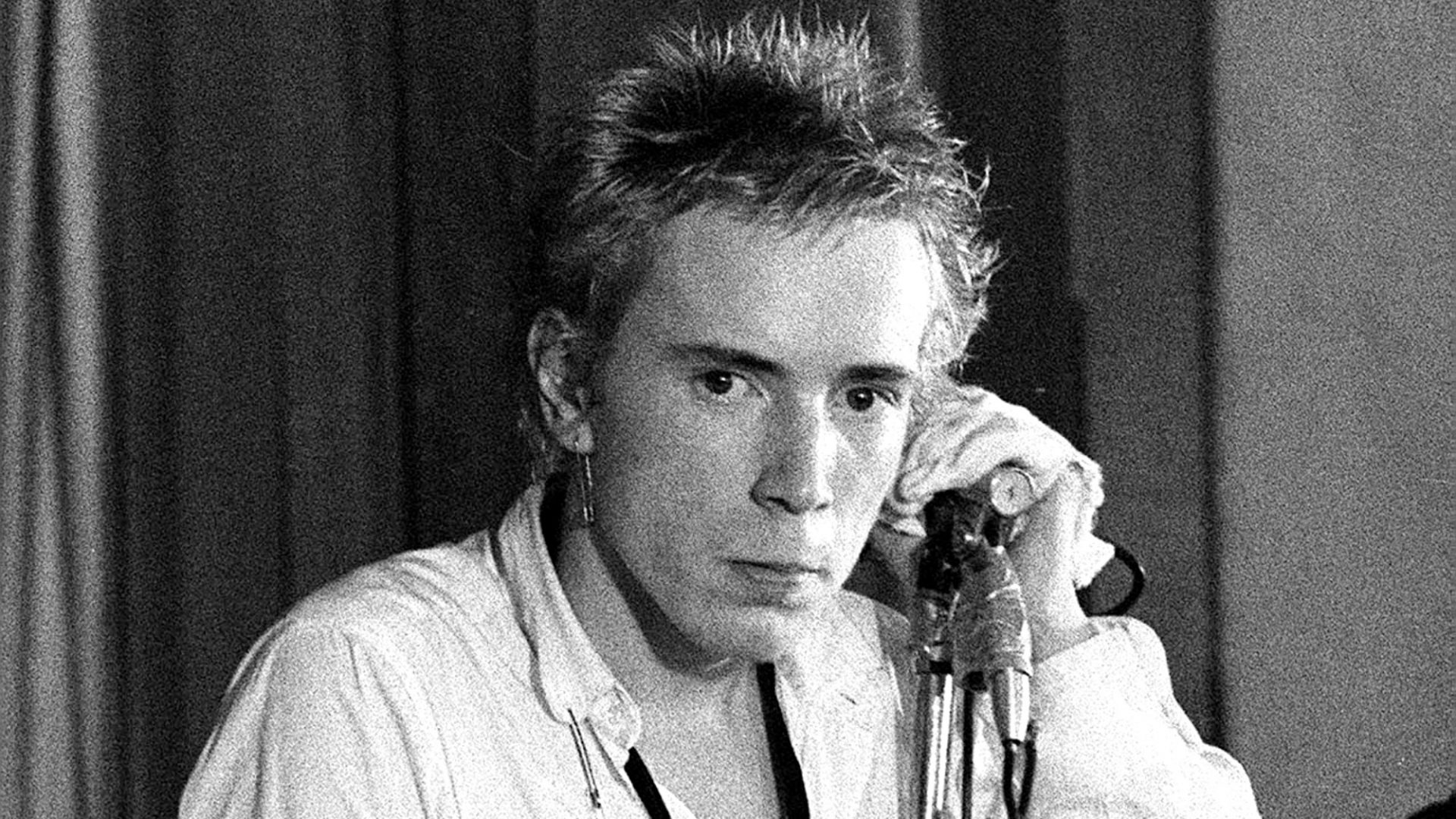
As Ingham, then known as Jonh, turns away from chatting to Paul Cook, Steve Jones and Glen Matlock about the band’s brief history (they’d been together for about seven months), he asks Johnny Rotten why he’s in the band. In an instant, he writes, “the intensity level immediately leaps about 300%. He looks manic. ‘I hate shit. I hate hippies and what they stand for. I hate long hair. I hate pub bands. I want to change it so there are rock bands like us’.”
Ingham records feeling instantly out of time and out of touch, suddenly aware of his tortoiseshell earring and five-week stubble. Time for change.
The rest is history, of course. Against some resistance, writers such as Ingham and Caroline Coon began to cover the Pistols, delineating their break from the formalities of 1970s rock and ensuring press reports brought into view the band’s distinctive style.
Confrontational attitudes led to confrontations at gigs. Attention turned to the Pistols’ early entourage and the distinctive style Malcolm McLaren and Vivienne Westwood propagated from their shop SEX on the King’s Road.
Those who read about or saw the Pistols began to form bands, or write fanzines, or reinvent themselves. “Punk” entered the lexicon, the band swore on live TV, the press went mad, the music industry wobbled then corrected itself, and pop music was rejuvenated and reimagined.
Looking back, Ingham is satisfyingly clear-eyed about the drive to find something new that he’d been searching for after arriving in Britain from the US in 1972. “‘When I came to Britain [fresh out of film school in California], it didn’t feel like there was anything particularly new coming out of America. Britain was better. At this point we’re talking about the Who, the Stones, Bowie and Roxy Music, who I liked a lot.
“But they were beginning to get very rarefied by 1975. I was bored. It just felt like the same old groups and they weren’t really as good any more. I wanted something new, something that felt ‘now’, not some guys from the early-mid 60s. So I started going out a lot, looking at young bands, trying to find someone somewhere.”
A live review of the Sex Pistols by Neil Spencer of the rival NME gave Ingham his first clue. “It was just the name,” he remembers. “I thought ‘my god, that’s fantastic’. I wanted to know more, but I had no idea how to find them.”
A month later, in a team meeting at Sounds, he overheard his colleague Vivien Goldman speaking on the phone. “She was going ‘What? The sex what? The Sex Pistols?’ I said ‘Vivien, you’re not going to like them’, and clawed the phone out of her hand.”
McLaren was on the other end of the line, and invited Ingham to a Sex Pistols gig at El Paradise strip club in Soho on April 4, the choice of venue deliberately eschewing the typical 1970s gig circuit and connecting to a suitably subcultural underworld.
The night didn’t disappoint. Reviewing it for Sounds, Ingham noted the emphasis on noise and energy over technique, the antagonism of Rotten (“clap, you fuckers”) and the singer’s ripped red jumper. The lyrics intrigued.
He wanted to know more. “Does one ‘go’ or ‘come’ to see the Sex Pistols?” he asked, neatly capturing both the sexual implications of the band’s name and the shift in emphasis – from passive consumption to active engagement – that the band demanded.
“The next morning, the Sounds editor, Alan Lewis, asked me what they were like. We started talking and he got a more and more bemused look on his face. Out of nowhere, he said, ‘I want you to interview them’. I said, ‘come on, they’re only a few months old, it’s too soon’. But he insisted because I’d been talking about them for over 10 minutes.’”
An interview was arranged. “Malcolm played this game where you had to meet him first and he delivered his manifesto, basically stating that whatever is popular right now, you should do the opposite. He then gave me a time and a place to meet the band. But when I arrived I was the only one there. He said I was late, but I wasn’t! Then he gave me another time and a place, this time on Denmark Street, and I turned up 30 minutes early. The band were there and he said ‘You’re late!’, so I went ‘Fuck off, Malcolm!’. I passed the audition.”
The Cambridge pub still stands round the corner from Denmark Street. Back in 1976, Ingham wandered there with Cook, Jones and Matlock, not yet having met Rotten. “While we were talking, John walks in with two ladies and sits down with them on the opposite side of the room. He’s very subdued and looks bored by the whole thing. The others, meanwhile, kept talking about Rotten in the third person, telling me what he thinks and doesn’t think.
“It was interesting that he sat away from the rest of them. He’d been there 15 or 20 minutes and I turned to him and asked what he had to say. And then he just started: ‘I hate this, I hate that!’. Unfortunately, I was really sick of carrying a tape recorder around and then transcribing all the tape, so I did the interview without a tape recorder. Of all the interviews in the last century!”
Suggested Reading

When punk took on the National Front
Ingham’s piece set the standard. It brought Rotten’s media presence to life. It captured punk’s iconoclasm, the exciting thrill of dismissing everything. It articulated punk’s difference, evoking “chopped and channelled teenagers… People sick of nostalgia. People wanting forward motion. People wanting rock and roll that is relevant to 1976”.
Ingham himself soon fell in love with The Clash, and briefly managed Generation X. All around him, the culture was transformed.
“Punk mixed music with fashion, graphic art. As a cultural moment, punk defines postwar culture in this country. The freedom in punk’s early period really sticks out in my head,” he says.
“Then you think what would have happened if people like me hadn’t written about it. Mine was a conscious approach to make the Sex Pistols sound like the most exciting thing that you as a teenager had ever heard of.” And he did.
Matthew Worley is professor of modern history at the University of Reading. His book No Future: Punk, Politics and British Youth Culture, 1976-1984 is published in a new anniversary edition by Cambridge University Press on May 14